Film is therefore able — precisely as a result of its photographic authenticity — to lend a manifest and evident reality to the most extreme phantasm. 1
– Georg Lukács, The Specificity of the Aesthetic
Painting, in Manet, was forced to forgo likeness exactly because of its own obsession with reality, because the illusions it had learned to create did not provide the conviction in reality, the connection with reality, that it craved. 2
– Stanley Cavell, The World Viewed
“I didn’t draw that line”3
Toward the middle of Kleber Mendonça Filho’s 2012 feature film, Neighboring Sounds (O som ao Redor), João (Gustavo Jahn), the bom rapaz whose family owns “over half the property in the neighborhood,” 4 walks into his apartment to find his housemaid’s son asleep on his couch. The housemaid Mariá (Mauricea Conceição) tells her son Sidiclei (Alex Brito) to get up, at which point the young man quickly stands to sheepishly greet João, extending his right hand. The two clearly know each other, and João shakes Sidiclei’s hand. Grinning, João asks, “You know what my grandpa used to do when I was sleepy?” and, grabbing Sidiclei by shoulders, vigorously shakes him as the young man’s mother looks on. The exchange concludes with the owner of the house asking the housemaid’s son, “Feel better now? It smarts, doesn’t it?” while Mariá excuses her son, telling João, “he came tired from work, and I let him rest a bit.” João goes about his business but, before leaving, encounters Sediclei again in the back of the house. Asking Sediclei about his new job, he recounts working similarly late shifts as a bartender while living in Germany, and teases Mariá for complaining too much about her son. What have we just witnessed?
The interaction appears cordial, even warm, though a closer look at the sequence—composed primarily of static shots—suggests otherwise. Take, for example, the look on João’s face as he stares at the kid sleeping on the couch; or the somewhat slapdash manner in which he extends his hand to Sediclei. More to the point, when João shakes Sediclei, the gesture appears playful enough, though the air of irritation is discernable and—as his facial expression when he turns away makes clear (Figure 1)—undeniable.
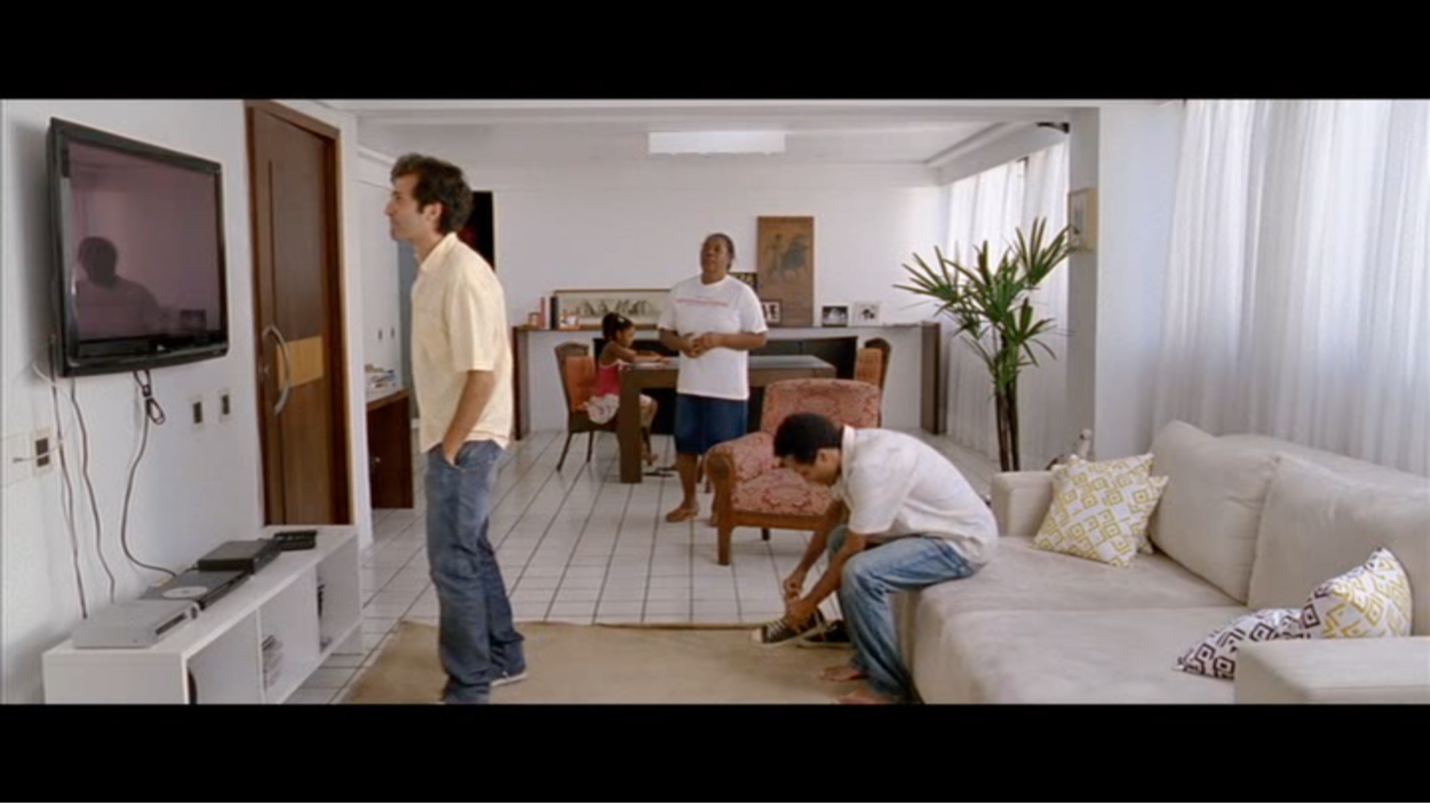
Figure 1. Still from Neighboring Sounds, dir. Kleber Mendonça Filho, 2012.
The complexity of this sequence—itself a tribute to the exceptional talent of director and actors alike—is difficult to overstate (finding an equivalent perhaps only in the nineteenth-century Brazilian novel). 5 Importantly, although involving only three characters, it brings a panoply of social relations into view, including those between domestics and their employers, between the working poor and the heirs of the ruling class, between blacks and whites, and between family members, all forming a whole governed by some unspoken rule which, at the same time, gives meaning to their gestures, glances, and dialogue. The result is a tension between three characters that will recur in various guises throughout the film and that, as we will see, is sustained as much by performance as by form.
Mendonça offers one way of understanding this tension in an interview when, reflecting on a personal experience that was more than likely the inspiration for this same scene, he recounts that,
We had a maid who worked for many years in my house. One day I returned from work and found her son hanging out on the couch and watching TV, and her grandson in the kitchen. It felt like an invasion, and I always found this very curious. It’s my house, they’re in it, but there’s a social line they aren’t supposed to cross between the kitchen and the living room. I didn’t draw that line; it was drawn by history and by society. They “should be” in the kitchen, or in the maid’s room ... and I hate this. 6
Certainly, one way to understand that “line” is as the product of how housemaids, who are poor and overwhelmingly nonwhite, are viewed—that is, as the product of racism or classism or both. Understood this way, we might dismiss Mendonça’s candid reflection as a kind of exculpation (“I didn’t draw the line”). Yet it also suggests that the filmmaker conceives of that “line” as a product not just of the way we view others, but of a social formation whose historical development gives rise—or rather, demands—such inequalities in the first place. And he names that formation in the same interview, when he observes, “The complete absence of justice in many social situations in Brazil is something I find extremely disturbing, and that is often established by class structure.” 7 Read this way, the fact that he “hates this” is somewhat beside the point—the line is drawn by the “class structure” regardless of how he feels about it or those it affects. Mendonça himself remains ambiguous as to which of these two perspectives he holds: whether individual attitudes or the class structure plays a more fundamental role in perpetuating such inequalities. Nevertheless, I want to argue that his film ultimately insists on the class structure. So, while João’s problematic attitude toward his housemaid and her son is everywhere apparent, the problem Neighboring Sounds aims to address is not that attitude itself, but the class structure that sanctions it—the problem, in other words, of how a film might visualize the structure of abstract laws, principles, and functions that draws this line. On this view, the tension that saturates not just this interaction, but, as we will see, the film as a whole, is what makes that structure visible.
When it first appeared in cinemas, Neighboring Sounds was almost immediately celebrated both at home and abroad for what many critics described as a portrait of a rapidly changing Brazilian society, garnering accolades not just from movie critics at the New York Times, but even from then-president of Brazil, Dilma Rousseff. The critical and box office success Mendonça experienced after the film's release has been not just matched, but surpassed by his subsequent films, including Aquarius (2016), Bacurau (2019), and, most recently, The Secret Agent (2025; O agente secreto), all of which have garnered several nominations and prizes from at the Cannes Film Festival and the Academy Awards. Set in the middle-class neighborhood of Setúbal in Recife, the largest city in the Northeast region of Brazil, the film revolves around three distinct plotlines, each centered on a different set of characters. The first includes the same João, a wealthy young man who manages properties owned by his grandfather Seu Francisco (W.J. Solha), and who is romantically involved with a young woman named Sofia (Irma Brown). Their relationship dissolves, and the grandfather ultimately meets his end at the hands of two figures seeking vengeance. The second plotline centers on Bia (Maeve Jenkins), a middle-class housewife and mother of two whose daily frustrations—including her futile attempts to silence a neighbor’s incessantly barking dog—lend a comedic tone to the film. These two storylines never intersect, and their characters do not directly interact. The film nonetheless weaves them together through a third group: a private security team hired by neighborhood residents and led by Clodoaldo (Irandhir Santos). Abandoning the urban slums and rural landscapes that had come to define Brazilian cinema since the 1960s, Mendonça’s first feature film creates its portrait of Brazilian society by adopting an approach that, in the words of one critic, “addresses the concerns of a country that had become predominantly middle class.” 8
Indeed, by the mid 2000s, Brazil witnessed a broader shift in national politics, inaugurated by the Workers’ Party (PT) during President Luiz Inácio “Lula” da Silva’s first term. As is well known, the thirteen years of the PT’s ascendancy—from Lula’s election in 2003 to the parliamentary coup that ousted Dilma Rousseff in 2016—witnessed a profound reorientation of politics toward addressing Brazil’s deep-rooted social inequalities. Spurred on by the commodities boom of the 2000s, Lula’s administration combined rapid economic growth with redistribution policies—particularly through the conditional cash transfer program Bolsa Família—to produce significant gains for the country’s poor. These included increased access to formal employment and a historic reduction in poverty: by some estimates, the number of people living in poverty fell from 50 to 30 million. These gains were further bolstered by increased investment in education, with the number of university students doubling over the period. For the first time in Brazil’s history, the poor appeared to finally have a pathway into the middle class. And yet, as we will see, Neighboring Sounds suggests why this history should not be taken at face value.
Still, while this history is very much indexed by Mendonça’s film, his sharp focus on a single neighborhood, I want to argue, allows him to explore broader social and historical forces that not only birthed this “new middle class” but also precipitated a profound shift in Brazilian class politics—a shift that culminated six years later with far-right candidate Jair Bolsonaro winning the presidency. How exactly a film like Neighboring Sounds goes about making those forces visible is the focus this paper, though, by exploring this issue, we might also come to view Mendonça’s film as raising broader questions about cinema more generally. I mean questions like: What kind of knowledge does a film produce about the world? How is that knowledge different than, say, a sociological or historical account of that same world? And, how does it go about making that knowledge intelligible to its audience? These questions have long animated discussion of realism and, like many critics, I view Mendonça as part of a new wave of ambitious filmmakers working in Latin America, including figures like Lucrecia Martel, Pablo Larraín, and Andreas Fontana, who have sought to reinvent cinematic realism for the twenty-first century. That Mendonça pursues such reinvention is apparent enough in the film's use of conventions associated with the great genre films of the 1970s and 1980s—such as the horror movie, the thriller, and the siege film—and, most notably, in its highly acclaimed use of ambient sound. As anyone who has seen the film can attest, these stylistic elements contribute to a distinctive atmosphere of paranoia, fear, and all-consuming dread pointing to what critic Ivonne Daré Rabello has described as some “imminent, unknowable, unpredictable threat.” 9 Saturating nearly every scene, such elements yield a social commentary on inequalities that have long characterized Brazilian society, but one that looks like a film by Roman Polanski, Stanley Kubrick, and, above all, John Carpenter, suggesting that any effort to represent the matter of contemporary Brazil demands unconventional means. As we will see, critics have tended to identify these stylistic elements with an abandonment of ideas like representation, meaning, and autonomy, insisting instead on the film’s affective resonances. I want to argue the opposite: namely, that the appearance of such elements in Neighboring Sounds marks a renewed commitment to those very ideas, and demonstrates the degree to which the film’s realism depends on that commitment.
Realism Beyond Realism
The director himself makes clear why we might think of his film in terms of realism, noting that, when he started to work on the script for Neighboring Sounds, he “wanted to do something with social realism, but it couldn’t be just that.” 10 He continues, “Realism for realism’s sake is boring to me, I’m not that interested in filming that.” 11 For this reason, he explains, “I started bringing together a certain style of filmmaking, in Cinemascope and with fixed shots,” adding “I really liked the idea of making an absolutely mundane movie . . . but with a camera that you wouldn’t associate with social realism.” 12 With its contemporary setting in a middle-class neighborhood of Recife and an ensemble cast comprising a cross-section of Brazilian society, it is easy enough to see how the film’s portrayal of everyday life is deeply invested in producing a picture of contemporary Brazil. Of course, realism in film is often (and mistakenly) associated with a downplaying of technique and style in favor of a more straightforward or immediate representation of reality whose idealized form André Bazin described as cinema’s “guiding myth” of an “integral realism, a recreation of the world in its own image, an image unburdened by the freedom of the artist’s interpretation or the irreversibility of time.” 13 Yet, Mendonça’s description puts some daylight between this more conventional sense of cinematic realism and his own film—one whose visual and sonic cues, drawn from genre cinema, contribute to a style, as we will see shortly, “you wouldn’t associate with social realism.”
To begin to understand Mendonça’s sense of realism, let us return to the sequence with which we began—this time with an eye to its form. In a brilliant reading of Mendonça’s film, Daré Rabello observes that, in the apartment, relations between João and Mariá “are and are not subordinated to modern norms: she is not part of the family, since she is subject to labor laws; in their dealing with each other, however, the rule is the boss’s cordiality, in a mixture of closeness and aloofness governed by volatile bursts of sympathy or antipathy, always commanded by a cunning volubility.” 14 João’s invocation of his “grandpa,” moreover, links this volubility to forms of domination that have long defined the exploitation of labor within Brazil’s Northeast region. His grandfather, Seu Francisco, is a former plantation owner turned real estate mogul whose familial wealth was built on the production of sugar on engenhos, or plantations, within Pernambuco’s rural interior only to be reinvested as speculative capital funding a recent construction boom. Exercising an authority over his black employee and her family that his grandfather had similarly exercised over members of the lower and working classes, João nonetheless gives such forms of domination a veneer of enlightenment, embodying what we might describe as a cordial authoritarianism. Or, as Daré Rabello puts it, he “builds his life certain of his origins—‘I’m a rich man,’ he tells his girlfriend —but he has the wit and ability to modify and update his grandfather's patriarchal behavior.” 15 Yet, this also means that the character’s “volubility” can be understood in these terms only to the degree that the film succeeds in making visible the structure of abstractions that shape class relations in Brazil.
To put the point this way, then, is to see Neighboring Sounds as raising a question that Bertolt Brecht understood as central to a genuine realism: that is, the question of how to “make abstraction possible” and see beyond the “immediately visible surface” of reality with an eye to a “more exact representation of the real social forces” that shape that reality. 16 As is well known, Brechtian theater locates a solution in the development of alienation effects which, piercing through the “characteristic illusions” of conventional European theater, might “demonstrate a custom, which leads to conclusions about the entire structure of a society at a particular (transient) time.” 17 The point, in this sense, is to see the social causes rather than the individual or psychological ones behind such customs in the gestures or dialogue of characters. We might approach the sequence featuring João, Sediclei, and Mariá, then, as raising Brecht’s question of how “is such an incident to be represented if its historic character is to be brought out,” and “in such a way that it is understood as a historic dictum?” 18 In other words, if Mendonça wants viewers to see the line as one “drawn by history and by society,” then what we are being asked to see when João shakes Sediclei, in a manner both lighthearted and aggressive, is not just the rich man’s attitude—racist, classist, paternalistic, or even “enlightened”—which would amount to individual or psychological causes. Rather, what we are being asked to see is the structure of class relations in Brazil and its history condensed into a single gesture.
My point here is that, not unlike Brechtian realism, Mendonça’s film understands that making visible the “real social forces” that shape social relations demands a similar capacity to abstract from what is immediately perceived, felt, or experienced. Indeed, as Todd Cronan demonstrates, Brecht’s ambition to “make abstraction possible” is doubled by—indeed, depends on—a second form of abstraction. 19 Brecht observes that, where the “Western actor does all he can to bring the spectator into the closest proximity to the events and the character he has to portray,” 20 the alienation effect refuses such identification between actor and spectator, between the drama playing out on the stage and audience sitting in the theater. This, according to Cronan, means that,
Theatrical situations should “indicate”—but not make inevitable—precise political results; they should make those results follow from the action as though they were effects of the causes performed. Crucially, those precise indicators are a function of the audience’s capacity to abstract from its specific subject position, to evaluate the performance in terms of probable causes and effects, rather than lose itself in empathetic identifications. 21
While audience members might respond to a performance in any number of ways, to “abstract” from its specific subject position is to distinguish between those feelings that are merely personal and those the artist intended the audience to have. But this capacity to abstract matters not just because it also requires the audience to identify the play’s action as the cause of their feelings, but also because it makes the idea of a politics possible. Cronan puts the point succinctly, explaining that, for Brecht, “no set of personal feelings about a work can be said to be wrong—wrong in terms of what? If the actual responses of a beholder are beyond dispute, then the different interpretations made by viewers, interpretations of what one thinks the work is about (including questions about the kind of feelings the artist intended one to have), are fully available to disagreement or agreement.” 22 Or, as Brecht himself puts it, “Non-Aristotelian drama . . . is not interested in the establishment of a ‘common humanity’ shared by all spectators alike. It divides the audience.” 23
In Neighboring Sounds, this is a problem of how to (correctly) see João’s attitude as an effect of a class structure that demands the inequality between the wealthy and the poor and not as itself the cause of that inequality. Or to put it another way, to see João’s gesture as a product of his attitude it not just to miss seeing the social structure that sanctions it and, thus, to misunderstand its meaning; it is to imagine that attitude as the problem to be solved. Thus, where the sequence begins with a tracking shot which, following João into his apartment, suggests a close identification with his perspective, the majority comprises static shots that impede such identification—not just with João but with the victims of his attitude as well. As Brecht understood it, the imperative to make that abstract structure visible depends on the work’s capacity to get the audience to treat their personal responses to the characters—their “empathetic identifications” with one or the other—as irrelevant to its meaning. It depends, in other words, on the autonomy of the work’s meaning from the viewer—or, more precisely, on the irreducibility of that meaning to the viewer’s experience. So, while such identification may say something about the kinds of persons we are, it falls short of making the abstractions that “draw the line” between classes possible. At the same time, to point to such abstractions is to make a claim about Brazilian society—a claim fully available to disagreement or agreement insofar as the point is not merely to look at that society differently but correctly.
What is at stake, then, is the audience’s ability to understand why society looks the way it does —why it takes on specific forms of appearance. This means learning to look beyond society as it is immediately experienced to the underlying structures that explain why it looks that way. For Marx, as is well known, this amounts to an ability to conceptually grasp “concrete” reality as the product of “abstract determinations” (e.g., value, property, enclosure)—that is, as the “concentration of many determinations, as the unity of the diverse.” 24 That said, aiming for such abstraction in this context is complicated, given that the forms of collectivity long associated with class conflict—most notably, the proletariat as the self-abolishing “subject-object of history”—find no easy equivalent in Brazil today. As political scientist André Singer pointed out shortly after the parliamentary coup that ousted Dilma in 2016 and on the eve of Jair Bolsonaro’s electoral victory, “contrary to the expectations of the Communist Manifesto, according to which ‘the epoch of the bourgeoisie … has simplified the class antagonisms,’ the contemporary scene is marked by the conspicuous fragmentation and complexity of that conflict.” 25 To be sure, it is this fragmentation and complexity—already visible four years earlier, in 2012—that lies behind the film’s focus, in Daré Rabello’s words, “ on the informally employed, domestic servants, the middle class, and the heirs of the ruling class,” a “choice [that] excludes the proletariat and the true owners of wealth.” 26 It is this same fragmentation and complexity, I want to suggest, that animates Mendonça’s commitment not just to a form of cinematic realism, but to realizing it by unconventional means.
The Horror, the Horror
But if such abstraction is the key element of Mendonça’s realism in Neighboring Sounds, it is one largely unnoticed by the film’s critics, particularly in how they have understood the film’s use of genre-cinema conventions. Fernanda Santos and Cecília Mello summarize the consensus on Mendonça’s indebtedness to American genre films when they observe that Neighboring Sounds “operates a multifaceted connection between realism and horror.” 27 Identifying Mendonça’s first feature with a larger trend in Brazilian cinema of the 2010s that “capture and articulate—narratively, thematically, formally, and sensorily—the zeitgeist of fear pertaining to a parcel of Brazilian society,” Santos and Mello explain that “[i]t was at the height of this period that most films belonging to this trend were produced, and they captured a new state of affairs that began to gradually pervade everyday social relations: a growing sensation of fear felt and expressed by Brazilian middle and upper-classes in the face of the social ascension of the poorer classes.” 28 Finding its origins in the growth of social spending under the PT that resulted in a “gradual increase in the income and spending power of previously excluded segments of the population,” 29 this growing sensation of fear, they argue, is itself a “reaction of a portion of the population to the social rise of their employees and/or people of non-white ethnic-racial profiles” (who represent the majority of Brazilians) “was nothing short of hostile” and “consistent with an archaic and structurally racist culture.” 30 To capture this middle-class fear, Mendonça’s aesthetics “employ atmospheric elements and narrative suspense derived from the horror genre to emulate the sensory perspective of those characters, sometimes fearful, sometimes guilty, having to live in a state of constant apprehension.” 31 That the ostensible class ascension of the poor into the ranks of the middle class (more on this below) was met with a hostility and racism born of middle-class class resentment is undeniable. At the same time, to treat such resentment primarily as the effect of a “structurally racist culture” risks framing the problem at the heart of Brazilian society as one of attitudes: the views certain people (whites) harbor toward others (non-whites), rather than the social order that generate such views in the first place. 32
Critic Jack Draper lands somewhere similar when he reads the film as “framing the genre within a dramatic narrative emphasizing not fantastical characters … but the everyday, material reality of class, race, and/or gender violence and unequal social relations that are deeply rooted in Latin American history.” 33 Citing what he describes as the film’s “materialist horror,” he argues that elements of the genre are “seamlessly integrated into the everyday experience of various characters to reproduce the collective middle-class affect of fear, along with the unconscious recognition of the violence that their everyday lives have been built upon since slavery, and continue to rely upon in the form of high-security apartment complexes and guards.” 34 Draper goes on to note that Mendonça himself “has said that ‘[t]he constant feeling of insecurity is part of the culture, embedded in the different social layers’ … hint[ing] that horror will be an important stylistic convention in the director’s effort to focalize this feeling.” 35 Like Santos and Mello, Draper believes “common horror film elements such as nightmares, hauntings, eerie sounds and terrifying hallucinations” become, in Mendonça’s hands, a means toward depicting an “everyday experience” (120–21), “feeling” (230), and “affect” (122) belonging to the middle class—an experience that Santos and Mello cast as the origins of the PT’s decadence and the rise of rightwing reaction. “In the case of Neighboring Sounds,” Draper observes, “the diverse cast of characters exhibits a collective unconscious—often a collective guilt and/or paranoia—arising out of the history of ruling class violence against slaves (historically) and against non-whites and the lower and working classes (up to the present).” 36 That is, the film’s mobilization of an affect like fear is meant to confront its characters—and, more crucially, its audience—with the repression of a history that a more just society would presumably recognize. For Draper, then, this also means that, apart from the “terror” evoked by the “striking abject imagery” of Neighboring Sounds, Mendonça also finds beauty in “the potential of these images, as revelations of oppression, to bend the moral arc of the universe a bit more towards justice.” 37 And yet, this emphasis on the focalization of affect is doubly problematic, in aesthetic and political terms alike. Aesthetically, because it must conceive of Neighboring Sounds as remaining on the level of immediate appearances—of “everyday experience,” “feeling,” and “affect”—which is to say as uninterested in the abstractions in which such appearances take root. And politically, because it isn’t entirely clear how the justness of such revelations of oppression is necessarily incompatible with the injustice of a class society in which inequality reigns and power remains squarely in the hands of the ruling class.
Nevertheless, critics have tended to view this emphasis on experience, feeling, and affect as a constituent element of the film’s realism. Leslie Marsh goes further, similarly identifying Neighboring Sounds as part of “a ‘realist revival’ in contemporary Latin American cinema,” but arguing that “we think less about cinematic realism in terms of representing the material world according to established forms or techniques of representation and think more about cinematic realism in terms of presentation and of realism as a plural aesthetics.” 38 For Marsh, the difference between representation and presentation is key, mapping it onto what she describes as the distinction between “perceptual realism” and a “sensorial” or “conceptual realism” 39 —that is, between a film that aims to depict Brazilian society and one that, addressing itself directly to the viewer, provides her with a sense of how the middle and upper-middle classes experience that society. For this reason, she insists that, “[w]hile discussions of realism continue to emphasize the discovery of human truth through a reliance on the senses, the ‘affective turn’ one finds in the current period questions the emphasis on careful observation, which is assumed to lead to an accurate, objective representation of the world.” 40 Neighboring Sounds “ultimately questions the importance of ‘careful observation’ and, in fact, highlights the failures of visual perception.” 41 There is something to this. Mendonça, as we will see, does complicate the means employed by conventional realism—only not, as Marsh suggests, out of a skepticism toward “representation” or “careful observation.” Further, it does not take much to see the film as telegraphing a “sense of insecurity” 42 that provides viewers with a particular experience. But, as we have just noted, to see the film primarily as a document of sensory experience—however sophisticated—is to limit it to a reality that is only immediately perceived. What Marsh’s emphasis on presentation cannot easily accommodate, however, is precisely what we have been arguing is central to the film's ambition: not merely to render how class antagonism feels, but to make visible the “determinate abstractions”—value, property, enclosure—that give rise to such feelings in the first place. Recognizing this abstraction as its aim, we can also see that the “importance of ‘careful observation’” is not questioned but rather underscored as a means toward that end. 43
Sound Structures
Indeed, Neighboring Sounds insists on the centrality of such careful observation in both visual and audio terms, not least by refusing the immediate perception that would make such observation unnecessary. Consider the film’s opening, which begins with a photomontage of ten photographs depicting individuals living and working in an unidentified rural region, decidedly in the past (Figure 2), as Serge Gainsbourg and Michel Colombier’s percussive instrumental “Batucada meurtrière” (translated as “deadly” or “murderous drumming”) plays over the sequence.

Figure 2. Stills from Neighboring Sounds, dir. Kleber Mendonça Filho, 2012.
The effect is disorienting, all the more so when the photomontage ends, the drumming stops, and the film suddenly shifts from rural backlands to its urban setting. Nothing seems further from the world documented by the black-and-white pictures than the explosion of color and the movement of the two children the camera follows through a parking lot and into a cloistered playground. The tracking shot ends in the playground, with a group of housemaids (or empregadas) standing in a corner, while children play. The cries of the children are slowly drowned out by an extra-diegetic whirring overlaid onto the loud, diegetic buzz of a saw cutting into metal bars (everywhere present in the film), the combination no doubt intended to produce a sense of discomfort or heightened tension. Mendonça’s indebtedness to horror is apparent from the beginning, then, and unmistakable in a tracking shot that recalls Kubrick’s The Shining—one among many nods to the film’s cinematic sources. 44 Drawing on stylistic elements of horror films has the effect setting viewer expectations, though, crucially, only to upend them ultimately.
This is most evident in the film’s celebrated use of acousmatic sound—particularly the aforementioned diegetic buzz, whose source, hidden at first, is eventually revealed to have an utterly quotidian origin. As musicologist and philosopher Brian Kane explains, in our experience of acousmatic sounds, the “cause of the noises … remains unseen; its sound is an audible trace of a source that is invisible to the listener.” 45 “Acousmatic sound is unsettling,” he observes, “because it depends on a structural spacing of sonic source, cause, and effect that is fundamentally insecure.” 46 Of course, a genre like horror often makes use of such acousmatic sounds to produce a foreboding, sinister, or otherworldly atmosphere, and Mendonça employs similar techniques throughout the film. But if the source of the buzzing remains unseen, creating a disjunction between the film’s visual and sonic registers that produces an intensifying sense of tension, the sound is ultimately dis-acousmatized when the film reveals the cause to be an ordinary saw operated by a man working on metal bars.
Through its use of such acousmatic sounds, the opening sequence establishes a structural motif that recurs throughout. We can see a similar structure in the sequence involving Bia and a water deliveryman named Romulado. Beginning with a slow zoom on Bia who, shot in profile, leans on the table as she watches Romulado walk in, the camera follows her as she moves quickly to shut the front door and lock it.
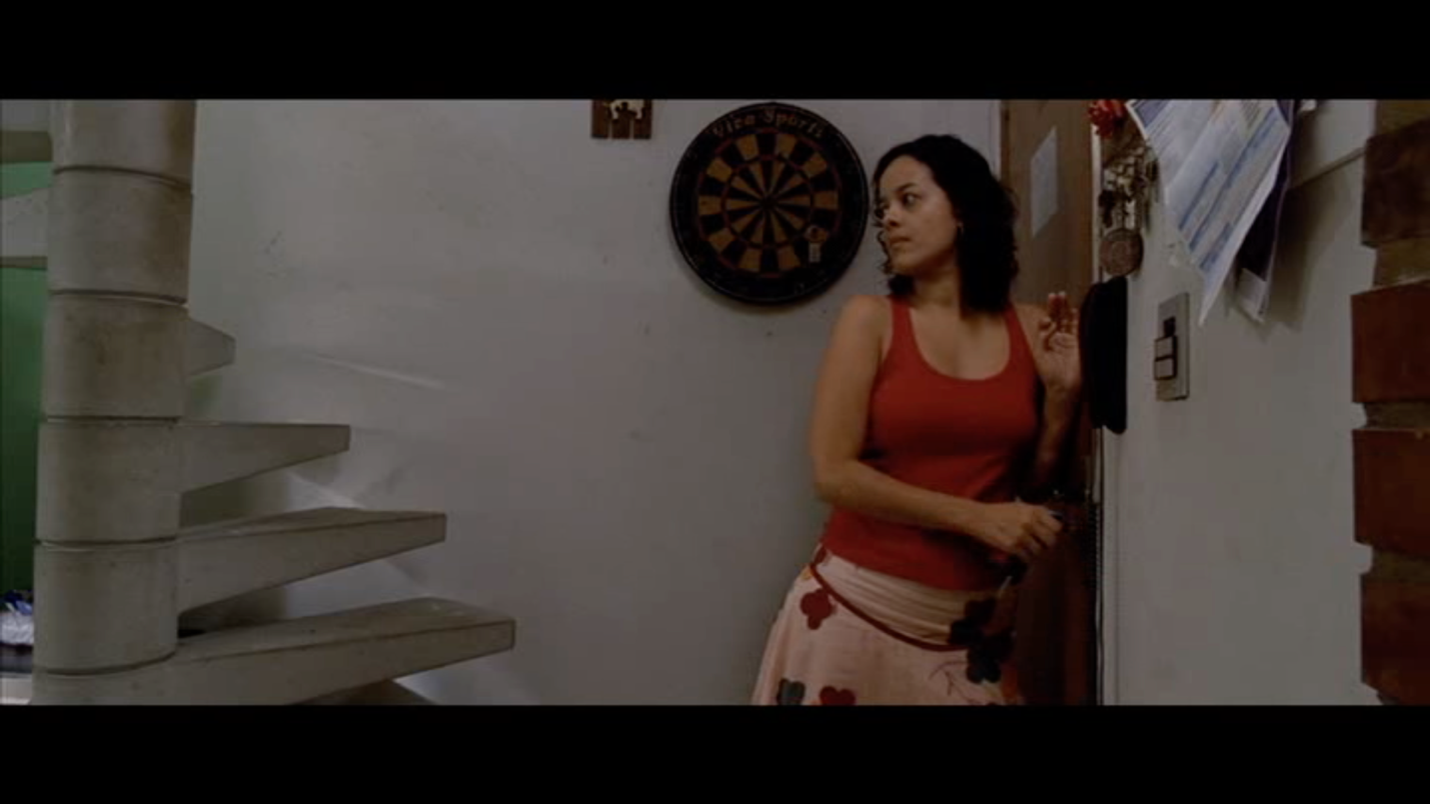
Figure 3. Still from Neighboring Sounds, dir. Kleber Mendonça Filho, 2012.
A tight shot/reverse shot next captures their conversation in the small kitchen, where the housewife is notably anxious (the screenplay tells us that “Bia seems to want to say something, doesn't know how to bring it up”), and the deliveryman seems confused—as is the audience. 47 Are we about to witness a romantic encounter between the bored housewife and deliveryman? Or is something more nefarious afoot? The suspense immediately dissipates, however, when we discover that Bia is simply buying pot from her plug. Not unlike the film’s opening, moreover, the dis-acousmatization of sound plays a significant role in this sequence too. While Bia goes to “get the money” she owes him, we stay with Romulado alone in the kitchen, as the camera frames him in profile, first, in a medium shot, then, following his gaze toward a mechanical, whooshing sound that appears to only get louder. The combination of pedestal down and low-angle shots once again intensifies the sense of suspense, but only to imply that the sound’s origin is a dishwasher, dis-acousmatizing it.
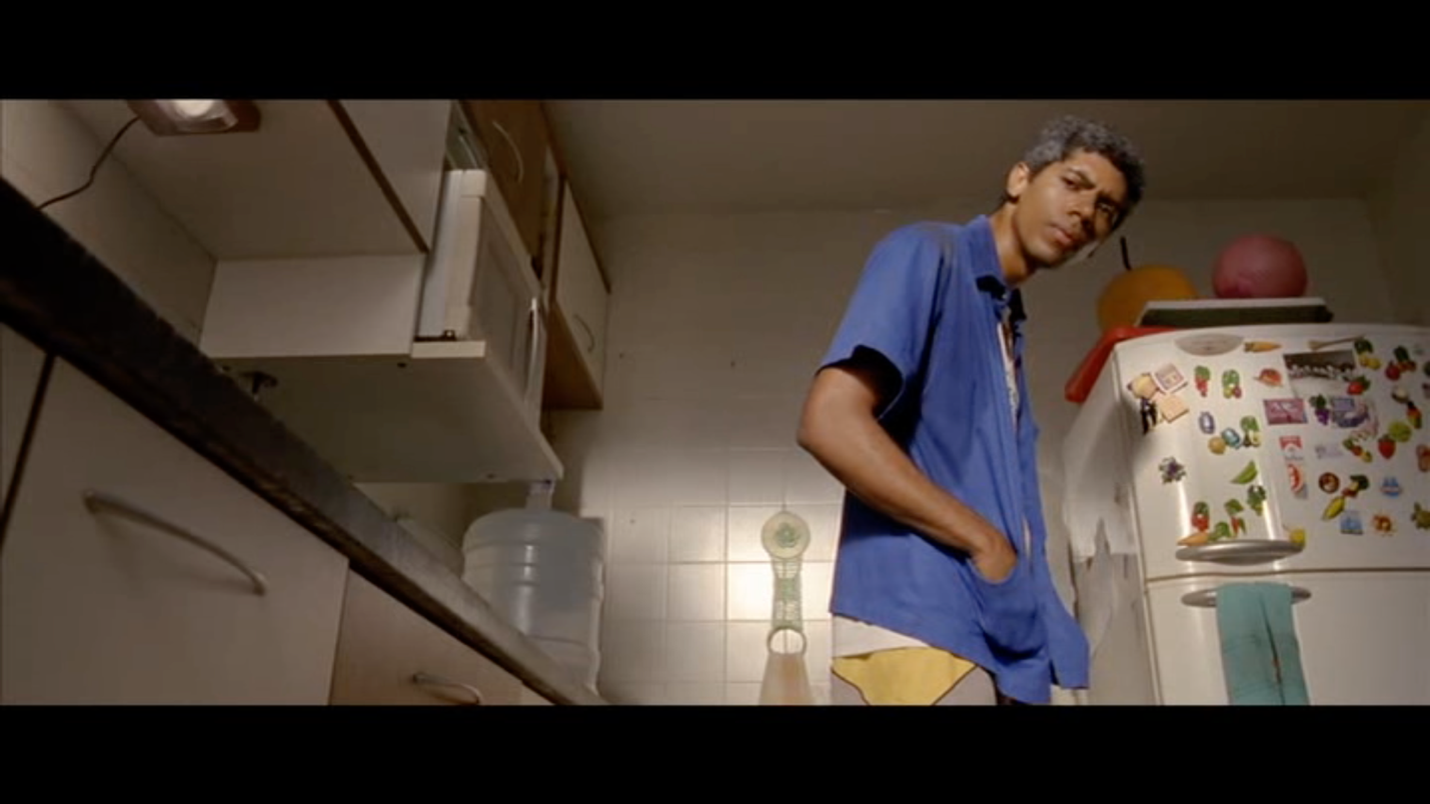
Figure 4. Still from Neighboring Sounds, dir. Kleber Mendonça Filho, 2012.
This use of acousmatic sound is unsettling, exemplifying one of the primary ways in which Mendonça makes use of sound to great effect, though it also culminates in a deflationary gesture. But if the production of suspense gestures toward impending catastrophe only to withhold its realization, this structural motif nonetheless transforms the everyday into the site of latent menace. Once you are attuned to this sense of menace, you cannot help seeing it everywhere in the film, making the minutest of details, the slightest of gestures meaningful. This is apparent right from the beginning, where the man’s sawing can be read doubly—that is, as performing an action that both preserves the system (securing or replacing the bars that protect property) and threatens it (cutting or removing the bars). 48 And it is just as apparent in the scene in João’s apartment when we notice him holding the car stereo in his right hand menacingly, like a brick, while speaking to Sediclei. As Daré Rabello succinctly puts it, “The film’s success . . . can be attributed to several factors, including shrewd glimpses of contemporary life in a big city, in the vein of what Kleber Mendonça calls ‘mundane realism,’ combined with a suspenseful narrative in which agonizing uncertainties remain unresolved.” 49
But while countless critics have been attentive to this precise aspect of the film, most have tended, as we have already seen, to treat its mobilization of dread as an utterly subjective experience, to see only affect where there are social processes involved. Obviously, we feel that sense of paranoia, fear, and all-consuming dread—it would be difficult not to. At the same time, insofar as Mendonça is interested in making a claim about the world his film depicts, intuiting something beyond mere experience, it can’t just be about the way we—or even the characters—feel. Indeed, the filmmaker’s use of dis-acousmatized sound not only affords a certain degree of verisimilitude, making it obvious that we are not dealing with a horror film’s supernatural or otherworldly elements; it also indicates to the viewer the limitations of her immediate response as a source of knowledge—that is, the limitations of her personal feelings. In doing so, Neighboring Sounds activates the viewer’s capacity, as Cronan puts it, “to abstract from its specific subject position,” to make such visual and sonic cues not just a matter of what the viewer feels but rather an opportunity to evaluate the sound itself “in terms of probable causes and effects.” 50 It is as if this pattern were indicating to the audience a mode of abstraction that the audience is meant to apply to the film—including the sequence with which we began. Thus, a critic like Marsh has it exactly backwards when she claims that Mendonça’s film “questions the importance of ‘careful observation’ and, in fact, highlights the failures of visual perception.” For, as we have just seen, its use of dis-acousmatized sound not only invites “careful observation” of the way the film secures the “structural spacing of sonic source, cause, and effect;” this careful tracing of effects back to its source also makes the sound a matter of interpretation—a question of which feelings the artist intended one to have and why, rather than an occasion for an experience. Mediating immediacy, Neighboring Sounds employs this sonic structure not to produce an experience, but to make that experience meaningful.
Brazil Viewed
This carefully constructed refusal of immediacy also begins to explain the presence of the photographs at the beginning of the film and, in turn, how such a refusal involves an attentiveness to film’s medium. To be sure, while the world documented by the black-and-white photographs seems nothing like the world depicted by the film in color, their juxtaposition is clearly intended to draw some kind of connection between the film’s contemporary urban setting and the photographs’ rural setting—a continuity reinforced later by João and Sofia’s trip to visit Seu Francisco on the family’s now defunct plantation. And while the provenance of the black-and-white photographs remains unclear, critic Ismail Xavier notes that they “allude to the history of Brazil’s Northeast from the period of slavery in the sugar mills to the struggle for rural rights, which gained momentum during the period of the Ligas Camponesas” that, “in the second half of the 1950s and early 1960s,” fought to improve working conditions and living standards for sharecroppers, subsistence farmers, and rural workers. 51 This spatial and temporal bridge between these ostensibly disconnected settings suggests a historical continuity, though not so much to suggest that the struggle continues. For, as is well known, the progressive land reforms set in motion by President Juscelino Kubitscheck in response to a growing peasant movement, and accelerated under his successor, João Goulart, were eventually halted by the 1964 military coup, which brutally attacked organized labor in urban centers and rural backlands alike. As Daré Rabello observes, “It’s as if to say that contemporaneity, as we see it, is born out of the defeat of what was imagined, at the end of the 1950s, as the possibility of transformation.” 52
At the same time, while the story Neighboring Sounds aims to tell certainly is how “the past is never dead. It’s not even past,” this same scene also concludes by pointing up the difference between photography and film: where the photographs in the first half of the sequence promise the viewer a more direct view of the past they document, the second half complicates any such view of the present. Consider the dis-acousmatized buzzing sound mentioned a moment ago: while the camera eventually shows us the sound’s source, it is only revealed by a back shot of three children looking on from behind a chain link fence (Figure 5) in the last instance.
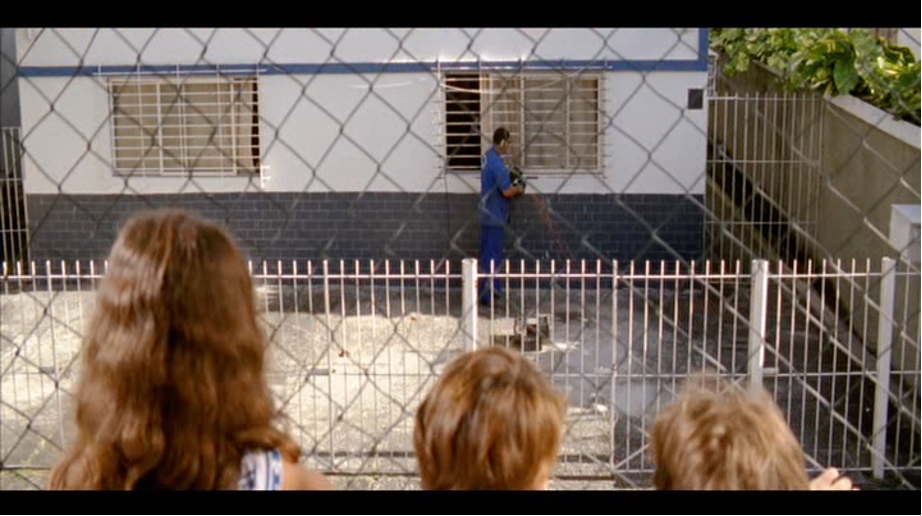
Figure 5. Still from Neighboring Sounds, dir. Kleber Mendonça Filho, 2012.
That is, its source remains slightly obscured or, in any event, gives the viewer the impossible task of viewing the man handling the saw, as it were, simultaneously directly and through the fence. Looking but unable to see everything at once, the viewer’s awareness of watching the film is heightened, though only insofar as the film emphatically refuses any kind of immediate access to the reality its photographic basis indexes.
Mendonça rehearses a similar refusal later, in a sequence where João stands on the rooftop, while speaking with his grandfather, Seu Francisco, on the phone (Figure 6). João is shown in profile, looking out over the city of Recife and, in the wide angle shot that follows, the camera looks out from the rooftop to the cityscape from where dozens of modern apartment buildings rise, only to slowly zoom in on a cluster of smaller, older, and more modest homes in the center.
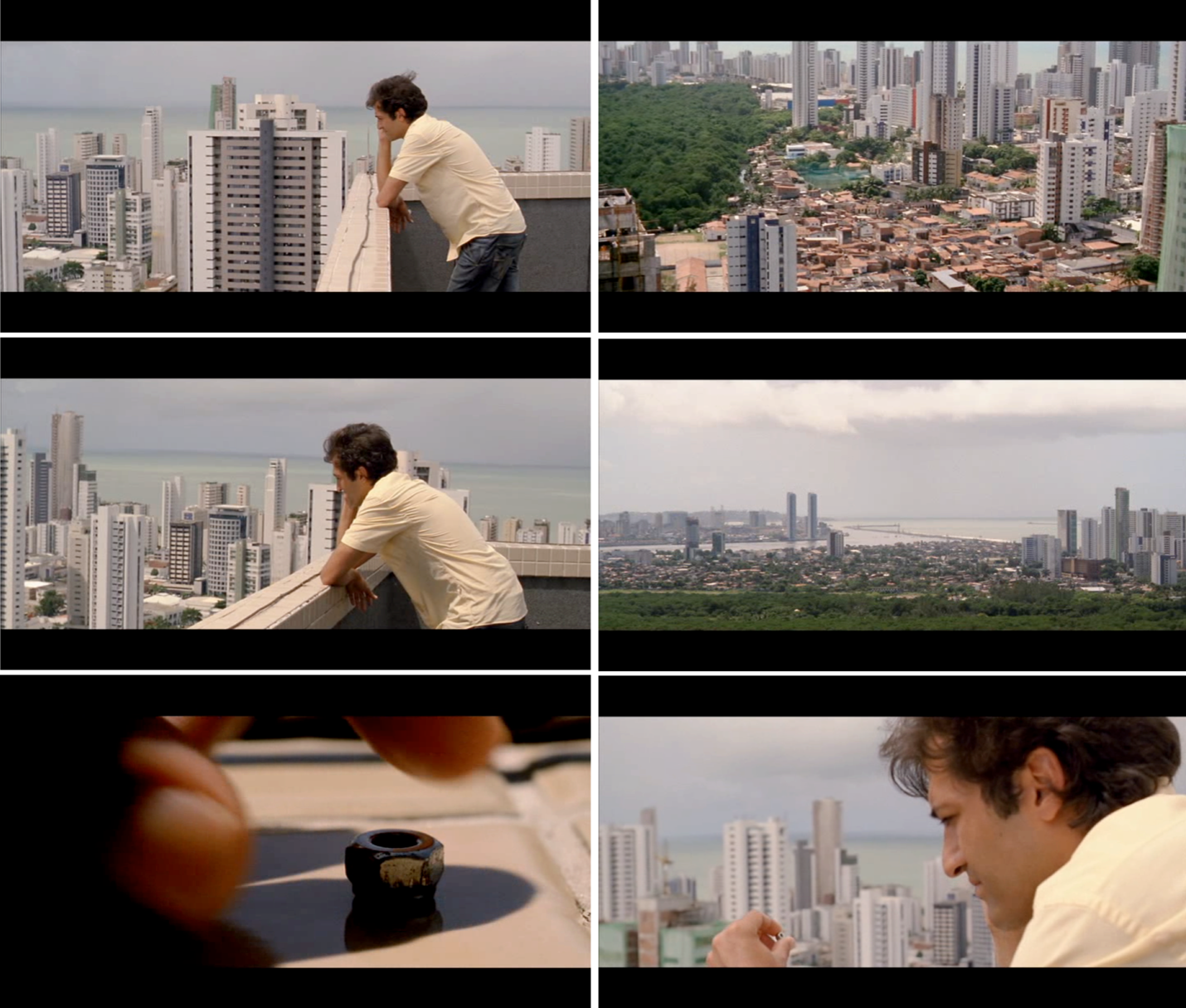
Figure 6. Stills from Neighboring Sounds, dir. Kleber Mendonça Filho, 2012.
This is, presumably, João’s own point-of-view, through which we not only see the consequences of the construction boom of the early 2000s, but are also shown what the young heir views as opportunities for or obstacles to success in this investment climate. And yet, the film itself looks beyond this. For after returning to a medium shot of João in profile, we get yet another wide angle shot of the cityscape, though this time a different view of the city, now oriented toward the bay, even though João has not moved. This immediately raises the question of whether this point-of-view belongs to João. But the camera slowly pans down to a close-up of a metal nut which, at first blurred, comes into focus moments before we see his fingers move into the frame to pick up the nut. The next shot returns to a close-up of João in profile as he examines the tiny object in his hand—a gesture that anchors the camera's perspective as his own. If we had every reason to believe the first point-of-view shot assumed João’s perspective, the second one, functioning as a kind of corrective, suggests the first was never straightforwardly his own. Yet, even as the identification between the camera’s perspective and João’s is confirmed by his picking up the metal nut, this still leaves the question of whose point-of-view we are viewing the city through in the first unanswered. This has the effect of militating against any emphatic identification between what we see and what the character sees in either point-of-view shot. Here too an obstacle is interposed between the viewer’s world and the one appearing on the screen (albeit by way of montage), echoing the rejection of immediacy dramatized earlier by the chain-link fence in the opening sequence. The audience is not so much asked to view the world through João’s eyes as to “view it unseen.”
This last phrase, of course, comes from Stanley Cavell’s The World Viewed (1971), which argues that, with film, we watch the world on screen without being present to it and without it being present to us. But Cavell’s account is relevant to Neighboring Sounds not just because it insists on a similar separation between the world appearing on the screen and our own, but also, and more crucially, because it offers a means to understand why—and against those critics we have already cited—that separation is crucial to the filmmaker’s realist ambitions. Indeed, the argument at the heart of The World Viewed turns upon the question of how film compels conviction in the reality of the images it projects and screens, a question that makes it philosophically significant, moreover, insofar as it invites us to consider how we account for our “conviction in reality” 53 itself. “[T]o deny it is ever reality which film projects and screens” or “to speak of film as providing in general an ‘illusion of reality,’” Cavell observes, “dims the differences in the role of reality posed in painting, in theater, and in film, and it closes out the wish of art to address reality in order to combat, or suspend, our illusions of it.” 54 Film, then, models a way of thinking about reality and our own relationship to it, and does so precisely in ways specific to its medium, whose physical and material basis—according to Cavell—is “irreducibly photographic.” 55
As Cavell notes, the insistence on film’s photographic basis had been central to well-established accounts of cinema like Erwin Panofsky’s and André Bazin’s. But where he agrees with these and likeminded film theorists that its photographic basis means that “film bears a relation to reality unprecedented in the other arts,” so that “on film reality is not merely described or merely represented,” Cavell also insists that “it is not actually present to us either (anyway, obviously not present with us) when it appears to us on the screen.” 56 While film’s physical or material basis binds it to reality, its projection onto a screen separates us from that reality and it from us. For this reason, he ultimately prefers to define the medium of film not as photography alone, but rather as “successions of automatic world projections.” 57 In watching a film, Cavell observes, it “is not so much that the world is passing us by, as that we are displaced from our natural habitation within it, placed at a distance from it.” 58 And this means that even as film’s photographic basis cannot but bear an indexical relationship to our own world, the one we see projected on the screen remains irreducible to our everyday experience of that same world.
The World Viewed conceives of this distance as an inescapable fact of the medium of film, an “automatic” effect, as it were, of its physical or material basis: when we see reality on film, we “view it unseen.” 59 But this fact raises the question of how the viewer might come to know the world itself through film—so much so that “[i]t is as though the world’s projection explains our forms of unknowingness and of our inability to know.” 60 Film, then, can be said to exemplify a kind of skepticism about knowledge within and of the world more generally that, at the same time, finds any number of equivalents in philosophy and art. (He draws parallels primarily to modernist painting.) And yet, Cavell not only believes that film (like painting) can provide the “conviction in reality, the connection with it,” 61 but also maintains that how it reestablishes this connection marks its significance among the arts.
How exactly film goes about providing this conviction, Cavell explains, is by “giving significance to and placing significance in specific possibilities and necessities (or call them elements; I sometimes still call them automatisms) of the physical medium of film.” 62 What he calls “successions of automatic world projections” 63 defines the medium of film, though it alone neither provides the conviction in the reality it portrays nor guarantees its seriousness as art. “Reproducing the world is the only thing film does automatically,” 64 he observes, though, somewhat paradoxically, the mechanisms involved in that reproduction (camera and screen) also create the distance that “necessitates or makes possible the meaningful use of human reality and of nature as such” 65 in the first place. For this reason, such conviction is achieved only by confronting those possibilities and necessities—“elements,” “automatisms,” or supports—that have come to define filmmaking historically. “What gives significance to features of this physical basis,” Cavell writes, “are artistic discoveries of form and genre and type and technique.” 66 Only artistic intention can make film’s physical or material basis meaningful and thereby compel conviction in its reality. In this way, the projection of the world onto the screen is not simply the upshot of film’s indexical relationship to the world, but rather an object of interpretation in a way that our immediate experience of that same world cannot be. Or to put the point another way, if the world projected onto the screen were simply a consequence of an automatic process, then any explanation of why it looks the way it does would amount to nothing more than a causal account of how the mechanisms involved (camera, screen) produced that image. If, in contrast, that world is understood as the realization of an artistic intention, no such explanation could be exhausted by a causal account alone. I am arguing that this effort to lay bare the processes by which film's physical or material basis is rendered meaningful is precisely what animates Mendonça's formal strategies in Neighboring Sounds and his broader preoccupation with genre. And this is illustrated in the distinction between photography and cinema staged in the opening sequence: where the black-and-white photographs simply reproduce the past, Mendonça’s film confronts its origins in a specific medium to produce an aesthetic form inscribed with meaning.
“Movies convince us of the world's reality in the only way we have to be convinced,” Cavell notes, “without learning to bring the world closer to the heart's desire (which in practice now means learning to stop altering it illegitimately, against itself): by taking views of it.” 67 Film bears the potential to present us with an image of the world not as we see it, but rather as it exists. This is precisely the kind of intervention I am arguing Mendonça stages both in the sequences we have just considered and throughout his film. As we noted earlier, critics have largely seen something of the opposite, treating the film's engagement with genre cinema as a means of shortening or overcoming that distance (“to emulate the sensory perspective of those characters”). But this too may tell us something about those conditions under which film is produced today.
Writing in 1971, Cavell already sees a “loss of conviction in the film’s capacity to carry the world’s presence as a new theatricalizing of its images” 68 resulting in a “growing doubt of its ability to allow the world to exhibit itself.” 69 Theatricalizing its images, producing them for its audience, film can no longer take the distance between viewer and world for granted, and now must take over the “task of exhibition” 70 and assert that distance. Four decades later, Mendonça produces Neighboring Sounds at a moment when the few institutions that had created a space at a remove from the market have all but disappeared both in Brazil and beyond—a moment when film is increasingly conceived as an occasion for an experience rather than a demand for interpretation. “An experience is immediately a use value,” Nicholas Brown writes in a related context, “and therefore in a society such as ours immediately entails the logic of the commodity,” 71 and is, in this sense, uninterpretable. A film that offers nothing but an experience is, in the end, nothing but a commodity. This is the picture of society thematized in the film, which, as Daré Rabello observes, “is structured around brief scenes that, by weaving together small stories about the residents of Setúbal Street, capture what life has become under the rule of commodities and its consequences for the psychological well-being of the middle classes” 72—an experience whose origins, moreover, remain unknown to these characters. Yet, Brown also observes that artworks, in contrast, call for aesthetic judgment and interpretation, and thus “sets aside use value even if it cannot do away with it.” 73 When viewed in this light, we can begin to see how Mendonça’s use of those conventions associated with a genre like horror is not so much intended to theatricalize the film as it is to insist on what Cavell calls the “task of exhibition.” That is, Neighboring Sounds ultimately takes up genre to confront those “elements,” “automatisms,” or supports—which today include film’s status as a commodity—to present us with a view of the world rather than immersing us in it. 74 And it is only by confronting those possibilities and necessities of the medium of film, only by producing an aesthetic form inscribed with meaning, that Mendonça produces a film which, in being something more than a commodity alone, can compel conviction in its reality.
Mediating immediacy, Neighboring Sounds employs this sonic and visual structure not to document an experience, but to make that experience meaningful. Brazilian society and the film’s depiction of that society are not the same, and to treat these as homologous would be to treat the film as nothing but a mere document of the world as it is immediately perceived—a homology that Mendonça’s ambitions to visualize the abstractions that shape the experience of millions of Brazilians (the “line” “drawn by history and by society”) must refuse. At the same time, because meaning is unavoidably social, any interpretation must reckon with that structure and its historical development. 75 For this reason, Mendonça can meet his ambitions by making that experience a matter of interpretation—a matter that, because it demands a form of abstraction, cannot be reduced to the viewer's own experience. But this also means that, unlike our immediate responses or personal feelings, interpretations of why the filmmaker employs such sonic and visual structures are either right or wrong—which is just to say that the meaning of the film is normative in a way that one’s experience of that same film cannot be.
Atmospheric Changes
Following Brecht, we might say that claims about Brazilian society are fully available to disagreement or agreement, insofar as the point is not to look at that society differently but correctly. Conversely, claims about someone’s experience are not normative in this same sense: whether the audience experiences a fear similar to that of Mendonça’s characters or not, that experience is neither right nor wrong. So, even as critics acknowledge the role class society plays in Neighboring Sounds, their emphasis on affect ultimately functions to obscure the social and historical causes that, as we have seen, the film aims to make visible, rendering moot its normative claims about the society those same causes give rise to. And what I have tried to show thus far is how Neighboring Sounds draws on stylistic elements of genre cinema to produce a tension that, demanding a form of abstraction is itself a claim about that same society. To understand that claim we might begin by noting that Mendonça came up with the idea for Neighboring Sounds at a moment when, in his words, “Brazil was flying high as a country and society, something I had never witnessed in my lifetime. The Lula years are portrayed in the film as a stable and imperfect society, a Brazil wanting to do well, but still afraid of its own shadow.” 76 The film’s emphasis on dread, fear, and paranoia, then, might strike us as strange. And yet, this is, I want to argue, precisely what makes the film extraordinarily prescient—a prescience it owes to its efforts to make visible the “real social forces” that shape everyday relations. For as the film suggests, the flourishing of rightwing reaction that eventually culminated in Bolsonaro’s victory had already taken root in a social order whose historical development has long “drawn the line” between classes in Brazil.
Indeed, André Singer has shown how the social and historical forces that birthed the reformism at the heart of Lulismo also precipitated its crisis. This reformism succeeded in vastly reducing the number of immiserated Brazilians, though the pathways into the traditional middle class remained out of reach for the overwhelming majority, leaving them with no resources “to escape from an unstable future.” 77 For Singer, then, the point is not that thirteen years of PT rule did not improve the lives of those living in extreme poverty—it most certainly did. But if Lulismo had been born of the labor militancy and trade unionism of the late 1970s and 1980s that fostered a politics that centered the conflict between classes, by the 2000s, it bore a reorientation away from a politics of class conflict. The result, Perry Anderson has shown, is that, “far from doing any harm to the propertied (or credentialed), this was a government that greatly benefited them.” 78 The unprecedented gains on the Brazilian stock exchange Bovespa, high interest rates that translated into significant returns on simple bank deposits, and taxes that remained among the most regressive in the world all point to an environment favorable to moneied interests. “Never has capital so prospered as under Lula,” Anderson notes, adding that “[t]hroughout its rule, the PT’s core strategy had been to expand home demand by increasing popular purchasing power. That was achieved not only by raising the minimum wage and making cash transfers to the poor—the Bolsa Família—but with a massive injection of consumer credit” (103)—the consequences of which we can see everywhere in Neighboring Sounds. In other words, rather than hasten class conflict, PT hegemony sought instead to manage it, pursuing what Singer has dubbed the “ideological dream of . . . integration without confrontation” (297). This also means, as Daré Rabello explains, that, “[t]he accumulation of personal wealth traps those who, lacking community or political ties, are governed by interests dictated by the market and live under the constant strain of a looming threat,” 79 suggesting that the end point of this dream is an extensive and intensive expansion of the market. The point, then, is that the story of Lulismo is not just about millions being raised out of extreme poverty but about doing so without confronting the structure that produces such extreme forms of poverty in the first place.
Any effort to understand that structure, Singer insists, must first reckon with the unique trajectory of Brazil’s incorporation into the world system which, beginning with its foundations as a mercantile-slave society and extending into the present, gave rise to an “incomplete” peripheral capitalist system. This is what sociologist Francisco de Oliveira famously calls the “platypus,” a mix of ostensibly archaic economic arrangements and highly modernized sector of capitalist accumulation that finds no easy equivalent elsewhere. 80 But where those archaic arrangements would typically be read as signs of underdevelopment, Oliveira demonstrated that they were entirely functional to the country’s modern development, driving labor costs down to allow for accumulation in other sectors of the economy, but all without the means to catch up to the core economies. Citing Oliveira, Singer explains that the development of this system demanded the existence of large surplus populations and their conversion into what Marx describes as “a ‘reserve army’ adequate to the reproduction of capital” on the periphery. 81 On this view, the poverty and immiseration of over half of Brazilians is not a sign of “backwardness” or a holdover of a bygone era to be eradicated by modernization; it is what makes capitalist accumulation on the periphery possible. For this same reason, “some of the poor may cease to be poor, but poverty cannot cease to exist.” 82 But this also means that “[o]ne of the peculiar traits of this society is the structural limbo from which the poor can escape (and into which they can fall again) individually, but never as a class.” 83
Thus, it is not the case that the so-called backwardness of Brazil weighs down the modern sector. On the contrary, as Singer puts it, “the limbo functions as the atmosphere from which the modern draws the air it breathes—or better, the labor that feeds it.” 84 This too then begins to explain the resentment of the traditional middle class which, having long benefited from the existence of those immiserated populations from which it drew domestics into informal employment, eventually joined massive mobilizations during the “June Days” (Jornadas de Junho) of 2013. But as Singer also suggests, that discontent had already taken root among a middle-class which, beginning in 2011, began to experience the consequences of a slowdown in economic growth firsthand, including downward class mobility, all of which created a “tense atmosphere in society.” 85 Having “touched a nerve,” Lulismo’s dream of “integration without confrontation” created atmospheric changes that put paid to any kind of collective organization of the “new working class”—yet class tensions throughout society were heightened all the same.
It is worth noting that, apart from the film’s final scene—in which Clodoaldo and his brother kill Seu Francisco, the man responsible for the death of their father and uncle thirty years earlier—the class conflict between characters remains muted in Neighboring Sounds. This is not to say that the film doesn’t depict the poor lashing out against their middle- and upper-class counterparts. As Daré Rabello explains, “[i]n this social structure, the workers’ servility reveals its true face in small vengeful acts.” 86 Consider, for example, the scene in which a parking attendant slyly keys the car of a woman who treats him like a beggar. Everything about the woman, from the ear seeds on which the camera zooms in to the Audi into which she climbs, marks the class difference between her and the attendant, and it is her attitude of class superiority against which the young man reacts. Yet, as Daré Rabello also notes, these acts have “no precise aim or scope,” and instead “are veiled tactics of revenge, in response to accumulated resentments,” so that “their revenge for small, daily humiliations does not presuppose or imply (and how could it?) any project.” 87 Indeed, this point is punctuated by the fact that the car’s white color makes it difficult to discern the scratch he makes (Figure 7). Even more important, however, is the fact that this act, like all the “small vengeful acts” dramatized in the film are undertaken by individuals, not a class.

Figure 7. Still from Neighboring Sounds, dir. Kleber Mendonça Filho, 2012.
Mendonça’s realist ambitions thus reveal this class tension an expression of a social order whose historical development draws the “line” between classes in Brazil. On this view, the sense of paranoia, fear, and all-consuming dread we have been tracing in the film’s use of genre-cinema conventions has a very specific content: a muted class conflict which, in the absence of institutions that might transform class resentment into a collective project, threatens to burst through at any moment, while only finding expression in the form of individual acts of vengeance. As we have already seen, one of the ways in which Mendonça renders this feeling palpable is through his use of ambient sounds which, although quotidian, contribute to the unshakeable atmosphere of dread. Noting a connection between this use of sound and realism, an interviewer asks Mendonça. “Was there an attempt to represent the environment as it was? It seems like you were more interested in engineering something new from a natural register of sound.” Mendonça’s response is telling:
KMF: The thing is, I don’t think it’s a documentarian approach, because what you’re looking at is a stylized representation of realism. My film would probably fit into social realism—you know, if you think in terms of the British New Wave of the ’60s, Ken Loach, those kinds of films. But at the same time, when you look at a movie screen, depending on the kind of film you’re going to watch, you expect certain kinds of images—that’s what we call cinematic. 88
Mendonça identifies two ways of representing society on film: on one hand, a documentarian approach and a stylized representation of realism. The filmmaker chooses realism, recounting that, “I thought it would be interesting to make a film that takes place in kitchens and living rooms, but to shoot it with the feel of 1970s Panavision, knowing that would create this tension between what you see and the situations being depicted.” Tension, as it turns out, is key for Mendonça, and while the same might be said for any number of filmmakers, it also provides a way of understanding what the director has in mind when he refers to his own aesthetic as a “stylized realism.” Indeed, for Mendonça, the decision to give the film a “widescreen treatment,” along with the choices of sounds themselves (what he describes as not just “realistic” but “hyper-realistic”), belong to the cinematic, or the “idea of the cinematic.”
Tension is the name Mendonça gives to what we, following Brazilian literary and cultural critic Roberto Schwarz, might describe as the “aesthetic formalization of a generalized rhythm in Brazilian society,” a “mediating principle, which organizes the elements of fiction and of reality at a profound level, and is part of both.” 89 Which is to say that, by organizing the visual and sonic elements of the film, tension mediates and, in this sense, makes visible the structure that gives rise to the muted tension between classes. Or to put it in slightly different terms, this tension is put in the service of a kind of realism most effectively when the dread the viewer feels is recognized as the result of the relationship between compositional elements.
Mendonça, then, gives us a concrete sense of what this structure is when he notes,
I could’ve done the film in Rio or Salvador or any big Brazilian city. Maybe even Buenos Aires, some other city in Latin America. Who knows? … Maybe I could’ve done the film in Brooklyn, but of course, it would lose a lot of the peculiar cultural details that actually help define the mood and the story. If I really wanted to make a movie about people, and segregation, and class tension, I don’t think it would’ve been impossible to do in some other place, some other country, but ... well, I didn’t. 90
Of course, as the director himself makes clear, what all these cities and neighborhoods have in common with Sebútal, Recife, and Brazil more generally is a class tension. History and society will draw the line, so to speak, in a variety of brutal and volent ways, producing an inequality that the structure of capitalism demands regardless of the kinds of individuals pulling the levers of the global economy and of those views we harbor toward each other. João is an asshole, but inequality is not simply a matter of attitude, and changing the structure that demands it requires something more than a recognition of how we all experience it differently. By producing a “stylistic representation of realism,” however, Mendonça is making a claim about what that structure looks like. As we have also seen, a work of art like Neighboring Sounds can produce such a representation only by positing an alternative to the same market that Daré Rabello sees regulating the lives of characters in the film. Meanwhile, that this structure underlies not just Brazilian society but the asocial sociality of the world more generally, also suggests why we, outside of Brazil, might be equally invested in such a representation of realism. For as Daré Rabello, following philosopher Paulo Arantes, puts it, “[i]n times of the Brazilianization of the world, Brazil provides the center with the image of its own future.” 91 Here, then, we are asked to make a choice—either we agree with the reality of this image or we do not—holding out the possibility of a politics that contemporary theory and criticism everywhere denies.
Emilio Sauri a professor of English and Director of the Center for Humanities, Culture, and Society at the University of Massachusetts, Boston. He researches literature and visual art from Latin America and the United States, and reads these in relation to the development of the global economy from the end of the nineteenth century to the beginning of the twenty-first. He is the author of Imperial Decay: Literature, Autonomy, and the End of Modernization in the Americas (Northwestern University Press, 2026).
Notes:
-
1 Georg Lukács, “Film,” in Lukácsian Film Theory and Cinema: A Study of Georg Lukács' Writing on Film 1913-1971, ed. Ian Aitken (Manchester: Manchester University Press, 2012), 202. BACK
-
2 Stanley Cavell, The World Viewed: Reflections on the Ontology of Film, enlarged edition (Cambridge: Harvard University Press, 1979), 21. BACK
-
3 This essay has benefited greatly from discussions with participants at events hosted by the Center for Film & Media Studies at the University of Cincinnati and the Office of Latino/Latin American Studies (OLLAS) at the University of Nebraska–Omaha, as well as at the FORMA/nonsite workshop in fall 2025. I am also grateful to Ericka Beckman for providing me with an opportunity to discuss a draft of this essay with her class in spring 2026. Finally, special thanks to Steve Buttes and Eugenio Di Stefano for their extensive comments on later drafts. BACK
-
4 O som ao redor [Neighboring Sounds], directed by Kleber Mendonça Filho (2012; New York: Cinema Guild, 2013), DVD. BACK
-
5 I am thinking here primarily of Roberto Schwarz’s readings of Machado de Assis’s novels Memorias póstumas de Brás Cubas (1881; The Posthumous Memoirs of Brás Cubas) and Dom Casmurro (1899). See, for example, his Um mestre na periferia do capitalismo: Machado de Assis (São Paulo: Livraria Duas Cidades, 2000), translated as A Master on the Periphery of Capitalism (trans. John Gledson [Durham: Duke University Press, 2001); and Duas meninas: Uma leitura comparada de Machado de Assis e Helena Morley (São Paulo: Companhia das Letras 1997), translated and included in Two Girls and Other Essays (London: Verso, 2012). BACK
-
6 Aaron Cutler, “Recife Breathes: Klber Mendonça Filho on Neighboring Sounds” in Cinema Scope, https://cinema-scope.com/cinem.... BACK
-
8 Larry Rohter, “In Brazil, a Noisy, Tense Prosperity,” New York Times, https://www.nytimes.com/2012/0.... BACK
-
9 Ivone Daré Rabello, “O som ao redor: Sem futuro, só revanche?” Novos Estudos 101 (March 2015), 170. BACK
-
10 Francisco Russo, “Kleber Mendonça Filho fala sobre O som ao redor, vencedor do Festival do Rio,” Adorocinema, https://www.adorocinema.com/no.... All translations from Portuguese to English are my own unless otherwise noted. BACK
-
13 André Bazin, “The Myth of Total Cinema,” What Is Cinema?, vol. 1, trans. Hugh Gray (Berkeley: University of California Press, 1967), 21. BACK
-
14 Daré Rabello, “O som ao redor,” 161. Daré Rabello’s use of the word “volubility” also connects João’s attitude to the forms of domination exercised by nineteenth-century Brazilian elites via Roberto Schwarz’s reading of Machado de Assis’s As memórias póstumas de Brás Cubas. See Roberto Schwarz, Um mestre na periferia do capitalismo. BACK
-
17 Bertolt Brecht, “Alienation Effects in Chinese Acting,” Brecht on Theater: The Development of an Aesthetic, ed. and trans. John Willett (New York: Hill and Wang, 1992), 92, 98. BACK
-
19 Brecht in Todd Cronan, Red Aesthetics: Rodchenko, Brecht, Eisenstein (Lanham: Rowman & Littlefield, 2022), 110. BACK
-
21 Cronan, Red Aesthetics, 111, (emphasis in original). BACK
-
24 Karl Marx, Grundrisse, trans. Martin Nicolaus (London: Penguin Books, 1993), 101. BACK
-
25 André Singer, O lulismo em crise: um quebra-cabeça do período Dilma (2011–2016) (São Paulo: Companhia das Letras, 2018), 17. BACK
-
27 Cecília Mello and Fernanda Santos, “Reckoning with the Future: Fear, Resentment, and Social Monsters in Neighboring Sounds,” Brazilian Horror Cinema in the Twenty-first Century: Neo-Fascism, Disaffection, Resistance, ed. Stephanie Dennison and Laura Loguercio Cánepa (Boydell & Brewer, 2025), 75. BACK
-
32 Comparing Bolsonaro’s populism to Trump’s in 2019, Perry Anderson noted that “Racism, of course, is an issue, to which Bolsonaro like Trump has made covert appeals, and whose violence in the practices of the police he will encourage. But unlike Trump, he won a large black and pardo (mixed) constituency in the polls, and is not likely to risk this by anything approaching an equivalent of white supremacy or backlash rhetoric in the North Atlantic” (Brazil Apart: 1964–2019 [London: Verso, 2019], 190). While it is beyond the scope of this essay, it is worth noting that the demographics of the electorate that voted Trump into office in 2024 were significantly different. BACK
-
33 Jack A. Draper III, “‘Materialist Horror’ and the portrayal of middle-class fear in recent Brazilian film drama: Adrift (2009) and Neighboring Sounds (2012),” Studies in Spanish and Latin American Cinemas vol. 13, no. 2 (2016): 123. BACK
-
38 Leslie L. Marsh, “Reordering (social) sensibilities: Balancing realisms in Neighboring Sounds,” Studies in Spanish & Latin American Cinemas vol. 12, no. 2 (2015): 142. BACK
-
43 Consider the scene with which we began. For Marsh, “This moment is notable for its treatment of a subtle social transgression,” because, as she reminds us, “Service workers (cleaning ladies, doormen, security guards and others) are expected to know their ‘place’ … and not transgress invisible social lines” (148). But João, she insists, “shows a great deal of social flexibility and does not demonstrate an apparent desire to uphold past social hierarchies” (147). The owner’s experience abroad working late hours at a bar in Germany, according to Marsh, “affords him a greater degree of sympathy” for his empregada’s son, suggesting that João “understands what it means to be exhausted during the day” (148). In brief, what Marsh describes as the wealthy young man’s sympathetic attitude toward the poor kid effectively allows him to cross longstanding social lines, making him, in Marsh’s words, a “model for cross-class collaboration.” (148). As we have already seen, however, close observation reveals the degree to which several details, while understated, suggest otherwise. BACK
-
44 Here we need only mention the director’s expressed admiration for John Carpenter, who he has cited as a major influence, while scattering allusions to films like The Prince of Darkness and Assault on Precinct 13—as well as to the director himself—throughout all his films. BACK
-
45 Brian Kane, Sound Unseen: Acousmatic Sound in Theory and Practice (Oxford: Oxford University Press, 2014), 3. BACK
-
46 Kane, Sound Unseen, 157-59.There much more to say about Kane’s reading of the history of acousmatic sound not just in film but in literature, sound studies, and philosophy, including the ways in which efforts to secure certainty about the sonic source, cause, and effect leads to two possible reductions in sound studies and philosophy: “On the one hand, there is a the drive to secure certainty by discovering the material source of acousmatic sound … and seeing the source in all of its nakedness. On the other hand, there is the drive to secure certainty by bracketing everything that is inessential to encounter the sound object in all of its absolute and essential detachment” (159). As he suggests, each of these might be understood as efforts to treat acousmatic sounds as heteronomous or autonomous respectively, though, as he shows in a brilliant reading of Kafka’s story “The Burrow,” it isn’t simply a matter of choosing one or the other. BACK
-
47 Mendonça, O som ao redor, screenplay, in Kleber Mendonça Filho, Três Roteiros: O som ao redor, Aquarius, Bacurau (São Paulo: Companhia das letras, 2020), 82. BACK
-
48 Jennifer Ashton was the first to point out this ambiguity to me. BACK
-
51 Ismail Xavier, “Prefácio: Documentando processos de criação,” in Mendonça, Três Roteiros, 17. BACK
-
57 Cavell goes on to explain, “‘Succession’ includes the various degrees of motion in moving pictures: the motion depicted; the current of successive frames in depicting it; the juxtapositions of cutting. ‘Automatic’ emphasizes the mechanical fact of photography, in particular the absence of the human hand in forming these objects and the absence of its creatures in their screening. ‘World’ covers the ontological facts of photography and its subjects. ‘Projection’ points to the phenomenological facts of viewing, and to the continuity of the camera’s motion as it ingests the world” Cavell, World Viewed, 72–3. BACK
-
71 Nicholas Brown, Autonomy: The Social Ontology of Art Under Capitalism (Durham: Duke University Press, 2019), 49. BACK
-
74 I am indebted to Melissa Macero for this distinction between a kind of horror film that aims to immerse its viewer and one that refuses such immersion. As Macero shows in her doctoral dissertation, “Beyond the Scare Factory: Aesthetics, Horror, and the Working Class” (PhD dissertation, University of Illinois at Chicago, 2023), we might conceive of horror films as pursuing two distinct, though not entirely mutually exclusive, aims. On one hand, there are those conventions—like jump scares and gore—that aim, above all, to solicit a response from the audience, who, jumping out of their seats, experience a certain kind of surprise, shock, or terror. The point of the horror film, then, is to create a particular kind of experience. On the other hand, Macero identifies a second kind of horror film, one that “does not avoid identification” but rather “works the question of identification into its very structure and by so doing distances itself” (19) from the kind of immediate, visceral identification solicited by the first type. See especially Macero's brilliant reading of Kubrick's The Shining (a film which, as we have already seen, functions as a kind of touchstone for Mendonça). It should also be noted that, for Macero, the US horror films of the 1970s and 1980s are, above all, films about the dispossession of the middle class—a reading that Mendonça appears to confirm in his own story of middle-class horror. BACK
-
76 Kleber Mendonça Filho, “Introdução: Como está o filme?” Três Roteiros: O som ao redor, Aquarius, Bacurau (São Paulo: Companhia das letras, 2020), 14. BACK
-
78 Perry Anderson, Brazil Apart, 1964–2019 (London: Verso, 2019), 74. BACK
-
80 See Francisco de Oliveira, A crítica àrazão dualista / O ornitorrinco (São Paulo: Boitempo, 2003); and Francisco de Oliveira, “The Duckbilled Platypus,” New Left Review 24 (Nov.–Dec. 2003): 40–57. See also Roberto Schwarz’s “preface” to the same article: “Preface with Questions,” New Left Review 24 (Nov.–Dec. 2003): 30–39. BACK
-
88 Ryan Sheldon, “The Sound of Surveillance,” BOMB Magazine, https://bombmagazine.org/artic...., my emphasis. BACK
-
89 Roberto Schwarz, “Objective Form,” trans. John Gledson, Two Girls (London: Verso, 2012), 23. BACK
-
91 Daré Rabello, “O som ao redor,” 163. See also Paulo Arantes, “A fratura brasileira do mundo,” in Zero à esquerda (São Paulo: Conrad Editora do Brasil, 2004), 25–77. BACK