Bodies and Breath: Brazilian Experimental Poetics of the 1950s
The late 1940s through early 1950s saw a global reconfiguration of artistic practices after the exhaustion of interwar avant-garde paradigms. 1 In Brazil, however, this interval is often overshadowed by the dramatic aesthetic ruptures that bracket it: the 1922 Semana de Arte Moderna and 1930s nation-building vanguards, on the one hand, and the polemical declarations of Concretism and Neoconcretism in the latter 1950s and 1960s, on the other. 2 Already in 1947, critic Lourival Gomes Machado diagnosed Brazil’s midcentury aesthetic impasse in terms of an emergent artistic generation that “does not offer any discrepancy in relation to its immediate predecessors.” 3 He attributed this stagnation to the “repression of freedom and imposition of standards” under the authoritarian Estado Novo (1937-45). 4 If Machado’s diagnosis framed midcentury aesthetics in terms of Estado Novo’s cultural standardization, later critics transposed this impasse from authoritarian constraints to a more general aesthetic stasis. In 2013, critic Paulo Henriques Britto similarly contrasted the “nation-building” literary efforts of the 1920s and 1930s to an aesthetic “lull of sorts [at] midcentury.” 5 While these accounts describe stagnation, this was instead a moment of reorientation, in which aesthetic criteria were being reformulated. In fact, this period is better understood as a time of aesthetic flux.
The critical debate and formal experimentation of the 1940s were due, in part, to a generational turnover. In 1944, for example, emerging dramaturge Abdias do Nascimento requested the endorsement of writer Mário de Andrade—a canonical figure of 1920s and 1930s modernism—for a new experimental Black theater group. 6 Andrade declined, and he died the following year, leaving unresolved this attempted passing of the torch. Nascimento went on to found the Teatro Experimental do Negro (TEN), which developed explicitly Black performances that rejected lyric interiority in favor of ritualized chant and percussive instrumentation rooted in Black ritual. Black poets such as Solano Trindade likewise worked across poetry and theater, producing sonically driven, performative texts. Visual artists, too, moved away from older concerns with representational national imaginaries. They debated the trajectory of modern art (“do figurativismo ao abstractionismo” in 1948-49); they disputed which manner of art (and which generation of artists) should represent Brazil at the 1950 Venice Biennale; and they proclaimed avowedly vanguard groups such as Ruptura and Frente in the early 1950s. 7 In poetry, writers of the so-called Generation of '45 saw Mário de Andrade’s death as a closure of an era in Brazilian literary history, and asserted “a new poetry in Brazil,” albeit one of elevated, precise language. 8 Still younger poets reacted against even those more recent poetics. In 1952, a group of São Paulo law-students founded the Noigandres journal of criticism and poetry, adopting new approaches to visual and aural rhythms, while Rio de Janeiro writer Ferreira Gullar began experimenting with poems organized around temporality, and perceptual activation. Across theater, poetry, and visual arts, late 1940s and early 1950s practitioners shared a core formal concern: how to compose perception itself after the foreclosure of earlier national imaginaries.
This essay thus reads the late 1940s and 1950s as a transitional phase in which artists across media actively experimented with embodied approaches to poetics, and with breath as key to formal organization. By “poetics” I do not mean a literary genre, but a set of compositional principles that structure sensory experience. The approach is often performative: language is scored, recited, and enacted; poems circulate beyond the page, appearing in galleries or staged as musical performances. If these works were intermedial, this was less a rejection of medium specificity than a relocation of form into embodied performances centered on activating the breath. What links otherwise disparate practices is not a shared style, medium, or political program, but a common compositional problem: how to re-ground avant-garde form after the erosion of nationalist modernisms, without retreating either into expressive immediacy or abstract universalism. And, in addressing these compositional challenges, critical considerations of the body became central, with divergent tactics: was the artist primarily a perceptual subject, a calculating intelligence, or a bearer of historical memory? In place of consolidating a stable style, these practices pursued forms of perceptual immediacy that unfolded in time and implicated the breathing body.
In this essay, breath is interpreted not as a metaphor or motif, but a structuring principle that links embodiment and form. Breath is a material condition of composition, particularly in poetry and performance, where breath organizes rhythms and structures or interrupts flow. Secondly, breath shapes corporeality in post-Vargas Brazil, with Afro-Brazilian embodiment no longer a romantic metonym for the nation. Recent Black Studies theorists have taken breath as a historically contingent activity. As Fred Moten, Christina Sharpe, and Ashon Crawley have argued, breathing is unevenly distributed across racialized bodies, not neutral phenomenological givenness. 9 Black experimental poetics of Brazil thus took breath as a material and temporal condition for organizing form at the same time that proto-Concretist poets sought de-territorialized modes of composition that drew on Husserlian accounts of embodied perception. 10
In this reinterpretation of midcentury Brazilian poetics, the stakes are twofold. One, Brazil exemplifies a broader adoption of intermedial aesthetics to address questions of the body during the late 1940s and 1950s. Across hubs of experimentation—Black Mountain College in the United States, Gutai in Japan, Lettrism in France, Black Orpheus in Nigeria, and Fluxus internationally—artists dissolved inherited boundaries between media in order to reorganize perception through rhythm, duration, and embodied attention. 11 This essay thus builds on recent re-evaluations of global modernism by scholars such as Pedro Erber and Chika Okeke-Agulu, which reject the alignment of abstraction with disembodiment and deterritorialization.
For Brazilian art history, this reinterpretation unsettles the divide between socially-engaged, racially-marked practices and allegedly autonomous formal experimentation, revealing instead shared concerns with mediation and embodiment. Instead of narrating mid-century Brazilian art through successive vanguard ruptures, this essay aligns with the arguments of Maria de Fátima Morethy Couto and Annateresa Fabris in relation to Brazilian postwar art, emphasizing a modernidade com sotaque (“modernity with an accent”) of localized aesthetic experimentation whose stylistic chronologies evince a mismatch with normative European ones. 12 The late 1940s and 1950s in Brazil thus emerge not as an aesthetic lull, but as a moment in which competing models of embodiment and formal strategies coexisted without resolution. With allegorical, lyric, and nation-centered frameworks no longer convincingly driving aesthetics, artists reconceived form itself as a process. By the mid-1950s, too, experiments in embodied composition would find their theoretical counterpart in a critical language that treated perception itself as a formal problem, rather than a neutral conduit for meaning.
Practices often treated separately should instead be understood as parallel responses to this condition. These practices do not cohere into a singular style or political commitment. Instead, their compositional experiments turn away from allegory and lyricism, toward form produced through embodied operations structured around breath. The Black poetics of Abdias do Nascimento and Solano Trindade, alongside emerging experiments that would later be associated with Concrete poetry and visual art, and theories of embodiment by Mario Pedrosa, turn from lyric-allegorical mediation toward composition as an operation unfolding in time. As the representational logics of nation-building modernism gave way, form no longer primarily functioned to metonymically represent a national body. Instead, form was produced through bodily procedures rooted in the breath: rhythm, duration, perception.
Vanguard Black Poetics at Mid-century
In midcentury Brazil, Black poetics did not simply eschew representation of the body, but sought to reorganize perception through the breath. Still, these strategies developed in a context of multiple strands of Black poetics. In 1945, Brazilian writer Mário de Andrade composed the 334-line lyric poem Meditação sobre o Tietê, staging one of São Paulo’s preeminent rivers as urban ruin and historical witness. 13 The river becomes a character in the nation’s history, from the colonial era to the turbulence of the Vargas years.
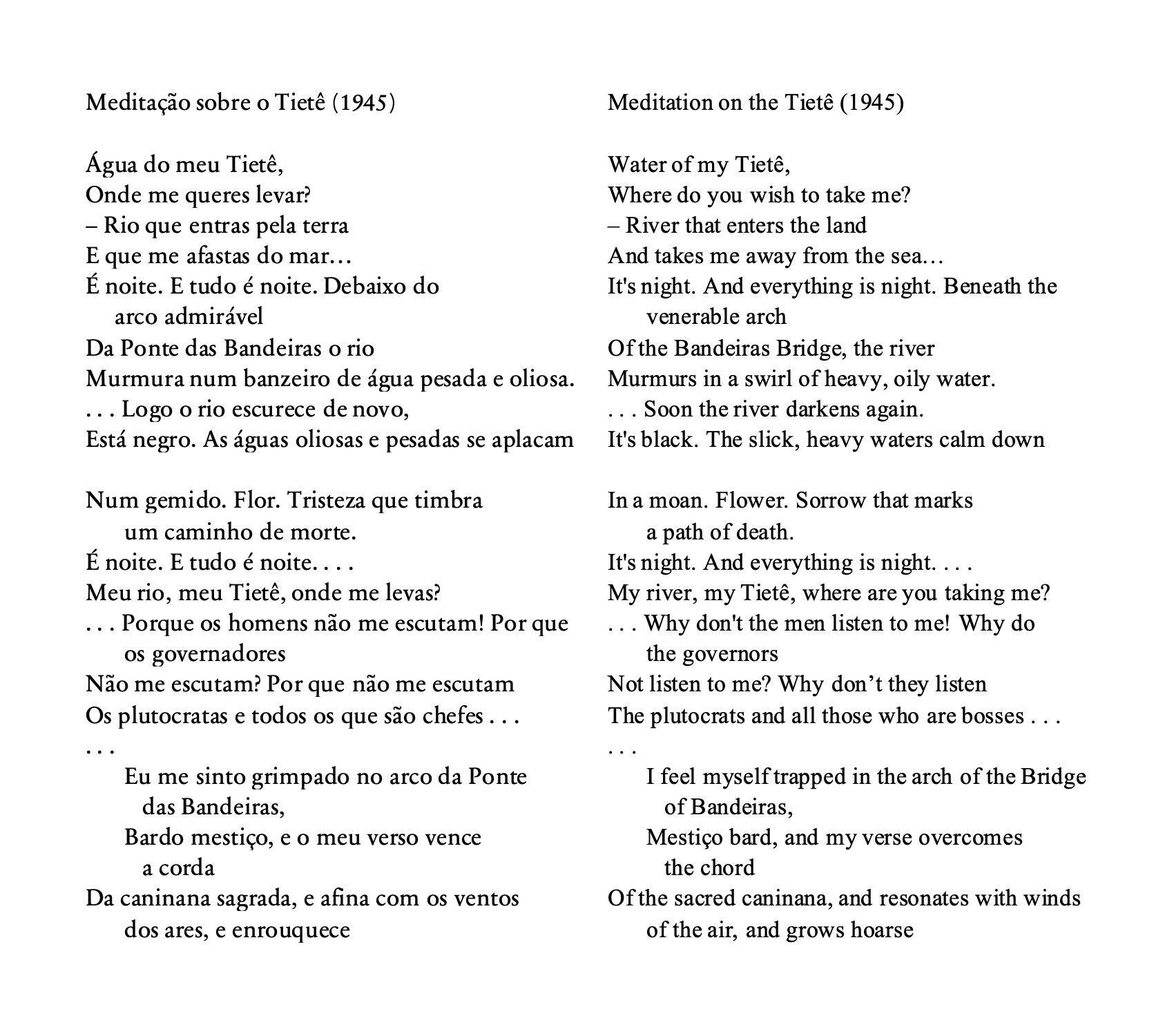
Figure 1: Mário de Andrade, “Meditação sobre o Tietê” (1945), excerpt
The opening lines narrate a move from the coast into the interior, with the reference to “Bandeiras Bridge” and even the Tietê itself marking an origin point for the bandeirante (frontiersman) incursions that tethered Brazil’s colonial expansion from São Paulo. 14 These excerpted lines also subtly reference both Indigenous and Afro-Brazilian histories. The word banzeiro can signify both an Amazon River turbulence and banzo, the despair of enslaved African-descendent Brazilians captured into slavery—echoing Castro Alves’ 1868 epic poem “O Navio Negreiro,” a canonical lament of Africans captured into slavery and trafficked to the Americas. 15 But in place of Alves’ epic narration, Andrade called forth moans, murmurs, and bellows (“gemido,” “murmura,” “muge”) to portray Tietê River as an expressive body, evoking both the turbulence of the Middle Passage and São Paulo’s fraught modernity. 16 Andrade’s references to plutocrats and politicians suggest the recent political turmoil of the Vargas years, while later lines center his own position as an African-descendent (mestiço) writer and invoke Indigeneity through the Amazonian cosmology of the caninana snake motif. 17 As Esther Gabara describes, this “modernist sublime achieved through an accretion of historical moments” was a longstanding poetic strategy for Andrade, already present in his canonical novel Macunaíma (1923). 18 In Meditação sobre o Tietê—his final major poetic work—Andrade interwove Amerindian and Afro-diasporic motifs into a critical lyric of Brazilian history. Although centered on São Paulo, this enlarged account registered Indigenous and Afro-Brazilian survivance as constitutive of Brazil’s collective body.
When Abdias do Nascimento approached Andrade in 1944 to support a new Teatro Experimental do Negro, and Andrade declined, this was not merely a generational handoff, but a formal and compositional rupture: the passing of an older modernism rooted in allegory and epic narrative, and the emergence of Afro-Brazilian experimental poetics grounded in embodiment, ritual, and performance. Where Andrade framed Afro-Brazilian culture within a critical project of nationalist synthesis in lyric form, both Nascimento and Solano Trindade envisioned a poetics grounded not in allegorical incorporation but in Black protagonism. Recent scholarship has underscored how modernismo frequently absorbed Black figures as landscape or symbol rather than as formal agents. 19 This tension shaped the younger generation’s ambivalent relation to Andrade and to Brazilian modernism more broadly. In theater and writings, Trindade and Nascimento thus sought to reclaim ritual and embodiment as the basis of avant-garde composition, whether with Afro-Brazilian cosmologies and practices such as candomblé and macumba, or with the rhythms of urban contemporaneity, providing structuring principles for avant-garde practice. This turn to embodied ritual does not align with a universalist phenomenology in which bodily perception is assumed to be equally accessible to all subjects. Instead, embodied experience is contingent, with the capacity to breathe, endure, and appear remaining conditioned by race, labor, and citizenship. In this sense, Black Brazilian experimental poetics reframed embodied perception itself as a formal problem.
Although Abdias do Nascimento and Solano Trindade met in late-1930s Rio de Janeiro, they remained on parallel tracks. Trindade was rooted in Brazil, working primarily through poetry, recitation, and leftist organizing associated with Black and communist milieus. His early work emphasized collective address and popular rhythms, a mode of practice that would only later coalesce into the Teatro Popular Brasileiro. Meanwhile, Nascimento spent the early 1940s in dialogue with a group of Brazilian and Argentine writers in Rio de Janeiro, Hermandad de la Orquídea, seeking to develop trans-Latin American intellectual networks. 20 Nascimento struck upon theater as a potent field for political action during an Orquídea trip to Lima, where he saw the Argentine Teatro del Pueblo’s 1941 production of Eugene O’Neill’s The Emperor Jones starring a white Argentine actor in blackface. 21 Nascimento returned to Brazil in 1943 intent on founding a theater troupe, only to find that he would need to serve prison time for an old offense from his time in the military; he was part of the prison theater group Teatro do Sentenciado prior to his release in 1944, when he contacted Mário de Andrade as part of his turn toward what would become the Teatro Experimental do Negro (TEN). 22
From the start, TEN approached theater through compositional problems of rhythm, sound, and bodily coordination, not only representational drama. Still, conventional drama formed a core pursuit for the group. As Tshombe Miles and Luís Madureira explain, Nascimento aspired to a Black Diasporic modernism, with TEN conceptualized as a Brazilian counterpart to the Harlem Renaissance or Afro-Caribbean Négritude. 23 Explicitly rejecting theatrical conventions where Black actors played only subservient roles—chauffeurs, maids, servants—Nascimento foregrounded Black protagonism. Yet over time, embodied practices went beyond representation to increasingly organize the theater’s formal approach.
TEN’s earliest performance came in 1944, when its members performed as the quilombo chorus in a student production of Stela Leonardos’s Palmares, concerning the famed colonial-era dissident maroon community led by Zumbi. 24 The TEN’s first standalone production was a one-day performance of U.S. author Eugene O’Neill’s The Emperor Jones at the Teatro Municipal in Rio de Janeiro in May 1945, followed by another staging in July 1945.
Where Palmares marked the TEN’s interest in specifically Afro-Brazilian stories, The Emperor Jones’s narrative of a Pullman Porter turned tragic Caribbean demagogue evinced Nascimento’s desire for the TEN to be understood as serious theater with an international reach. Nascimento’s strategy becomes clearer in light of white theater critic Henrique Pongetti’s racially dismissive preview:
Is there an intellectual elite in Rio capable of translating the spirit of a play by O’Neill or Langston Hughes onto the stage? . . . I have spoken with [the TEN] organizers, and I have no doubt. They are serious and enlightened spirits who do not boast of the low musicality of the favelas, nor of the easy poeticization of their miseries and sorrows. 25
Written even before TEN’s staging of The Emperor Jones, this prominent white critic’s evaluation made success contingent on the perceived erudition of the TEN organizers. It is thus unsurprising that Nascimento chose O’Neill’s renowned work to launch into Brazil’s national theatrical circuit. Moreover, in what was perhaps a direct rejoinder to the theater critic, the first staging of The Emperor Jones was preceded by a dramatic reading of three poems by Afro-descendent authors: Brazilian writer Aladir Custódio’s “Menina do Morro,” Cuban poet Regino Pedroso’s “Hermano Negro,” and—pointedly—U.S. author Langston Hughes’s “Always the Same,” marking the troupe’s international scope, erudition, and insistence on dialogues across poetry, performance, and theater. 26
In the 1945 staging of The Emperor Jones, Black poetics were evident but subtle and non-local. Following O’Neill’s stage directions for ominous drumbeats, Brazilian reviewers highlighted the “relentlessly pulsating tantãs” as the performance’s affective core. 27 Here, breath operates not as metaphor, nor as a signifier of interiority, but as a material hinge between body and perception: drumbeats regulate respiration, pacing, and attention, aligning spectators’ bodies with the unfolding action. In this sense, breath functions not simply as a motif but as a formal structure, organizing duration, attention, and collective rhythm. This approach aligns with phenomenological accounts of lived temporality, but remains inseparable from the racialized conditions under which breath is regulated, intensified, or constrained in midcentury Brazil. Breath structures how the work is experienced rather than what it represents.
This critical framing shifted over the following decade. By the time of the TEN’s 1953 revival of The Emperor Jones—broadcast on Television-Tupi—critics described the play in explicitly fetishizing and racialized terms that emphasized African origins for Brazilian practices.
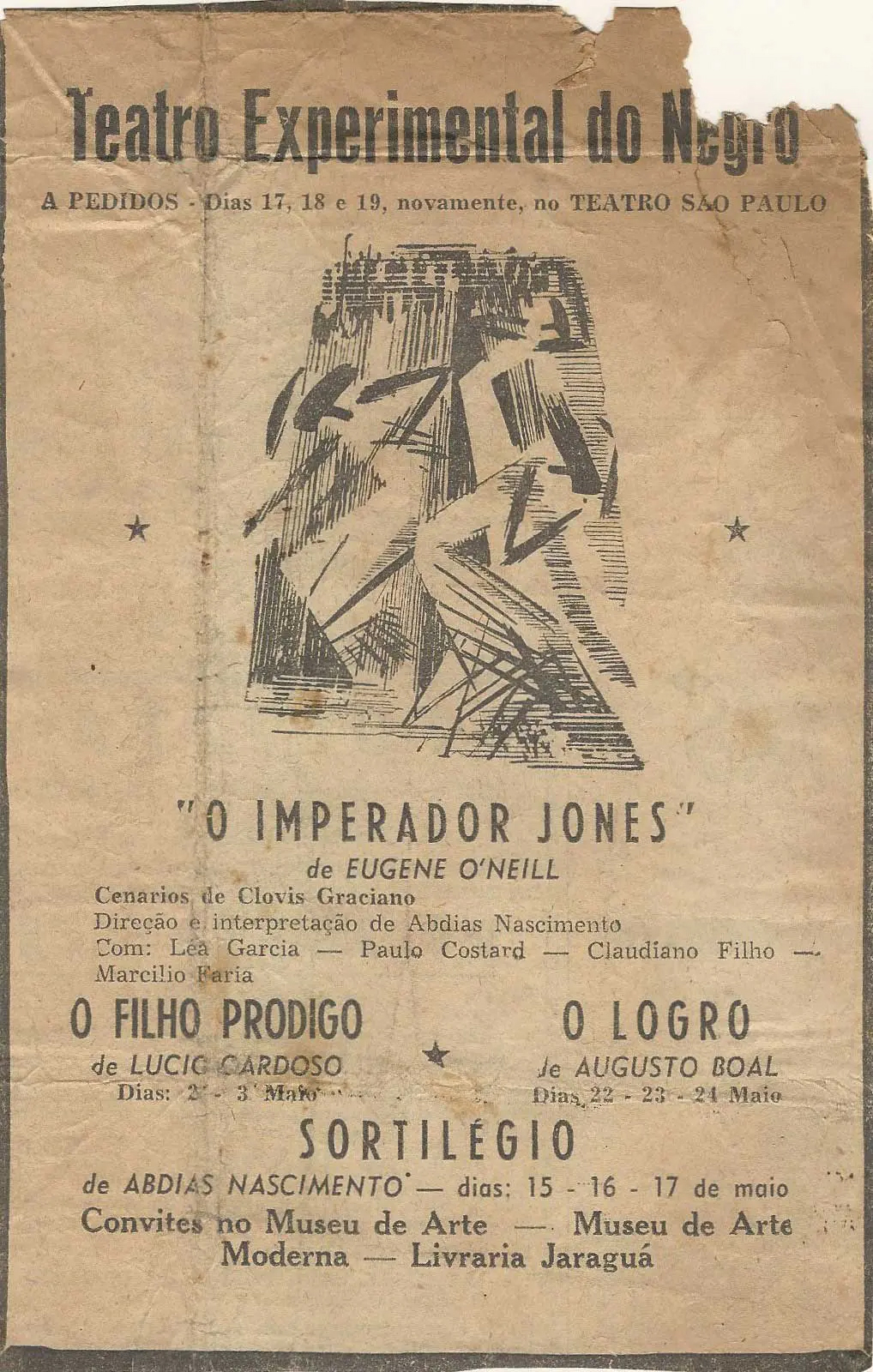
Figure 2: Teatro Experimental do Negro, O Imperador Jones (1953), poster
“The montage, its fascination of mystery and the music, its rhythms and syncopations of the tantã, of the tambores of black sorcery [feitiçaria], as if born from the very bowels of the African land, recreated the deepest meaning of the play,” writes one reviewer. 28 Despite the main character’s origins in the U.S. and the play’s primary setting in an unnamed Caribbean locale, this primitivizing mention of Africa is also evident in accounts of the drama’s use of musical instruments. While tantãs are associated with samba—racially marked yet embraced as a national Brazilian tradition—the tambores mentioned in the 1953 review are more closely linked to Black syncretic practices, especially candomblé. If, in 1945, The Emperor Jones had signaled erudite modernism by a Black troupe, the early 1950s saw it recoded as Afrocentric expression.
What happened between 1945 and 1953?
One hinge point in this transition was the TEN’s commission and staging of Joaquim Ribeiro’s Aruanda (1946, staged 1948). Though written by a white folklorist, the play’s structure centered on candomblé cosmologies in an imagined Bahía, and included percussionists, singers, and dancers whose activities were as much a part of the action as the actors’ dramatic speeches. As scholar Pedro Henrique Corrêa Victor asserts, “despite not materializing the terreiro de candomblé in its scenography, [the play still] refers to the place.” 29 Still, newspaper reviewers from 1948 tended to characterize the play as national or regional folklore rather than as specifically Afro-Brazilian; in one review, there are no words referencing Black or African-descendent aspects of the play, save to name the theater group. 30 Although Nascimento and the TEN had foregrounded Black Brazilian practices already in the late 1940s, these dimensions were routinely muted or neutralized in press coverage. This slippage, from modernist theater to Brazilian folk culture to Afro-Brazilian ritual, signals a broader shift in the critical field rather than a sudden turn in TEN’s practice: when rhythmic and corporeal forms moved too far from erudite theatrical norms, they became legible only as folklore or “Africa.”
Yet at the same time, Nascimento and others were involved in an efflorescence of Black cultural and political activity. In 1948, Nascimento founded the newspaper Quilombo, centered on Black Brazilian arts and culture. Nascimento was also active in the Conferência Nacional do Negro, held in Rio de Janeiro in 1949, and the Congresso do Negro Brasileiro, organized by TEN and held at the Associação Brasileira da Imprensa in Rio de Janeiro in 1950. 31 The shift from 1945 to 1953 thus exposes a limit of Brazilian modernism: Black embodied practices were legible as modernist form only when evacuated of ritual specificity, while Afro-Brazilian ritual was interpreted as folklore rather than formal experimentation. 32 TEN’s theatrical work emerged in dialogue with broader efforts to promote Black cultural autonomy in mid-century Brazil.
More radical still was Nascimento’s own Sortilégio: Mistério Negro (1951), which marks Nascimento’s most explicit articulation of composition through breath, where rhythm, silence, and invocation replace narrative progression. Though censored in the early 1950s and only performed later, the play shows Nascimento working to assert an Afro-Brazilian structuring principle through stage directions that include musical notations and invocations. Sortilégio is a modern-set play that opens in a bosque high on the morro, with three Candomblé Filhas de Santo assembling an offering, evoking Macbeth’s trio of weird sisters as well as a chorus of Greek tragedy, rooted in Afro-Brazilian ritual temporalities. 33 The play’s protagonist, Doutor Emanuel, is a Black man who has killed his white wife and is being pursued by police. Earlier in the play, Emanuel had dismissed what he saw as backward Afro-Brazilian practices. Through the play’s action, however, he renounces assimilation and undergoes a ritualized transformation scripted through breath, drums, and silences rather than psychological introspection. Moreover, as Sandra L. Richards asserts, this is a work “antithetical to the univocal national discourse.” 34
Beyond plot, Nascimento’s staging itself enacts this turn. Echoing the portentous drumming of The Emperor Jones, Nascimento turns O’Neill’s trope on its head by making the sound of atabaque drums—sacred within candomblé—signify not the protagonist’s descent and demise as farce, but as triumph:
Suddenly, the atabaques sound loud. The Orixá appears under the fig tree and makes a gesture of pulling someone by an invisible rope. Emanuel stops, the drums suddenly stop. Silence. Kabbalistic words from the Pai de Santo are heard, beginning the performance. The atabaques then begin a kind of rhythmic background, muted, that continues until the end of the play, accompanying the “pontos” [songs, chants to the Orixás], raising and lowering the rhythm and intensity. Emanuel retreats, as if pulled against his will. 35
This is dramaturgy through bodies and breath: sudden sounds, silences, the resumption of beats: the body moves with percussive and syncopated rhythms. As the character undergoes a candomblé initiation as the plot of the play—or is the play itself a candomblé initiation?— Nascimento’s stage directions include the note that,
At the Director’s discretion, the internal choir may be transferred to the stage and the macumba function may be performed in full view of the audience, as long as this does not detract from the atmosphere of mystery and unrealism fundamental to the unfolding of the Hero’s intimate drama. Furthermore, a naturalistic transposition would only harm the play, which does not intend to bring to the stage an ethnographic photograph of macumba or candomblé, nor a simple folkloric reproduction of the rituals. 36
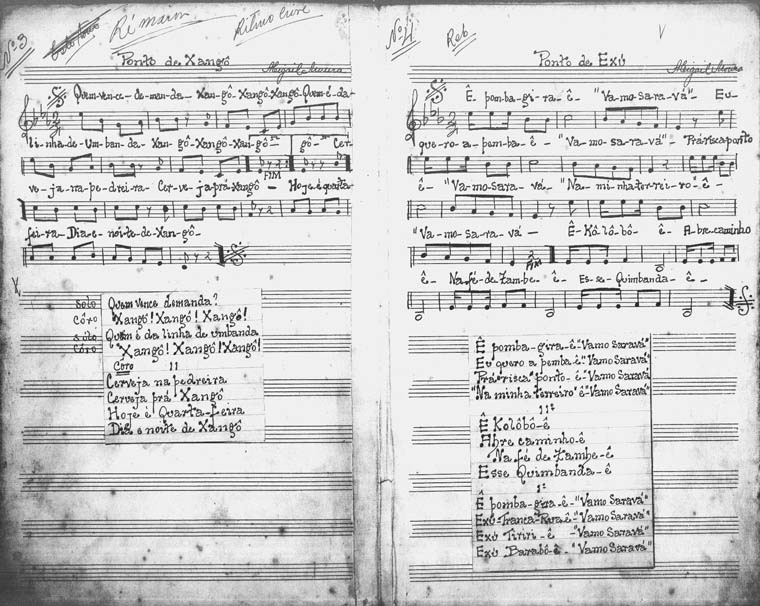
Figure 3: Abdias do Nascimento, Sortilégio: Mistério Negro (1951), script page
Here, Nascimento rejects a divide between representation and the real, and insists that rituals on stage go beyond image or symbol. Breath is a core strategy for organizing the performance. Recent Black Studies scholarship has approached breath as something shaped by regimes of labor, violence, and collective aesthetic expression, with breath registering history at the level of bodily experience rather than narrative. Writing on Black Pentecostal worship, Ashon Crawley understands breath not as a biological given but as a relational practice produced through collective rhythm. 37 Similarly, in his discussion of terreiros de candomblé, philosopher Tao DuFour emphasizes “lived experience as a mode of ‘sensing history’ at the level of sense perceptual encounter.” 38 Nascimento’s dramaturgy resonates with these accounts. In Sortilégio, breath does not signify interiority or psychological depth; it organizes the drama itself. The rhythmic propulsion of the Filhas de Santo and the chorus regulates pacing, with respiration becoming a shared temporal structure by which the play unfolds.
Within TEN’s plays, the rhythmic refrains and breaks for invocation foreground Black bodies not simply as protagonists, but as figures whose ritualized breaths structure the drama’s poetics. This focus on structure complicates a familiar critical narrative in Brazilian art history. Writing about Brazilian modernism, Rodrigo Naves famously diagnosed a “dificuldade de forma” (what Sérgio B. Martins translates as a “reluctance of form,” or a tentativeness in assuming form), arguing that incomplete modernization spurred Brazilian art to remain formally fragile or mild, lacking strong structure. 39 Yet Sortilégio suggests a different trajectory: a redefinition of form as temporal and embodied, articulated through breath and ritual sequence.
If TEN articulated embodied composition through theater, Solano Trindade pursued parallel strategies within poetry and popular performance. Trindade’s poem Tem gente com fome, repeats the eponymous phrase like a train rhythm—“Tem gente com fome, tem gente com fome, tem gente com fome”—a mechanical gasp that becomes collective, bodily chant. 40 Like his contemporaries who would go on to produce Concretism, Trindade treats rhythm as a structural constraint, but unlike them, he anchors it in the racialized laboring body. In another poem, “Quem tá gemendo? Negro ou carro de boi?” (1944), the repetition of “gemendo” enacts a moan, collapsing the breath of coerced Afro-descendent laborers with the groan of a cart, merging human and machine into an embodied lament that is specific to the history of Black labor in Brazil. The emphasis on breath in post-Vargas Brazilian performance and poetics is a historically situated formal strategy for articulating embodied duration, under uneven conditions of life.
This compositional logic is explicit in Trindade’s poem Abolição Número Dois [Abolition Number Two] (1944). 41 The poem opens with a suspension of rhythm—“Parem com estes batuques, / Bombos e caracaxás” [Stop these batuques / bass drums and caracaxás]—interrupting sonic forms typically associated with Afro-Brazilian ritual. The poem momentarily arrests the percussion, stopping sound, in order to reorganize perception itself. Next comes a sequence of embodied commands: “Deixem que eu ouça. / Que eu veja. / Que eu sinta” [Let me hear / let me see / let me feel]. 42 The poem’s pace continues through these short imperatives to conclude with the speaker’s body unhindered, staging perception as a bodily operation unfolding in time, not symbolic representation. Here, liberation is a sensory configuration that involves breath and free aesthetic play: “Deixam . . . / Que eu sinta / o grito / o cor / e a forma / da minha libertação” [Let me feel / The cry / the color / and the form / of my freedom]. 43 Here, abolition is simultaneously historical event and creative compositional act, the crafting of one’s freedom staged as a reorganization of embodied breath, sound, and aesthetic form.
Trindade soon pushed this concern with embodied perception beyond poetry as such. In 1950, with choreographer Maria Margarida da Trindade and sociologist Edison Carneiro, Trindade founded the Teatro Popular Brasileiro (TPB). Like the TEN, the TPB combined Afro-Brazilian religious ritual with conventional drama, but opted for vernacular forms rather than the Euro-American theater that Nascimento initially adapted. 44 Carneiro’s anthropological work gives one way to understand the role of embodiment for TPB. In his 1950 study Candomblés da Bahia, Carneiro collected ritual scripts, suggesting that Afro-Brazilian culture survived in and through bodily practice rather than through exclusively textual archives. 45 Another element of the Teatro arose from Maria Margarida da Trindade’s training as an occupational therapist and work with psychiatrist Nise da Silveira on expressive arts workshops that served both therapeutic and aesthetic ends. 46 Drawing on these strands, the TPB repertoire was less focused on staging singular plays than on drawing out the elements of regional folk traditions, e.g., capoeira martial dance, or the northeastern bumba-meu-boi masking tradition prominent in Trindade’s birthplace, Recife. This is something like V.Y. Mudimbe’s account of African gnosis as historically produced within colonial epistemologies, where modernity and so-called tradition emerge as mutually constitutive. 47 Archival material related to Trindade’s TPB shows an informed analysis of Brazilian “tradition”: annotated reproductions of nineteenth-century sketches by German traveler-artist Johann Moritz Rugendas depicting the work and dances of enslaved Afro-Brazilians, including notes on “staging dance-related scenarios, including the Afro-Brazilian dance, lundu.” 48 This evidence shows Trindade’s interest in positioning Brazil’s modern Black theater within rooted historical lineages rather than as timeless folk traditions. In tracing embodied practices, Trindade and the TPB articulated a genealogy of Black embodiment as both archive and experiment: a living repertoire rooted in histories of ritual and colonial legacies.
Like Abdias do Nascimento, Solano Trindade’s 1940s-1950s works were avowedly essentializing. Speaking of “poesia negra,” for example, Solano asserted that, “The recitation itself must be different in Black poetry. It must be rhythmic, free from the Western preoccupation with aesthetic terms.” 49 On one hand, these accounts of embodied poetics resonate with later accounts in performance theory, such as Diana Taylor’s account of embodiment in Latin America as itself a repertoire of collective knowledge. 50 Trindade’s gemendo stages exactly such a loop, but from the standpoint of racialized embodiment: the poem conjures a perceptual field where Black breath is not universal “phenomenological givenness” but historically weighted sound, an index of oppression and resistance. Read retrospectively, these accounts of embodied poetics resonate with later frameworks in performance theory. The oscillation enacts what Erika Fischer-Lichte has posited is the particular status of the human body for performance, as “always in a state of becoming . . . with every breath and every movement, the body creates itself anew.” 51 Trindade’s poetics anchor this becoming in the Afro-Brazilian body as a situated political and social subject.
As Luís Madureira points out, this can also be understood as an essentializing move subject to critique. 52 Madureira continues, however, by noting that this approach to an “essentialist articulation of Afro-Brazilian identity” was “mobilized as an oppositional strategy” in the late 1940s and 1950s. 53 This came in the wake of the Estado Novo’s subsuming of Black cultural products within a national project. 54 Moreover, even writers such as Gilberto Freyre—who purported to sensitively attend to Afro-Brazilian cultural forms—often dwelled on “the white-authored representation of black experience,” so Alexandra Isfahani-Hammond critiques. 55 This might be interpreted as a mode of strategic essentialism, then, in Gayatri Spivak’s sense. 56 That is, the TEN and TPB posed Black poetics as inseparable from the performative power of Black embodiment. This strategy propelled Black cultural production away from allegorical representation and toward embodied performance.
This formal shift becomes clear in contrast to earlier modernist uses of Afro-Brazilian motifs. If Mário de Andrade’s Meditação sobre o Tietê (1945) figured an urban river as an expressive body, its “gemidos” and “murmúrios” folding Afro-Brazilian tropes of banzo into a national allegory of historical turbulence, Abdias do Nascimento shifted the stakes. His Sortilégio: Mistério Negro (1951) structured the play through drumbeats, invocations, and ritual pauses that positioned Black embodiment not as allegorical motif but as a formal, structural principle. Solano Trindade extended this logic in verse with the poem “Quem tá gemendo? Negro ou carro de boi?” Turning lament into rhythm, the poem’s repetitions approximate respiration itself. In these cases, poetic language exceeds the page and enters the register of sound and performance. Where Andrade allegorized Afro-Brazilian presence, Nascimento and Trindade made embodied voice and breath the medium of vanguard practice. Here breath is not framed as universal phenomenology but as a historically situated form of embodiment—an embodied breath crafted in response to the limits of nationalist allegory as a compositional framework.
The practices of Abdias do Nascimento and Solano Trindade thus demonstrate how Brazilian poetics at mid-century confronted a shared formal problem: the exhaustion of nationalist allegory as a means of organizing aesthetic experience. Crucially, in their works, breath is inseparable from racialized corporeality in Brazil, where labor and citizenship are unevenly distributed across bodies. Beyond physiological function, that is, breath is a historically produced condition of endurance and aesthetic possibility. 57 In experimental poetics of midcentury Brazil, breath is thus a formal principle that links embodied performance and formal structure.
Measured Breaths: Poetic Rhythm and Avant-garde Music
If Nascimento and Trindade grounded poetic rhythm in racialized embodiment, the poets around Noigandres reinterpreted rhythm and breath within an intermedial field of visual and musical relations, breaking with other recent aesthetic paradigms. After the exhaustion of modernismo’s nationalist project, for example, the Geração de 45 retreated into a lyric interiority: refined language, dreamlike images, and themes of transcendence. 58
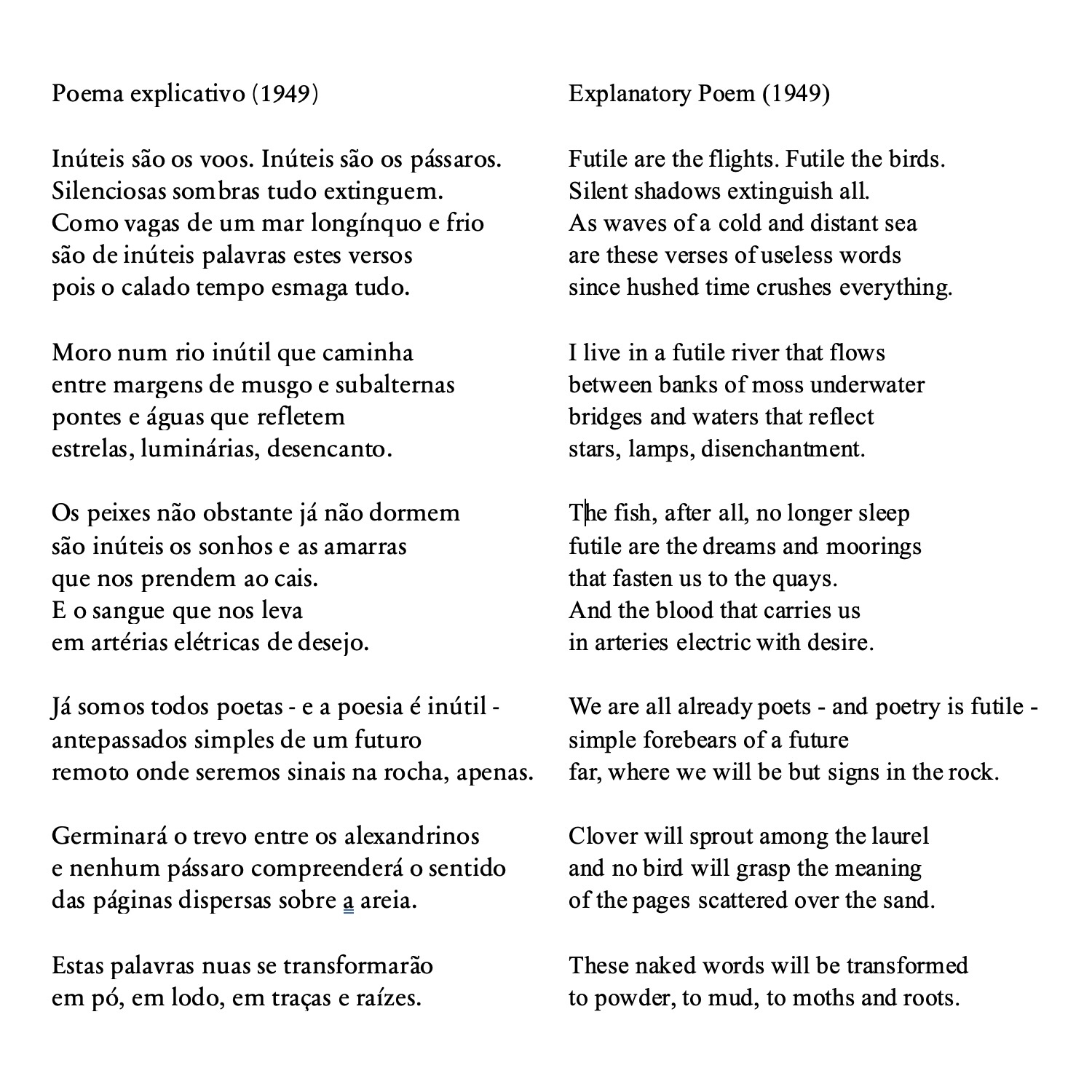
Figure 4: Domingos Carvalho da Silva, Poema explicativo (1949)
Domingos Carvalho de Silva’s “Explanatory Poem” (1949) epitomized this metaphysical turn, through dreamlike diction and polished meter, withdrawing from the collective and the contemporary. 59 In contrast to these forms of interiority, ponderously elegant language, and metaphysical stakes, Brazil’s younger poets of the 1950s would seek brevity, syncopation, synchronous visual perception, along with references to concrete objects and experiences. Against lyricism, these poets – later associated with Concretism – redefined the poem as a physical event, structured through breath, sight, and rhythm rather than interior reflection.
In the late 1950s, the term concreta
circulated across visual art, poetry, and music, before stabilizing as the name of a movement. 60 Before this consolidation, poets translated rhythm into optical and spatial form, words became visual units, and visual compositions acquired the pulse and pause of verse. Breath does not disappear; it is reorganized. Breath is measured, regulated, and redistributed across typographic space and compositional rhythm, transforming embodied duration into abstract perceptual structure. If Nascimento and Trindade’s experiments of the 1940s and 1950s made breath and embodiment central to Black avant-garde poetics, these poets abstracted corporeal logics into graphic and typographic forms, in dialogue with new music as well as visual arts, thus bringing Concretism into the space of performance.
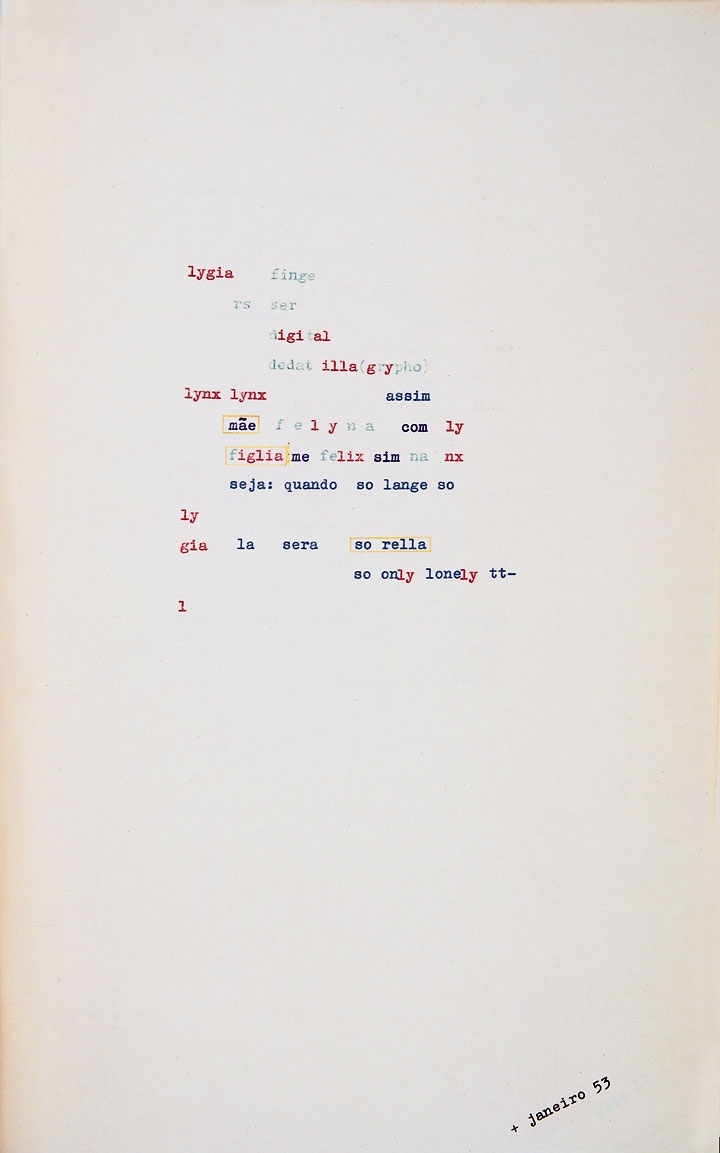
Figure 5: Augusto de Campos, “lygiafingers” (1953)
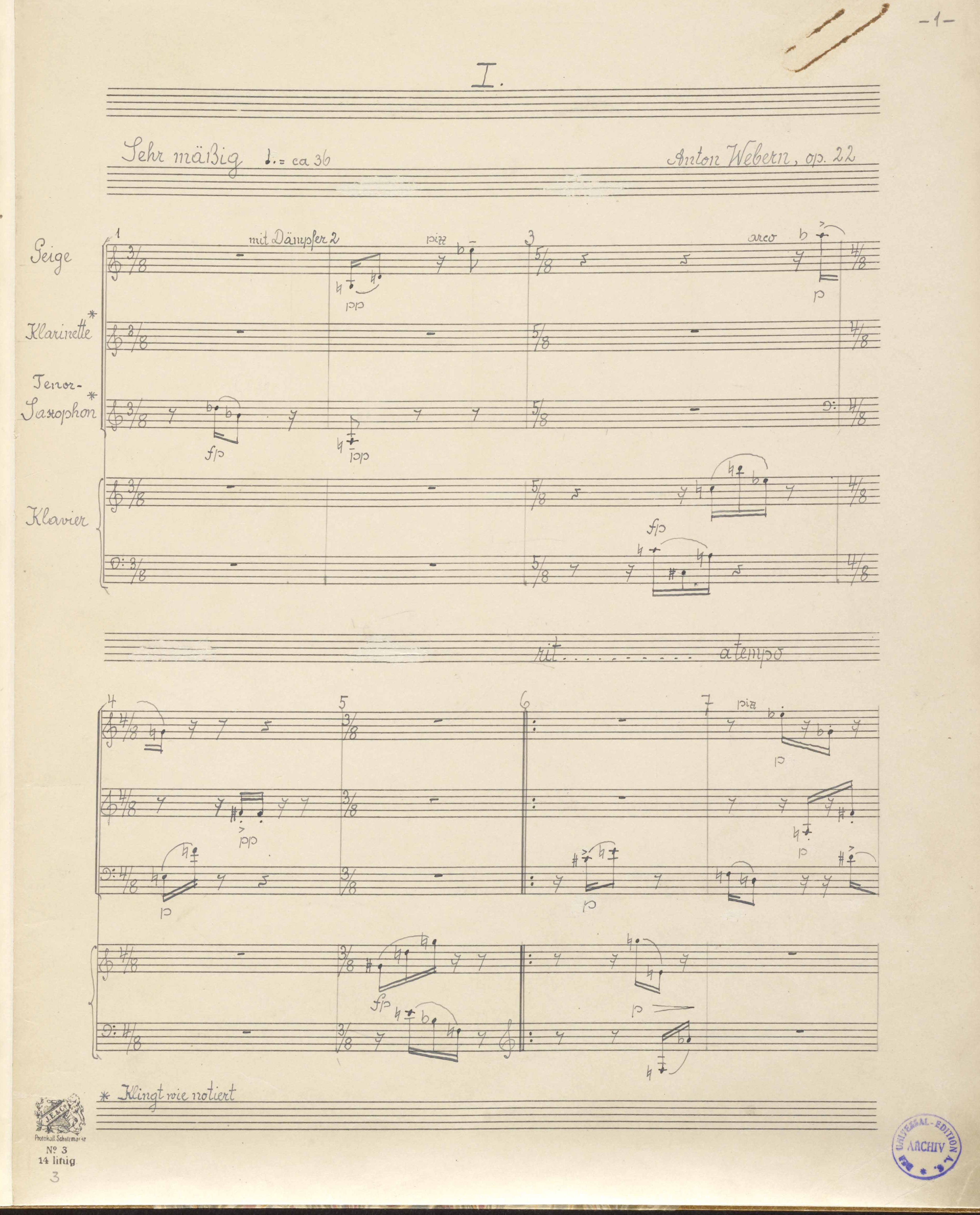
Figure 6: Anton Webern, String Quartet, Op. 22 (1928–30), score excerpt
Yet experimentation began before the project was named “concreta.” Prior to the exhibitions, manifestos, and collaborations with visual artists, poets were working in dialogue with avant-garde music, although less as direct influence than as compositional models. 61 As Claus Clüver has argued, the structure of Augusto de Campos’ 1953 poem “lygia finge/rs” consciously paralleled the contrapuntal instrumentation and polyphonic sonority of the first few measures of Anton Webern’s Quartet, Op. 22, for violin, clarinet, tenor saxophone and piano (1928-1930). 62 Moreover, a meeting with French composer Pierre Boulez in São Paulo in 1954 may have reaffirmed São Paulo poets’ interest in new music. According to a retrospective account written by Haroldo de Campos, Augusto de Campos presented his Poetamenos [Poet-less] poems “em cores-vozes” [in voice-colors] at this event, prompting discussions with Boulez about Webern and Mallarmé. 63 Performances of what would later be identified as Concrete poetry emerged first through sustained engagement with avant-garde music thus reference Webern as well as a Mallarméan quest for a non-linear simultaneity and the poetics of blank space—corresponding to irregular rhythms, repetition of syllables, and warring voices. Drawing on Boulez’s “Homage to Webern,” Haroldo de Campos’ 1955 essay “A Obra de Arte Aberta” compared Webern’s contrapuntal relationship of sound and silence to a Mallarméan poetic constellation, whose “circular organization of poetic material” preempts clock time. 64
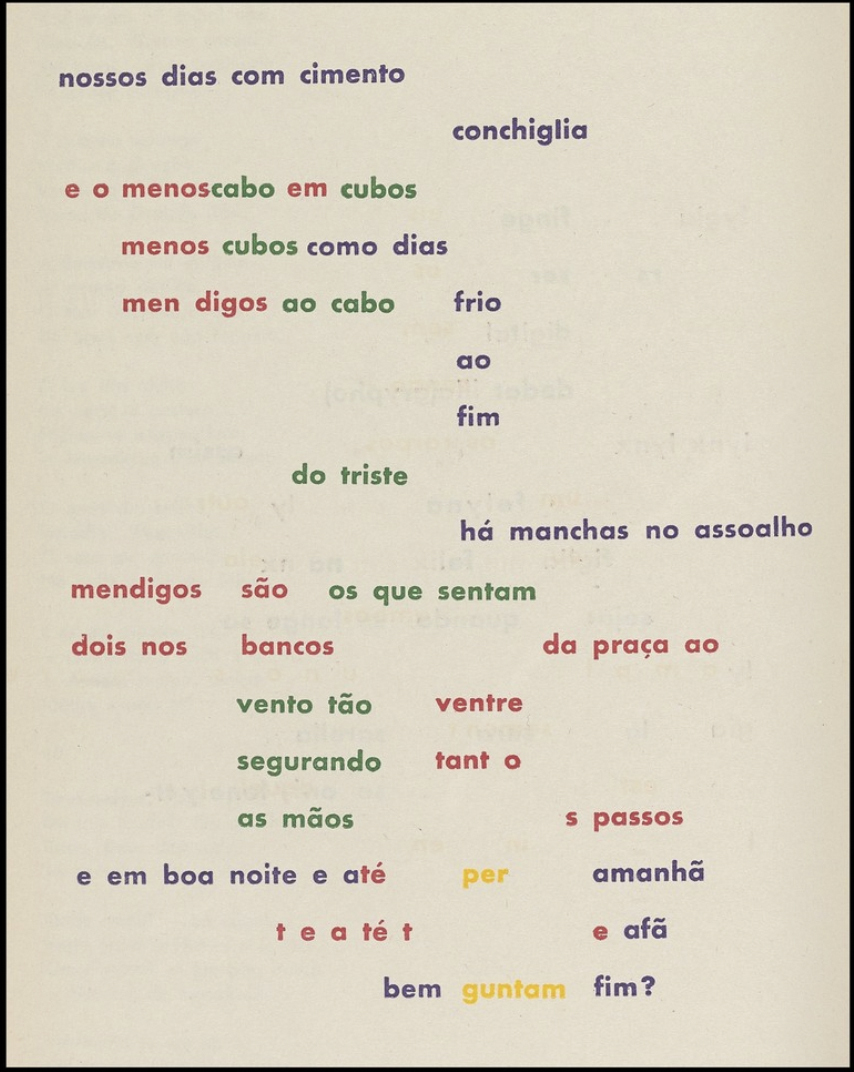
Figure 7: Augusto de Campos, “Nossos dias com cimento,” from Poetamenos (1953)
The years 1954-1955 also saw the emergence of the vanguard musical group Ars Nova, which specialized in performing choral compositions from the European Middle Ages and Renaissance, as well as polyphonic new music and adaptions of Concrete poetry for choral performance. The founding members included conductor Diogo Pacheco and artists Sanson Flexor and Willys de Castro; Castro, who would become a well-known Concretist artist, had studied dodecaphonic music with Brazilian musicologist Hans-Joachim Koelreutter and contributed compositions to Ars Nova. 65 Haroldo and Augusto de Campos likely started collaborating with Ars Nova sometime in 1955, when their works began featuring in Ars Nova performances. For Ars Nova director Diogo Pacheco, poetry fit within the broader ambit of the group. He compared the musical rest to the white of the page of poetry, arguing for a parallel between competing voices (each taking a syllable or words located in a different area of the page) and the non-linear experience of words and blank spaces in a poem spread visually across a page. 66 Here, breath becomes both a compositional unit and a perceptual demand.
A year after the musical ensemble’s founding, at the Festival Ars Nova in November 1955, Ars Nova performed the finale of a cantata by Anton Webern, three poems written by Augusto de Campos and adapted by Diogo Pacheco, a neo-medieval chant by German-born Brazilian composer Ernst Mahle, a handful of historical Gregorian chants, and several French chansons. 67 According to Haroldo de Campos, text scores of Augusto de Campos’ poems were also projected during this performance, presaging the 1956/57 National Exhibition of Concrete Art, which displayed poems alongside paintings on gallery walls. 68 In these sonic collaborations, Concrete poets transformed the typography into rhythm and breath, then to visual formats, presaging the displays of Concrete poetry at the 1956/57 National Exhibition of Concrete Art. Through these performances, musical compositional concerns – pacing, silence, polyphony – became central to poetic practice apprehended visually as well as aurally, what the Concretists called “verbivocovisuality.” 69
These approaches to poetry can be seen to parallel certain postwar debates in classical music, particularly those over the legacy of Schoenberg. The link between Brazilian Concrete poetry and advanced music was made explicit at several junctures in the São Paulo Concrete poets’ self-theorizations. In a 1955 essay by Augusto de Campos, perhaps the first time in print where the term poesia concreta is applied to the poetry of the Campos brothers and Décio Pignatari, Campos invoked música concreta: like Concretism in the visual arts and “to a certain point” avant-garde music, Augusto de Campos wrote, Concrete poetry puts aside “figurative pretensions to expression” in favor of words that “act as autonomous objects.” 70 Despite this terminological echo, Concrete poetry hewed to serialist and iterative methods, aligning with postwar European minimalism rather than the anti-tonality of Musique Concrète. As Haroldo de Campos explained in 1956, “CONCRETE POETRY/in culturmorphological perspective alongside/CONCRETE PAINTING/CONCRETE MUSIC.” 71 Thus the term Concrete was adopted not primarily due to compositional similarities to Musique Concrète, but as part of a broader field of cultural production in which “Concrete” would signify a rejection of older aesthetic conventions and intermedial practices.
Not all poets pursued embodiment by moving language outward across media. If the Campos brothers dispersed perception across typographic, visual, and sonic axes, the poet and theorist Ferreira Gullar instead foregrounded embodiment within language itself, treating the poem as an object to be handled, resisted, and temporally endured by the reader’s body. During the early 1950s, Gullar had been composing a book of poetry entitled A luta corporal as his own rejoinder to the Geração de 45. As Sérgio B. Martins and Wesley Thales de Almeida Rocha explore, Gullar’s volume proposes language and poetic form as always in a process of becoming. 72 Beginning from a series of seven poems that evoke the Geração de 45, yet with subtle stutters and interruptions, Gullar’s volume fragments verses, words, and then sounds themselves. As the book culminates by “pulverizing” words into letters and sounds, Martins asserts, “language itself is gradually but implacably transformed so as to shed all traces of mystifying overtones and to confront the opaque resistance of the objects it evokes”: Gullar’s primary thematic is “the disjuncture between language and things.” 73 In this work, Gullar internalized intermediality within the act of reading itself, treating the poem as an object whose material resistance unfolds through the reader’s bodily time. Over the following half-decade from 1954 to 1959, Martins has explained, Gullar’s interest in this disjuncture would lead him to an intense engagement with phenomenology and what Martins calls “fascination with the unstable temporality that stems from the bodily dimension inescapably attached to reading.” 74 Where the Campos brothers structured perception across media, Gullar emphasized the lived temporality of the reader’s body, the silence between words, and the instability of reading as a performative act.
These practices intersected with broader global debates following the exhaustion of traditional compositional modes. While some artists turned to scientific rationality or the exacerbated subjectivity of tachisme, Art Informel, and Abstract Expressionist successors of Surrealist automatism, other global artists and musicians turned to chance procedures in the 1950s. 75 Such processes did not figure prominently in Brazil, nor did Brazilian artists and poets seek to evacuate nationalist narrative by replacing it with abstract “‘purity’ and self-sufficiency,” as U.S. critic Clement Greenberg’s “Newer Laocoön” would have it. 76 Instead, Brazilian Concretist practices are closer to postwar experiments across Europe and Latin America centered on language and the body, what Kaira M. Cabañas described as artistic creation as an embodied, performative act rather than a vehicle of metaphysical transcendence. 77
Like Brazil’s Black vanguards of the late 1940s and 1950s, Concretists perceived that both nationalist allegory and postwar existentialism had exhausted their expressive potential. Over the 1950s, Brazil’s Concrete artists and poets would thus turn to experimentation across media and engage in iterative compositional methods. A focus on tempo, silence, and respiration connected poetics to perception as lived temporality or duration. For Concrete artists and writers concerned with the temporality of music, the bodies of the poet and performers retained the capacity for liveness, for breath. For other Concretists, poems became more and more object-like, and the artwork itself became a quasi-body [quase-corpus] enduring in time. 78
Visual Rhythm: The Space of the Page
By the mid-1950s, musical and verbal experiments were spatialized on the gallery wall. Typographic brevity evolved into wall-scale visuality, while poetry’s spatial rhythms extended to paintings. Pauses and syncopations previously enacted by the breath of the reader now governed the viewer’s bodily movement through the exhibition. These explorations reached the public at the 1956/57 National Exhibition of Concrete Art. Earlier musical and verbal experiments now took on spatial form not on the page of a book, but in gallery space: what had been heard as syncopation or pause appeared as typographic rhythm and the viewer’s own pacing before a vertical Gestalt.
This exhibition, held in December 1956 at the São Paulo Museum of Modern Art, and in January-February 1957 at the Rio de Janeiro Museum of Modern Art, juxtaposed works by twenty-six Concrete artists and poets, and made visible the diversity of formal and conceptual approaches within what was now being named as “Concrete” art and poetry in Brazil. In a flurry of texts surrounding the exhibition, artists, poets, and critics purported to identify factual differences across Concrete artists and poets, a divide often couched in terms of a “comparative cliché” between “rationalistic” paulistanos
[São Paulo dwellers] and “intuitive” cariocas [Rio de Janeiro dwellers]. 79 Poets associated with Noigandres emphasized play with tempo, rhythm, and sound, advancing their theoretical claims with references to contemporaneous music theory. Other poets assimilated their poetics to institutional settings of the visual arts.
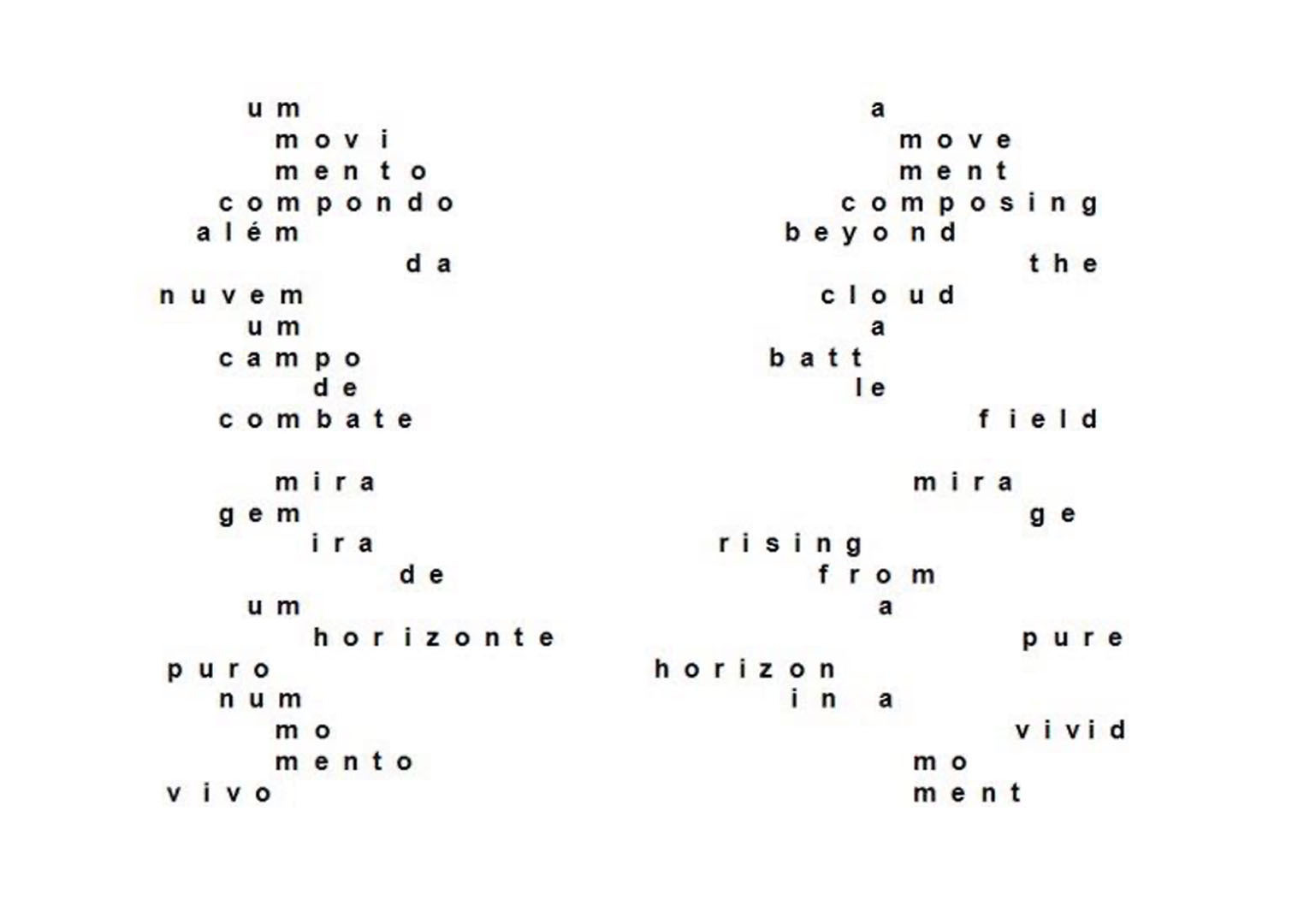
Figure 8: Décio Pignatari, “um movimento” (1956)
Building on spatialized and performative experiments, works by Décio Pignatari and Ronaldo Azeredo exemplify how typographic structures guided perception and rhythm on the page. In Décio Pignatari’s 1956 poem “um movimento,” for example, the alignment of the letter “m” provides the spine for a stack of words and word fragments branching out on either side. Readers must work to form phrases from asymmetrical rows. The poem possesses a stilted flow, with selected words—usually longer and nominal—serving as anchors in a tumbling stack of words and syllables. In addition to splitting words to stack the letter “m,” Pignatari arranges words lacking the letter “m” to suggest repetitions as well, as with “mira-gem” and “ira.” No longer reading a predictable metric structure, the ear is guided by the eye.
A similar formal arrangement is found in Ronaldo Azeredo’s poem “Z,” which was exhibited in the National Exhibition of Concrete Art in 1956/57. In Azeredo’s poem, stacked vowels order a left column justified at its right edge, situated opposite a right column consisting simply of two near rhymes, “azul” [blue] and “anzol” [fishhook]. The poem’s syntax leads readers to and fro horizontally as reading proceeds down the page, forming a sentence by leaping from one column to the other and back again: “believes in / blue / like the / hook / in the fish.” Read vertically, the left column alone offers a set of lilting fragments ending in vowel sounds, contrasting with the right-hand column’s assonant, two-syllable words with stress on the final syllable, punctuated by the brusque “z” sound of the title. The imagery is forceful and vivid. With the repeated stacked o’s and e’s, the words themselves create a visual rhyme. And while the poet is still working with poetic figures such as rhythm and aural rhyme, the spatial arrangement of words on the page guides the readers’ inner voice in creating a new, more fitful cadence. Both poems reimagine reading as an act of breath and balance, where the reader’s eye and voice negotiate the page’s spatial rhythm.
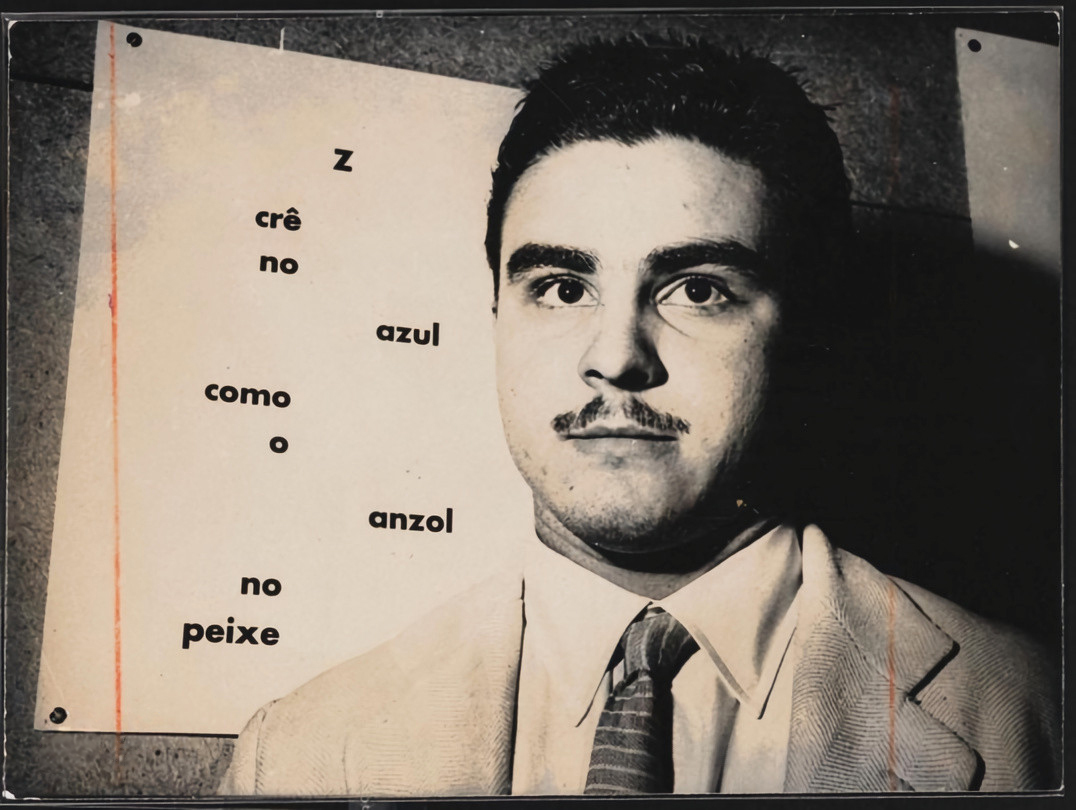
Figure 9: Ronaldo Azeredo with “Z” at the I Exposição Nacional de Arte Concreta, Museu de Arte Moderna de São Paulo (1956)
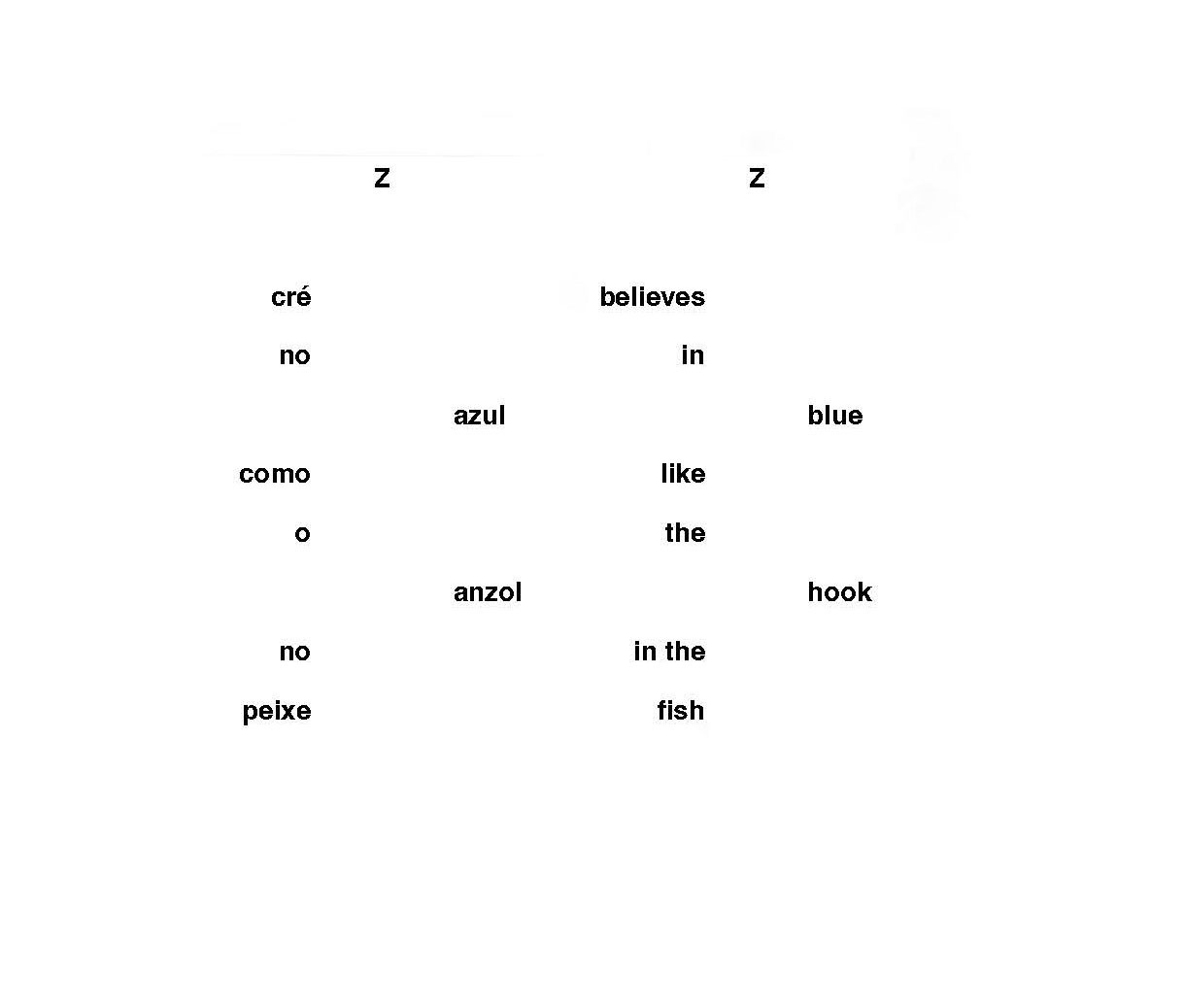
Figure 10: Ronaldo Azeredo, “Z” (1956)
Where Nascimento and Trindade’s 1940s-1950s works brought together poetry, music, and theater, the Concrete poem seems to share in the visual logic that undergirds certain Concrete artworks in 1950s Brazil. While not always resembling a grid as such, horizontal rows extending from a central axis create what Yve-Alain Bois has termed the “linear horizontal/vertical network” common in works by Mondrian, while broadly-spaced letters placed against the blank white space of the page refuse naturalistic spatial recession and instead emphasize surface pattern. 80 In Brazil, Concrete poetry did share compositional structures with some Concrete paintings, particularly those ordered around a central vertical axis, refusing illusionistic depth or volume to evoke stacked graphic design layout blocks on the page. Such formal characteristics are found in a number of mid-1950s Concrete works, including Aluísio Carvão’s Composição (1956); numerous gouaches by César and Hélio Oiticica from their Grupo Frente period, 1955-1956; Rubem Ludolf’s Assimetria resultante de deslocamentos simetricos (1955); Luiz Sacilotto’s relief Concreção 5624 (1956); an untitled 1956 painting by Ivan Serpa; and Judith Lauand’s Concentração à direita
(1956). 81
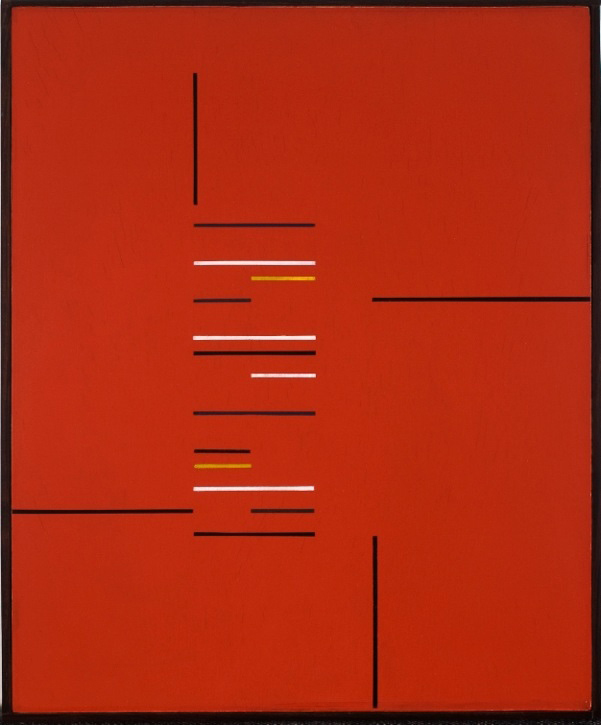
Figure 11: Aluísio Carvão, Composição (1956)
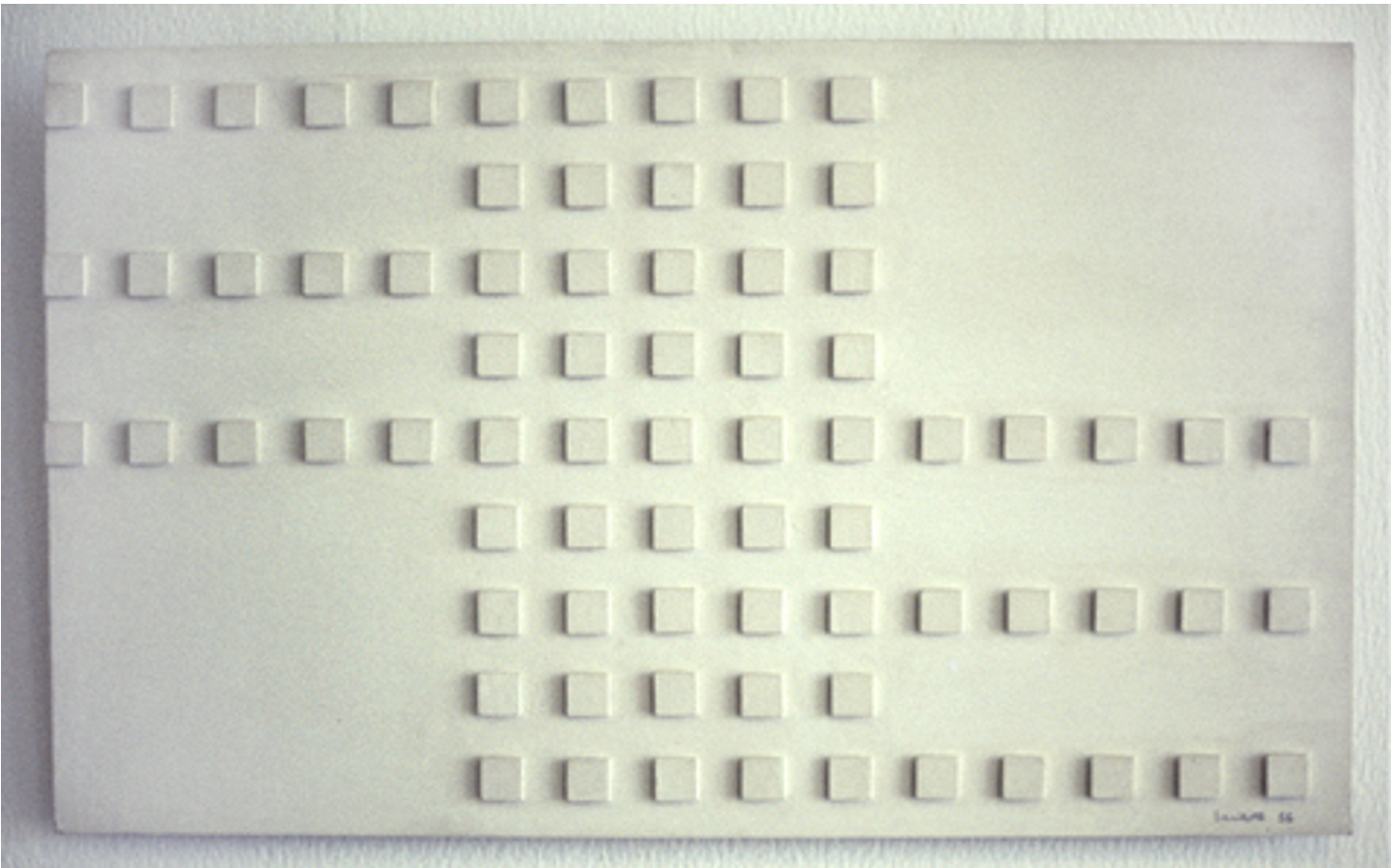
Figure 12: Luiz Sacilotto, Concreção 5624 (1956)
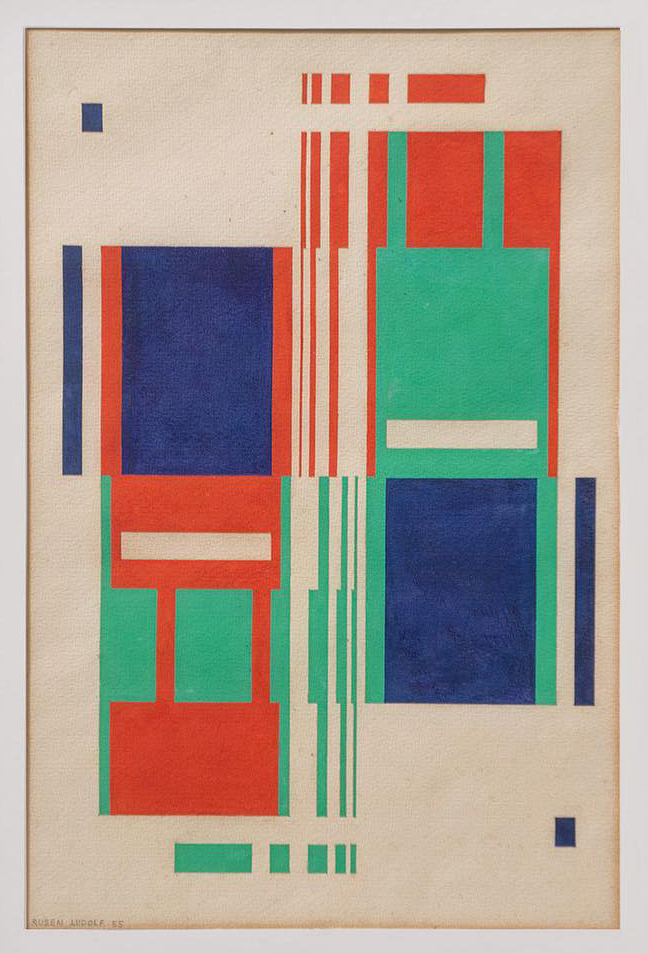
Figure 13: Rubem Ludolf, Assimetria resultante de deslocamentos simétricos (1955)
These mid-1950s Concretist poems and paintings shared a common interest in working through a subset of Piet Mondrian’s work from 1921-22 that Yve-Alain Bois has characterized in terms of a “bisecting vertical axis.” For Bois, Mondrian’s use of a vertical axis running from top to bottom of a painting could either provoke a sense of gyration around a central pivot, or could—when doubled—act as a “stabilizer” for the composition. While the four peripheral lines of Carvão’s Composição create a spiraling composition like Mondrian’s pivots, Sacilotto’s central grid and tendrils parallels Azeredo’s center void and peripheral consonants.
Concrete poets’ play with figure-ground relationships also echoed the poetry of Stéphane Mallarmé. In Mallarmé’s 1897 Un coup de dés jamais n’abolira le hasard, the poet used varied typography and irregular word placement to emphasize the materiality of both the text and the blank space of the page. As Mallarmé explained, since the poet no longer “knew the place of his verse” within an established structure like the sonnet, “inscribed for the mind, or upon pure space,” he wrote for the materiality of the book: no longer a disembodied lyric voice, the poem’s meaning was dependent on its materiality.
Certainly, the Concrete poets’ play with the unbroken field of the paper—paralleled in certain Concrete paintings—resembles the emphasis on the page in Mallarmé’s Un coup de dés. As Augusto de Campos himself explained, Mallarmé’s “poem-plan” provided a model for the Brazilian Concrete poets’ “optical-sonorous structuration,” the arrangement of the poem out of “pliable, moldable, amalgamating” words. 82 But Mallarmé’s irregular placement of words across the page, seemingly evocative of the rise and fall of breath or attention, rarely resolves into the stacked lines or even gridded structures that characterize many Brazilian Concrete poems and paintings, at least as they were presented in the National Exhibition of Concrete Art in 1956/57. A comparison with Marcel Broodthaers’ 1969 Un Coup de Dés, which reinscribed Mallarmé’s poem as black lines where the text had been placed, underscores the formal distinction between Mallarmé’s investigation of poetic structure and the formal strategies of Brazilian Concretismo—again, at least in the context of the 1956/57 National Exhibition of Concrete Art. Thus, unlike Mallarmé, but like Mondrian, many Brazilian Concrete poets and artists oriented their poem structures around a central axis or pivot, or even an implied grid. This compositional technique, working from a central vertical axis rather than arranged as horizontal bands of text, reflects one quality typically understood as characteristic of Concrete poetics: a poem as a vertical Gestalt to be apprehended with immediacy, rather than experienced sequentially, over a series of horizontal turned pages.
In fact, the most Mallarméan poem at the 1956/57 Exposição was Ferreira Gullar’s O Formigueiro [Anthill] (1954-55), which scattered bits of words across several poster-sized pages for readers to painstakingly assemble into a sentence-length poem. In contrast with orderly, stacked lines of poetry by Décio Pignatari and Haroldo and Augusto de Campos, Gullar arranged letters in topographical or quasi-organic arrays. Gullar’s poems visually approximated the textual ebb and flow of Mallarmé’s Un coup de dés, with its lack of a clear vertical axis, although it further disintegrated language into individual letters.
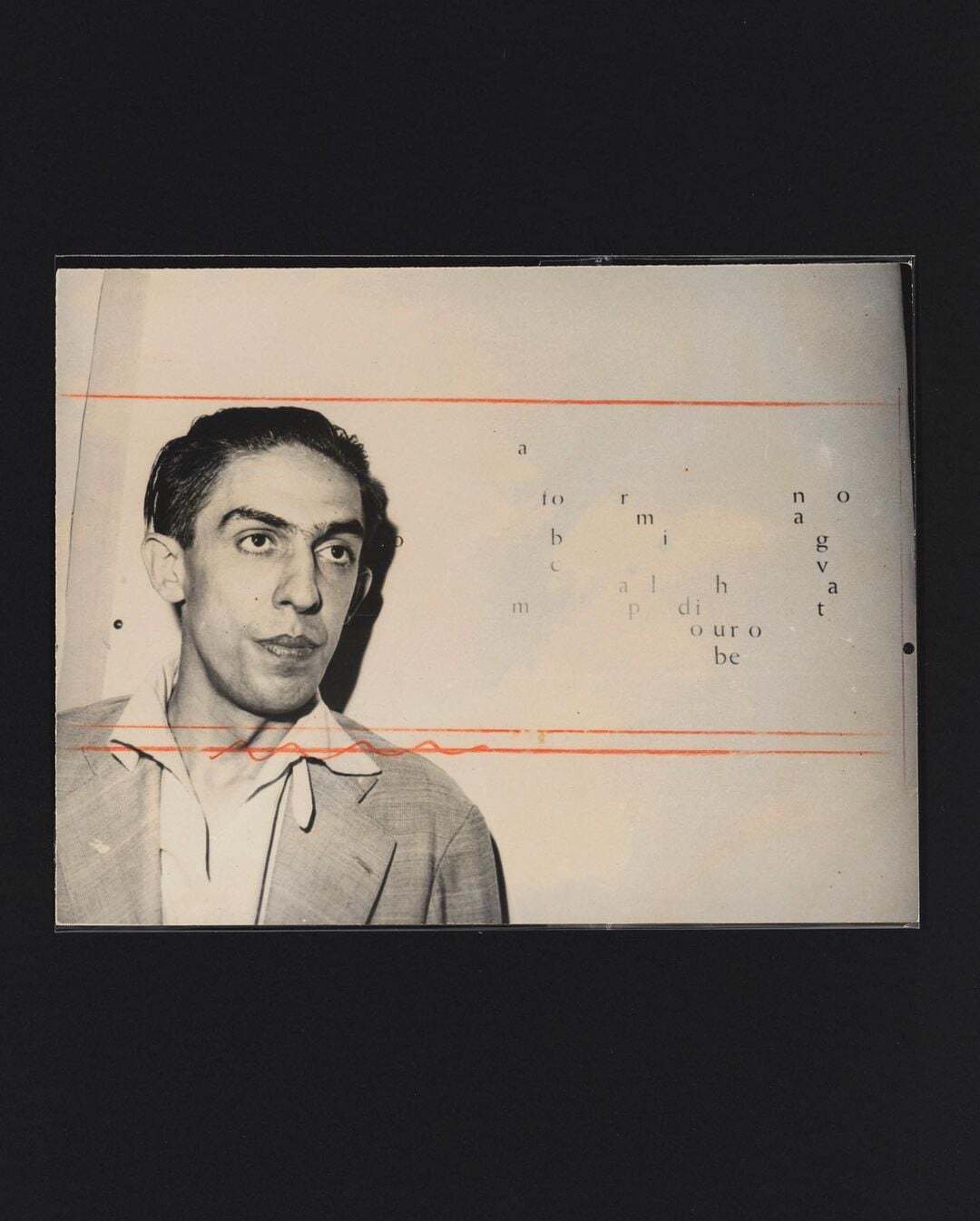
Figure 14: Ferreira Gullar with O Formigueiro at the I Exposição Nacional de Arte Concreta, Museu de Arte Moderna de São Paulo (1956)
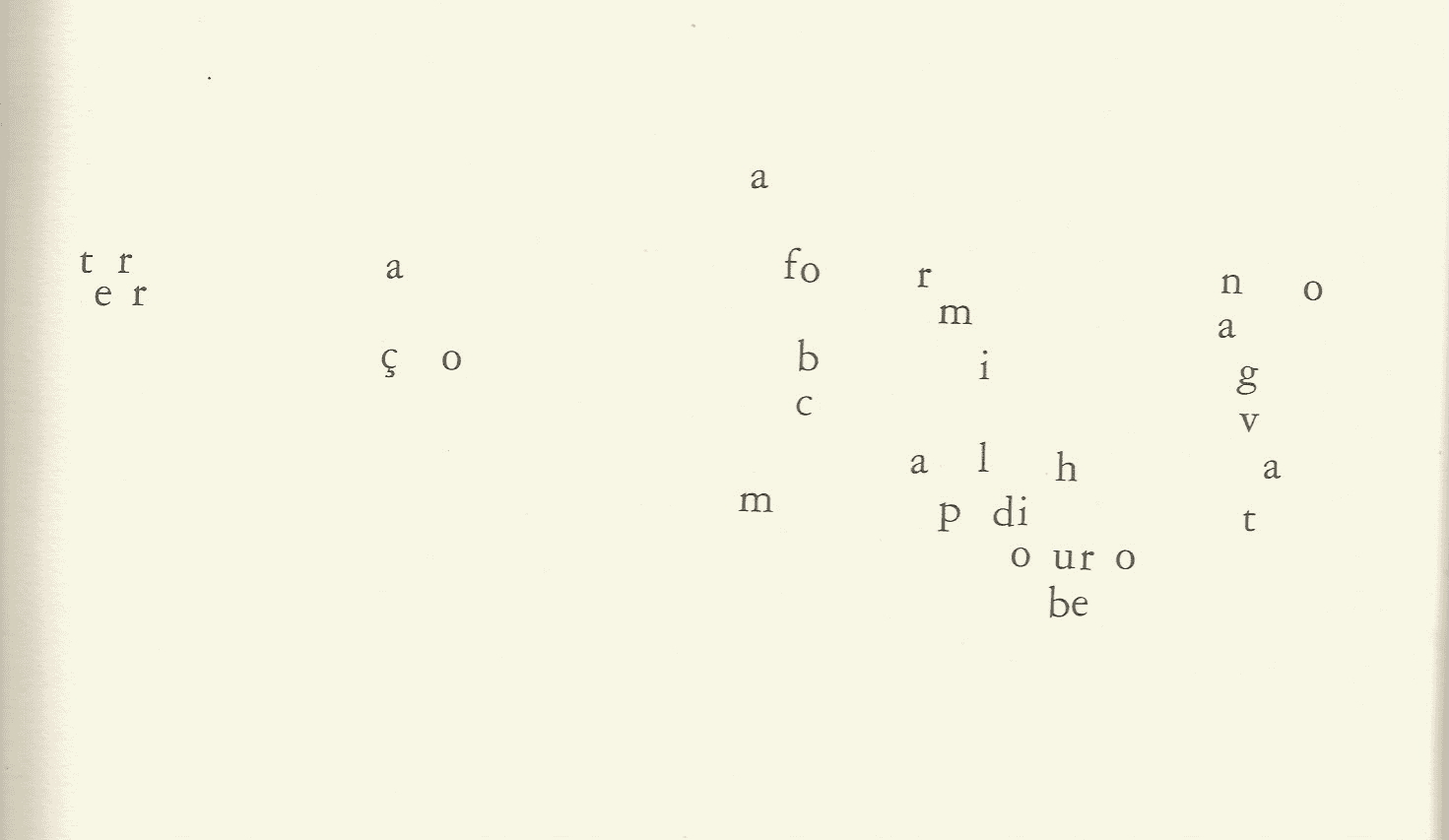
Figure 15: Ferreira Gullar, O Formigueiro (1954–55), detail
As art historian Sérgio B. Martins recounts, Gullar found the visual immediacy of many other Concrete poems incompatible with a durational phenomenological experience, since an agile eye would grasp permutations and repetitions of words in a single glance; the reader would thus fail to wend his or her way through a lingering experience. 83 And of course this immediacy was exacerbated by the conditions of the National Exhibition of Concrete Art, with the installation on museum walls making the totality of each Concrete poem visible at once, rather than perceived in a temporal flow according to the turning of pages in a book or journal. As a number of commentators have noted, the poster-like mode of display is furthermore amenable to interpretations that assimilate Concrete poetry to the language of advertising, with poetry remade as a direct visual campaign aimed at a modern urban consumer. 84 Gullar himself critiqued this idea of the poem as an instrumentalizing call to the reader, with “language employed solely to trigger a reaction.” 85 In his poetry and criticism, Ferreira Gullar is thus credited with introducing a temporal quality to Concrete poetry, rejecting a poetics of simplistic immediacy already in the mid-1950s, and presaging his break with more “orthodox” approaches to the Concrete in favor of Neoconcretism’s emphasis on embodiment.
In his later “Neoconcrete Manifesto” (1959), Gullar would articulate this break explicitly: “In Neoconcrete poetry the page is the spatialization of verbal time: it is breath, silence, time. It does not concern, obviously, the return of the concept of time as in discursive poetry, since while in the latter language flows in succession, in Neoconcrete poetry language opens itself in duration.” 86 According to Sérgio B. Martins, Gullar was not interested in the aural or sonic possibility of a Concrete poem that unfolds or flows [escorre] in the sequential experience of the reader, but in poetry that lasts [dura], which Martins has identified with “a bodily sense of time.” 87 For Martins, Neoconcretism’s embodied sense of duration [duração] was already present in Gullar’s mid-1950s works such as O Formigueiro, even before the Neoconcrete Manifesto. With each turn of the page of O Formiguero, “readers are forced to engage anew by assembling a word from a set of scattered letters,” and the entirety of the poem is available only “from memory, after the laborious effort of reading it word by word is over.” 88 For Martins, the temporality of the poem is thus set apart from the time of the everyday, absorbing the reader into itself. Yet if Gullar’s work insisted upon a poetics of potent duration, with the poem as an obdurate object working against instantaneity, the Noigandres poets’ engagement with vanguard music points to an embodiment of breaths unfolding over time.
While Gullar insisted on temporal duration, Concretists’ engagement with vanguard music shows how embodiment and breath could be encoded in Concrete rhythms. In this sense, Concretism does not evacuate breath, but redistributes it across typographic space and perceptual sequencing, translating bodily duration into abstract form. The 1956/57 exhibition, then, staged the threshold between embodied rhythm and optical immediacy, meaning between the poem as breath recorded or enacted, and the poem as tactile object. The exhibition foregrounds tensions between perception and concept, between the visible form and a poem’s lived temporality – a tension that poets and critics such as Haroldo de Campos and Mário Pedrosa articulated in explicitly phenomenological terms.
Object Lessons: Phenomenology and Organizational Control
Through the 1950s, as poets and critics sought to articulate the logics that would lead to Concretist poetics, questions of phenomenology and structure came to the fore. In Haroldo de Campos’s 1955 essay “A Obra de Arte Aberta,” the poet invoked Edmund Husserl’s “phenomenological reduction” to interpret Mallarmé, articulating philosophical terms that would frame late-1950s debates over perception and poetic structure:
Mallarmé practices the phenomenological reduction of the poetic object. The essence [eidos]—“Un Coup de Dés will never abolish chance” – is reached by bracketing peripheral themes off from the “thing in itself” [coisa em si] of the poem. 89
Campos continued by quoting Husserl: “What is bracketed is not wiped off the phenomenological board but merely bracketed and thereby provided with a marker [Index].” 90 For Campos, Husserl’s account supports an emphasis on poetic structure over content, with the structure as the “thing in itself” of the poem.
Campos proposed this Husserlian analysis in 1955, as the poets surrounding Noigandres were collaborating with Ars Nova, translating musical rhythm and breath into visual and conceptual poetic compositions. Slightly later, around the time of the 1956/57 First National Exhibition of Concrete Art, Campos discussed the Concrete poem as an object in slightly different terms:
an art – not one that presents – but one that makes present [presentifies]
the OBJECT
a non-objective art? no
: OBJECTAL [OBJECTIVE] 91
Campos thus rejected the “language of quotidian use of literary convention,” in favor of simultaneity, sonorism, “FUNCTION of a not mere psychology BUT phenomenology of composition.” 92
In a February 1957 essay, critic Mário Pedrosa similarly decried the “cultivated, erudite, conceptual nature” of traditional lyric poetry in favor of the “brute object” of the Concrete poem, which he contrasted to the idealized Concrete painting. In the Jornal do Brasil's Sunday Supplement, Pedrosa explained that the Concrete poets
approach the plastic arts, approach music, in order to realize a nudity of perception. . . . Thus they avidly abandon verse, with its ramblings, its cuts, its invincibly cultivated, erudite, conceptual nature, in order to touch, to cleave to, a brute object, to an experience that is still to one side of concepts, to one side of the inevitable logical-associative, speculative-psychological concatenation. . . . The activity of concrete poetry, even in the precise engineer constructor of poems [sic] like Augusto de Campos or Décio Pignatari, it is always passionately phenomenological. . . . [A Concrete poem is] a mere phenomenological object, immediate and primary data for direct experience . . . a Husserlian “pre-perceptive” essence. 93
For the Concrete painters, on the other hand, Pedrosa asserted that, “the ideal is to strip away, to the utmost, all direct phenomenological experience, in search of pure intellectuality. What he would like would be to realize a pure and perfect mental operation, like the calculation of an engineer.” 94 Despite the sensuous materiality of pigment and support, it was Concrete painting that Pedrosa saw as stripping away phenomenological experience, since the painted geometries presented “pure and perfect . . . calculation.” In contrast, the Concrete poets—even in the mode of “precise engineer”—evaded the “conceptual nature” of traditional verse, producing poems that approached the condition of “brute object.” For Pedrosa, Concrete poems thus existed as entities received predominantly, or perhaps firstly, as sensory perception rather than “conceptual” verse. Both Campos and Pedrosa thus identify Concrete poetry’s distinguishing feature – its striking difference from the Geração de 45 – in its offering of “immediate and primary data for sense experience” (Pedrosa), in the poem’s “making present” of the object [o OBJETO], with no gap between the “OBJECT pondered” and the “expressed OBJECT” (Campos).
This split presents a fundamental philosophical problem: whether—or perhaps how—“raw” sensation exists external to, or prior to, the application of concepts. Pedrosa’s “pré-perceptiva essência” may be a translation of Husserl’s “vorprädikative Erfahrung” [pre-predicative experience], where “perceptive” is associated with intellectual rather than embodied activity. Pre-perceptive would thus have connotations of (following philosopher Hubert Dreyfus) the “non-mental . . . non-conceptual, non-propositional, non-rational and non-linguistic.” 95 Given that Pedrosa studied philosophy in Germany in 1927-29, prior to the publication of Husserl’s Erfahrung und Urteil, the Brazilian critic was likely more familiar with earlier aspects of Husserl’s thinking. 96 Pedrosa’s “pré-perceptiva essência” may translate, that is, to Husserl’s notion of “vorphanomenales Sein” [pre-phenomenal being], referring to a “primitive consciousness” for which a perceived sense datum has not yet “become objective”; for Husserl, the “objective” lies in the realm of cognition rather than the phenomenological and pre-logical “brute object” of Pedrosa’s text. 97 Whether Pedrosa is citing early or late Husserl, this appeal to the German phenomenologist supports his claim that the primary experience of Concrete poetry is something that happens through embodied perception, prior to cognition or ratiocination, while Concrete painting remains resolutely conceptual, and idealist. Like Nascimento and Trindade’s breath-based temporality of the body, Pedrosa’s Husserlian interpretation framed Concrete poetry in terms of embodiment. Yet this was an abstracted embodiment – a universalized sensorium detached from the historical and racialized body that animated Nascimento and Trindade’s poetics. Where their work grounded rhythm in the collective pulse of Black life, Pedrosa’s phenomenology reimagined bodily experience as perceptual neutrality.
It was partly in response to Pedrosa’s February 1957 article, in the wake of the first National Exhibition of Concrete Art, that Campos would explicate his move “From the phenomenology of composition to the mathematics of composition,” staking out the Noigandres poets’ distinct compositional strategies as Concretists:
Concrete poetry is moving towards the rejection of organic structure in favor of a mathematical or quasi-mathematical structure. That is, in place of the poem of the type word-follows-word—where the structure results from the interaction of words or fragments of words produced in the spatial field, with each new word implying a new structural option (an intervention accentuated even more by chance and by availability to intuition)—one finds a mathematical structure, planned prior to the word. Solving the problem of structure will require, thus, that the words to be used are controlled by the thematic number. The exact moment of creative choice lies in the definition of the structure that will redound in the poem. From that point, the intervention of disciplined and critical intelligence will exert itself with much greater intensity. It will be the chosen structure that will determine, rigorously, almost mathematically, the elements of the game and their relative position. 98
One can already see here the outlines of the argument that would later be mounted in Ferreira Gullar’s 1959 Neoconcrete Manifesto, but from the opposite point of view, with Campos privileging ratiocination and a priori structural principles that Gullar’s Manifesto would dismiss as “dangerously exacerbated rationalism.” 99 At the same time, even while Campos rejects the “word-follows-word” model of composition, in which the structural unfolding of the poem is determined anew with each word choice, he holds back from affirming that Concrete poetry offers a purely mathematical mode of composition. There is consistent hedging, a polemical thrust and then retreat—“mathematical,” then “quasi-mathematical,” later “almost mathematically”—revealing a sense of lingering imprecision. As tradition is left behind, conventions of composition no longer hold sway, and poem structures are determined in and through the process of writing.
Yet rather than arbitrariness, Campos sought a new set of conventions within which poets can play the game. Just a few paragraphs on in his 1957 essay, for example, Campos tempered previous assertions by explaining that,
The integral vision of structure to be projected onto the paper is something that qualifies the creative work in advance, being able to orient it itself even in the case in which, in practice, the vision of the structure results (or is provoked by) an initial game of word-follows-word. There will sometimes be a primary correlation of stimuli between both processes, in poetic practice [emphasis added]. 100
Here we see that the title of Campos' essay, “From the Phenomenology of Composition to the Mathematics of Composition,” diagnosed poetry in transition, a poetics still suspended between a mathematical ideal and traditional compositional procedures of “word-following-word” across the page. Concrete poetry still, Campos conceded, admits some give and take between the imposition of an a priori structure and play with words on the page. Though there may be a totalizing mathematical logic that underlies the structure and sequence of the poem, this structure itself could be determined based upon an initial “game” [jogo]. Taking this 1957 call to order— “the organizational control” of the poet; “the content of the poem as [its] structure”—as the governing principle of Concrete poetry, it would come as no surprise, then, that Campos reacted so strongly to Pedrosa’s phenomenological account of Concrete poetry. 101 However, this divide between “mathematics” and “phenomenology” both conceals an important point of agreement and confuses the true contention between the two writers.
If phenomenology—in an avowedly Husserlian form no less—was a common goal for Pedrosa and Campos, what provoked the aesthetic dispute? The explanation for this divide lies in the question, which Husserl? Drawing upon the Husserl of Ideen (1913), Campos’ invocation of the bracketing off of “peripheral themes” is nothing less than the bracketing off of the world, in order to better apprehend consciousness itself. 102 This is a far cry from Pedrosa’s notion of the Concrete’s poem’s aim: “to touch, to cleave to, a brute object, to an experience that is still to one side of concepts,” which is something closer to Husserl’s seeming acceptance of raw sense data in his 1905/06 lectures. 103 Instead, Campos emphasized the poem’s status as Index, its sonorous and visual simultaneity offering forms of phenomenological play whose relation to “content” is indexical—markers of phenomenological possibility rather than representations or allegories of the real. “The concrete poem is an object in and of itself, not an interpreter of exterior objects,” the Noigrandres poets would write; yet still, this object does not reduce to Pedrosa’s “primary data for sense experience.” 104 Likewise, the Husserl of Experience and Judgment would insist that “sensuous data” are “already the product of constitutive synthesis”; and that “a perceptive consciousness in which an object is before us as existing . . . is an act of judgment.” 105 If the poem is, indeed, a phenomenological object for both Pedrosa and Campos, Pedrosa’s object exists prior to concepts, while Campos, however, hews closer to Husserl’s notion of apprehension as intrinsically objectifying [vergegenständlichender]. 106
Campos’ Concrete poetry is not intended to create a poetic object that induces this “pre-predicative” mode of apprehension in the reader, but to place before the reader—to “presentify” [presentifique]—the poetic object. By the end of 1957, these philosophical tensions marked the Concrete poets’ shift from musical experiments to visual exhibition, from voiced breaths to visual rhythms. Whereas the projected poem had been one aspect of the musical-poetic performances with Ars Nova, the eye-catching immediacy and pithiness of the poster-poem offered another strategy to “presentify” poetics.
Conclusion
Across these shifts – from the rhythmic breath of Nascimento and Trindade to the visual cadence of poets who would become Concretists and Pedrosa’s phenomenological “nudity of perception”—the body persists as both origin and limit of abstraction, a site through which to negotiate a modernist aspiration toward pure perception. Pedrosa emphasized sensation prior to thought, privileging a poetic “brute object” that exists pre-conceptually, while Campos worked instead with the poem as an object to be “presentified,” engaging Husserl’s notion of apprehension as intrinsically objectifying. In both cases, the body remains implicit: for Pedrosa, as the locus of immediate, pre-predicative experience; for Campos, as the medium through which visual and sonorous simultaneities are registered and enacted. The trajectory from voice to vision to concept, tracing Black avant-garde attention to breath in Nascimento and Trindade, culminates in a universalist phenomenology that seems to characterize Concretism – a system in which bodily perception structures engagement, even as the body itself recedes into abstraction. Concrete poetry, then, both abstracts and inscribes corporeality: it tests the limits of perception, and centers the role of the body as the measure of poetic and visual experience. In these divergent invocations of Husserl, form is no longer a pre-existing structure to be decoded, but something that comes into being through perceptual engagement itself.
When Ferreira Gullar proposed the Neoconcrete break with Concretism, he refuted the aural or sonic possibility of a Concrete poem that unfolds or flows [escorre] in the lived experience of the reader, but insisted upon poetry that lasts [dura], which Sérgio B. Martins has identified with “a bodily sense of time.” 107 This sense of infinitude, beyond a measurable passage of time, can be mapped onto art historian Michael Fried’s well-known account of the “presentness” and “instantaneousness” of modernist painting and sculpture, versus the “presence” of “literalist” art (Minimalism). 108 The concept of duration encompassed in Gullar’s famed defenses of Neoconcretism is suggestively close to Fried’s anti-literalist notion of “presentness,” which Fried deploys in support of modernist painting. Meanwhile, Fried’s “hostility toward the temporal dimensions of minimalist sculpture—its experience of endlessness, duration, and repetition”—are closer to Sérgio B. Martins’ critique of Concrete poetry’s “mechanical response” and “the typically Concretist treatment of time as a mechanical relation between discrete pictorial elements arranged serially.” 109 Indeed, for poets associated with Noigandres, time is something that flows, is measurable, and able to be divided up into discrete units. This problem of duration – whether poetic experience inheres within an instant or unfolds in rhythms over time – would undergird the 1959 Neoconcretist break. Across Concretist paradigms, the temporality of measured breaths became the hinge between perception and embodiment, between a universalist abstraction and an art grounded in bodily duration.
Diverse approaches to Brazilian Concretism could also be considered in terms of a struggle against medium specificity, as two different approaches to achieving what Michael Fried diagnosed in 1967 as “some kind of final, implosive, highly desirable synthesis [of the arts].” 110 The play across poetry, music, and art among Brazilian practitioners of the Concrete—especially prior to codification as Concrete—might seem to point the way towards a common ground on the field of performance, as with the Cageian or Artaudian intermediality marking global postwar art scenes. 111 Other than the projection of the score mentioned by Haroldo de Campos, however, there is no record that the Concrete poets gave much thought to the spatial aspects of the proceedings after the handful of Ars Nova experiments. Later, Brazilian Concrete poetry turned to multimedia and digital poetics, reinterpreting the formal qualities of the Concrete through the use of video, computer, and internet tools. 112 The aspirations of the Brazilian Concrete are perhaps best captured in contemporary approaches to the simultaneity, duration and flow of words and images encountered on our mobile devices. At the same time, as Jane Kassavin argues, Concretism’s embrace of phenomenology, duration, objecthood, and flow should also be challenged for their disavowal of Brazil’s colonial and racial histories. Kassavin points out that Concretist aesthetics typically avoid confronting the histories of slavery and racial capitalism in Brazil, and counters with attentiveness to recent experimental poetics of Ricardo Aleixo and Arthur Bispo do Rosário, as both citing and critiquing the formalist legacy of Concretism. 113
It is thus important to revisit Brazil’s 1940s-1950s avant-gardes with a broader frame of reference. Although Concretist tendencies are perhaps the best-known Brazilian vanguards of the 1950s, they were still in flux during the early 1950s. Moreover, during this period, works by Solano Trindade, Abdias do Nascimento and collaborators, staged the poetic and performative as the site of both aesthetic experiment and social resistance. Breath, chant, rhythm, and gesture travel across forms: poetry and theater, therapy and performance, music and visual arts and poetry. A body-centric avant-garde marks both Black poetics and debates over perceiving subjectivities that would come to shape the Concrete/Neoconcrete moment: where Husserlian retention or phenomenological interval might abstract breath, Trindade and Nascimento locate it in trace, in history, in labor, in ritual. A rejection of allegory in favor of embodied rhythm situates Black poetics within the same intermedial field that shaped postwar Concretism. Where the Concretists would transpose rhythm into visual and typographic form, however, Nascimento and Trindade grounded it in the lived textures of race and ritual. Such works are not formalist exercises but experiments in situating perception within social, historical, and corporeal contexts. Breath is historically situated, not as a universal phenomenological category, but an index of Afro-Brazilian survivance.
Adrian Anagnost is an art historian whose work explores how artists, architects, and cultural institutions produce and contest ideas of place, and how spatial practices are entangled with political power. Areas of focus include Brazil, the United States, Black and Indigenous geographies of the colonial Gulf South, and global contemporary art. She is the author of Spatial Orders, Social Forms: Art and the City in Modern Brazil (Yale University Press, 2022) and, most recently, De-Globalizing the Art World: Contemporary Art and the Case of Documenta 15 (Anthem Press, 2026).
Notes:
-
1 This is often framed as a reaction to the violent ruptures of World War II, although Brazil occupies a different position than countries with more extensive, direct involvement in the violence. See Okwui Enwezor, “The Judgment of Art: Postwar and Artistic Worldliness,” in Postwar: Art Between the Pacific and the Atlantic, 1945-1965, ed. Okwui Enwezor and Katy Siegel (Haus der Kunst, 2016), 20-41. BACK
-
2 On the complicated temporality of poesia concreta’s origins, see Ferreira Gullar’s contradictory statements, as chronicled in Leandro Candido de Souza, Entre a vanguarda e a arte: poesia concreta (Editora Dialética, 2021). BACK
-
3 Lourival Gomes Machado, Retrato da arte moderna do Brasil (Departamento de Cultura, 1947), 95. BACK
-
5 Paulo Henriques Britto, “Brazilian Poetry Today,” Los Angeles Review of Books, 24 November 2013. BACK
-
6 Abdias do Nascimento and Elisa Larkin Nascimento, “Teatro Experimental do Negro: Trajetória e Reflexões,” Thoth 1 (1997): 229. Carlos Eduardo Vieira and Fabiola Maciel Correa, “Abdias Nascimento: The Trajectory of a Black Intellectual Engaged in the Dissemination of Emancipatory Knowledge between the 1920s and 1940s,” Revista Brasileira de História da Educação 22 (2022): 19-20. BACK
-
7 Galciani Neves, Exercícios críticos: Gestos e procedimentos de invenção (FAPESP, 2016). Adele Nelson, Forming Abstraction: Art and Institutions in Postwar Brazil (University of California Press, 2022). “Participação de artistas de São Paulo na XXV Bienal de Veneza,” Jornal de Noticias (São Paulo), 6 April 1950, 5. BACK
-
8 Tristão de Athayde, “O neo-modernismo,” Época (July 1947), quoted in Joelma Santana Siqueira and Vagner Camilo, “Editorial,” Texto Poético 17, no. 34 (September/December 2021): 1. BACK
-
9 Fred Moten, In the Break: The Aesthetics of the Black Radical Tradition (University of Minnesota Press, 2003), esp. 6-7; Christina Sharpe, In the Wake: On Blackness and Being (Duke University Press, 2016); Ashon Crawley, Blackpentecostal Breath: The Aesthetics of Possibility (Fordham University Press, 2017), 5, 32-33, 40-41, 50. BACK
-
10 For the Brazilian reception of Edmund Husserl and Maurice Merleau-Ponty’s accounts of breath, embodiment, and phenomenology in debates on form and perception, see Mário Pedrosa, Arte/forma e personalidade: 3 estudos (Kairós Livraria e Editora, 1979), 12-86. BACK
-
11 Ming Tiampo, Gutai: Decentering Modernism (University of Chicago Press, 2011). Pedro R. Erber, Breaching the Frame: The Rise of Contemporary Art in Brazil and Japan (University of California Press, 2014). Kaira Cabañas, Off-Screen Cinema: Isidore Isou and the Lettrist Avant-Garde (University of Chicago Press, 2015). Eva Díaz, The Experimenters: Chance and Design at Black Mountain College (University of Chicago Press, 2015). Chika Okeke-Agulu, Postcolonial Modernism: Art and Decolonization in Twentieth-Century Nigeria (Duke University Press, 2015). Natilee Harren, Fluxus Forms: Scores, Multiples, and the Eternal Network (University of Chicago Press, 2020). Karen Kurczynski, The Cobra Movement in Postwar Europe: Reanimating Art (Routledge, 2021). Black Orpheus: Jacob Lawrence and the Mbari Club, ed. Kimberli Gant and Ndubuisi Ezeluomba, (Yale University Press, 2022). BACK
-
12 Annateresa Fabris, “Modernismo: nacionalismo e engajamento,” in Bienal Brasil século XX, ed. Nelson Aguilar (Fundação Bienal, 1994), 72-83. Maria de Fátima Morethy Couto, “Pensar a arte de vanguarda em Campinas,” Cadernos de Estudos Culturais 4, no. 8 (2012): 181-94. BACK
-
13 Mário de Andrade, De Paulicéia desvairada a Lira paulistana (Editora Martin Claret, 2017), 450-62, my translation. BACK
-
14 David T. Haberly, “The Depths of the River: Mário de Andrade’s Meditação Sôbre o Tietê,” Hispania 72, no. 2 (1989): 279. George Luiz França, “O cristal de Anhembi,” Boletim de Pesquisa NELIC (Santa Catarina) 9, no. 14 (2009): 259. BACK
-
15 On banzeiro and banzo, see the following. Mário de Andrade, “June 6,” in Turista aprendiz, trans. Flora Thomson-DeVeaux (Penguin Publishing, 2023), 23. Antônio Joaquim de Macedo Soares, Estudos lexicográficos do dialeto brasileiro, Revista do Instituto Histórico e Geográfico Brasileiro (1942): 61. Gilberto Freyre, O Escravo nos Anúncios de Jornais Brasileiros do Século XIX (Imprênsa Universitária, University of Recife, 1963). Haberly, 279. Carlos Haag, “Death Wish,” Pesquisa FAPESP 172 (June 2010), https://revistapesquisa.fapesp.br/en/death-wish/. Lorraine Leu, “Settlement: Rosana Paulino and Black Women’s Insubordinate Geohistories,” in Black Feminist Constellations: Dialogue and Translation across the Americas, ed. Christen A. Smith and Lorraine Leu (University of Texas Press, 2023), 255-75. BACK
-
17 Mário de Andrade, “The Music of Sorcery in Brazil” (1933), Vibrant: Virtual Brazilian Anthropology 14 (2017): e141184. BACK
-
18 Esther Gabara, “Facing Brazil: The Problem of Portraiture and a Modernist Sublime,” CR: The New Centennial Review 4, no. 2 (2004), 42-43. BACK
-
19 Niyi Afolabi, Afro-Brazilians: Cultural Production in a Racial Democracy (University of Rochester Press, 2009), 12-13. Rafael Cardoso, Modernity in Black and White: Art and Image, Race and Identity in Brazil, 1890-1945 (Cambridge University Press, 2021). Ricardo Machado and Deivison Campos, “A questão racial no modernismo brasileiro antes e depois da Semana de Arte Moderna,” Revista do Instituto Humanitas Unisinos (2022). Jane Kassavin, “Concretism’s Dissonant Objects,” Comparative Literature 77, no. 1 (2025): 40-65. Adrian Anagnost, “Afro-Brazil and Indigeneity from Pau-Brasil to Antropofagia,” Luso-Brazilian Review 62, no. 1 (2025): 25-48. BACK
-
20 Vieira and Correa, “Abdias Nascimento,” 16-17. Jens Andermann, Tierras en trance: Arte y naturaleza después del paisaje (metales pesados, 2018), 282n90. María Amalia García, Abstract Crossings: Cultural Exchange between Argentina and Brazil (University of California Press, 2019), 37-38. BACK
-
21 Oscar Nimtzovitch, “Uma realidade: O Teatro Experimental do Negro,” Correio Paulistano, April 12, 1953, p. 16. Vieira and Correa, 17-18. BACK
-
22 Viviane Becker Narvais, “O Teatro do Sentenciado de Abdias Nascimento: classe e raça na modernização do teatro brasileiro” (PhD diss., University of São Paulo, 2020). Vieira and Correa, 19-20. BACK
-
23 Tshombe Miles, “Abdias Nascimento e a Tradição Intelectual Afrodiaspórica: no Combate ao Racismo,” Revista de Ciências Sociais (Fortaleza) 48, no. 2 (July/December 2017): 118-19. Luís Madureira, “Theatre, Négritude and the Performative Unmasking of Brazil’s ‘Blackface Modernism’,” Santa Barbara Portuguese Studies, 2nd series, 10 (2022), 214, 217. BACK
-
24 Câmara do Distrito Federal II, no. 131 (3 August 1948). BACK
-
25 Henrique Pongetti, “Entre O’Neill e a ‘Pérola Negra’,” O Globo, October 21, 1944, reprinted in Teatro Experimental do Negro: Testemunhos (Edições G.R.D., 1966), 13-14. BACK
-
26 Some sources title “Menina do Morro” as “Menina da Favela.” BACK
-
27 “a floresta . . . implacávelmente vibrante pela voz agoureira e infatigável dos tan-tans!” Grock, “O milagre do ‘Imperador Jones’,” O Cruzeiro, May 26, 1945, 34. BACK
-
28 “A montagem, em fascinação de mistério e a música, em ritmos e syncopes do tantã, dos tambores da feitiçaria negra, como que nascendo das próprias entranhas da terra africana, recriaram o sentido mais profundo da peça.” Chico Vizzoni, “O Teatro do Negro,” O Cruzeiro, January 31, 1953, 84. BACK
-
29 Pedro Henrique Corrêa Victor, “Dramaturgia ‘Aruanda’, de Joaquim Ribeiro: poéticas Ubuntu de um corpo aquilombado, o tempo que perfaz a ancestralidade” (MA thesis, Universidade Federal de Uberlândia, 2022), 87. BACK
-
30 Edmundo Moniz, “Aruanda,” Correio da Manhã, January 1-2, 1948, 1. BACK
-
31 Niyi Afolabi, “The Quilombo Newspaper, Abdias Nascimento, and Human Rights Activism in Brazil,” Intellèctus XVII, no. 1 (2018): 95-116. Mário Augusto Medeiros da Silva, “O teatro experimental do negro de São Paulo, 1945-66,” Novos estudos CEBRAP 41, no. 2 (2022): 389-410. BACK
-
32 See also Abigail Lapin Dardashti, “Abstracted Resistance: Third-Worldism in Rubem Valentim’s Afro-Brazilian Symbolism, 1963-66,” Art Journal 80, no. 3 (2021), 56-77. BACK
-
33 Abdias do Nascimento, “Sortilégio: Mistério Negro” (1951), Callaloo 18, no. 4 (Autumn 1995): 990. Robert Lima, Dark Prisms: Occultism in Hispanic Drama (University Press of Kentucky, 2021), 132-34. BACK
-
34 Sandra L. Richards, “Constructions of Afro-Brazilian Identity in the Theatre of the 1950s: The Case of Zora Seljan and Abdias do Nascimento,” in Atlantic Cross-currents: Transatlantiques, ed. Susan Z. Andrade, Eileen Julien, Micheline Rice-Maximin, and Aliko Songolo (Africa World Press, 2001), 136. BACK
-
38 Tao DuFour, Husserl and Spatiality: A Phenomenological Ethnography of Space (Routledge, 2022), 14-16. BACK
-
39 Rodrigo Naves, A forma difícil (Ática, 1996), 21. Sérgio B. Martins, Constructing an Avant-garde: Art in Brazil 1949-1979 (MIT Press, 2013), 197n6. BACK
-
40 Solano Trindade, Tem gente com fome e outros poemas (Departamento Geral da Imprensa Oficial, 1988), 7-8. BACK
-
41 Solano Trindade, “Abolição Número Dois,” in O poeta do povo (Cantos e Prantos Editora, 1999), 80. BACK
-
44 The TPB used the União Nacional dos Estudantes (UNE) as the seat of its activities. Bruno Sanches Baronetti and Luiz Fernando Costa de Andrade, “Solano Trindade: O poeta do povo. Uma síntese de raça e classe no Brasil,” Mnemosine Revista 12, no. 2 (2021): 50. BACK
-
45 Edson Carneiro, Candomblés da Bahia (1950), 6th. ed. (Civilização brasileira, 1978). BACK
-
46 Cabañas, Learning from Madness: Brazilian Modernism and Global Contemporary Art (University of Chicago Press, 2018), 56, 73. BACK
-
47 V. Y. Mudimbe, The Invention of Africa: Gnosis, Philosophy, and the Order of Knowledge (Indiana University Press, 1988). See also DuFour, 34-37. BACK
-
48 Ananya Jahanara Kabir and Francesca Negro, “Solano Trindade’s Gift to Alvin Ailey: New Evidence from the Black Archives of Mid-America,” The Black Scholar 49, no. 3 (2019): 8. BACK
-
49 “Poesia Negra, social e mística no livro de Solano Trindade,” Diário da Noite (São Paulo), October 6, 1961, quoted in Arlindo Rebechi Junior, “Solano Trindade e a poética da resistência: na ausência, a existência,” Comunicação & Educação 26, no. 1 (January/June 2021): 211. BACK
-
50 Diana Taylor, The Archive and the Repertoire: Performing Cultural Memory in the Americas (Duke University Press, 2003), 26-27, 81-83. BACK
-
51 Erika Fischer Lichte, “The Concept of Performance,” in The Routledge Introduction to Theatre and Performance Studies, ed. Erika Fischer-Lichte, Minou Arjomand, and Ramona Mosse (Routledge, 2014), 25. BACK
-
52 Madureira, 215-16. The TEN’s “elitist” character was also a focus of criticism. See Baronetti and Andrade, 55. BACK
-
54 Dmitri Cerboncini Fernandes, “A negra essencialização do samba,” Luso-Brazilian Review 51, no. 1 (2014): 132-56. BACK
-
55 Alexandra Isfahani-Hammond, White Negritude: Race, Writing, and Brazilian Cultural Identity (Palgrave-MacMillan, 2009), 5. See also Madureira, 221. BACK
-
56 Gayatri Spivak, “Subaltern Studies: Deconstructing History,” in Ranajit Guha and Gayatri Chakravorty Spivak, eds., Selected Subaltern Studies (Oxford University Press, 1988), 13-14. BACK
-
57 On breath as a racialized and collective condition of endurance rather than expressive interiority, see Moten, In the Break, esp. 6-7; and Crawley, 5, 32-33, 40-41, 50. For a slightly different take, see Jessie Cox and Isaac Jeran-François, “The Aesthetics of (Black) Breathing,” Liquid Blackness 6, no. 1, (2022): 97-117. BACK
-
58 On the Geração de 45, see Charles A. Perrone, Seven Faces: Brazilian Poetry Since Modernism (Duke University Press, 1996), 17-20; and Aguilar, 161-162n1. BACK
-
59 Domingos Carvalho da Silva, “Poema explicativo,” in Poemas escolhidos (Clube de Poesia, 1956), 67-68, my translation. BACK
-
60 Clement Greenberg, “Toward a Newer Laocoön,” Partisan Review 8, no. 4 (July-August 1940): 296. BACK
-
61 Antonio Sergio Bessa, “The ‘image of voice’ in Augusto de Campos' Poetamenos,” CiberLetras: revista de crítica literaria y de cultura 17 (2007). BACK
-
62 Claus Clüver, “Klangfarbenmelodie in Polychromatic Poems: A. von Webern and A. de Campos,” Comparative Literature Studies 18 (1981): 386-98. BACK
-
63 The meeting occurred in São Paulo in 1954 at Waldemar Cordeiro’s home. Haroldo de Campos, “Da razão antropofágica: A Europa sob o signo da devoração,” Colóquio/Letras 62 (July 1981): 20, reprinted [with a number of typographical issues] as “The Rule of Anthropophagy: Europe under the Sign of Devoration,” trans. María Tai Wolff, Latin American Literary Review 14, no. 27, Brazilian Literature (January-June 1986): 53. BACK
-
64 Haroldo de Campos, “A Obra de Arte Aberta,” Diário de São Paulo, July 3, 1955, reprinted in Correio da Manhã, April 28, 1956. BACK
-
65 “Ars Nova,” Correio Paulistano, November 17, 1954, 6. João Bandeira, ed., Arte concreta paulista: documentos (Cosac & Naify, 2002), 77-80. Regina Teixeira de Barros, “Willys de Castro na Pinacoteca,” in Willys de Castro (Pinacoteca do Estado, 2012), 10-12. Denise Hortência Lopes Garcia, O Grupo Música nova e a música electroacústica (Editora Unicamp, 2022), 37-39. BACK
-
66 Diogo Pacheco, “verbalização da poesia concreta,” Ala Arriba (São Paulo) 4, no. 3 (May 1957): 16-17, reprinted in Bandeira (2002), 76. Artist Willys de Castro also adapted some poems for performance. BACK
-
67 See the program for Festival Ars Nova, November 21, 1955, reprinted in Bandeira, 68. BACK
-
68 Haroldo de Campos, Novas: Selected Writings (Northwestern University Press, 2007), 379-380n18. BACK
-
69 On concrete poetry, modern music, and the verbivocovisual, see Haroldo de Campos, “aspectos da poesia concreta,” Jornal do Brasil, October 27, 1957. He had first borrowed the term “verbi-voco-visual” from James Joyce for the 1956 essay Haroldo de Campos, “Kurt Schwitters ou o Júbilo do objeto,” Jornal do Brasil, October 28, 1956. Writer Antônio Houaiss explicitly applied the term to the Brazilian Concretists’ experimentation the following year, and poet Theon Spanudis picked up the term as well. Antônio Houaiss, “Sobre poesia concreta,” Jornal do Brasil, May 19, 1957. Theon Spanudis, "Gomringer e os poetas ‘concretos’ de São Paulo,” Jornal do Brasil, September 15, 1957. BACK
-
70 Augusto de Campos, “Poesia concreta,” Fórum (São Paulo) 1, no. 3 (October 1955): 243. This reference expresses more a search for terminology than a true aesthetic sympathy between poesia concreta and Musique Concrète, as theorized in the 1950s by French composer Pierre Schaeffer. Rather than the found sounds and anti-tonality of Musique Concrète, poesia concreta – at least as practiced by the poets around Noigrandres – hewed more closely to postwar explorations of serialism and the iterative qualities of Minimalism. See Pierre Schaeffer, In Search of a Concrete Music (1952) (University of California Press, 2012). BACK
-
71 Haroldo de Campos, “Olho por Olho a Olho Nu,” AD: Arquitetura e Decoração 20 (November/December 1956), reprinted in Suplemento Dominical do Jornal do Brasil, April 28, 1957. BACK
-
72 Wesley Thales de Almeida Rocha, “As paixões espúrias: subversão e negatividade em ‘A luta corporal’, de Ferreira Gullar,” Em Tese 20, no. 2 (2014): 14-30. Sérgio B. Martins, “‘The Pulp of Color’: Toward a Notion of Expenditure in Ferreira Gullar’s Neo-concrete Writings,” October 152 (Spring 2015): 103-20. BACK
-
73 Martins, “‘Pulp of Color’,” 105-07. Ferreira Gullar, A luta corporal (Companhia das Letras, 2017). BACK
-
75 See Yve-Alain Bois, “Chance Encounters: Kelly, Morellet, Cage,” in The Anarchy of Silence: John Cage and Experimental Art, ed. Julia Robinson (MACBA, 2009), 192. BACK
-
77 Cabañas is specifically interested in the legacies of Antonin Artaud, but her account is broadly relevant here. Kaira M. Cabañas, “Whither Artaud,” in Specters of Artaud: Language and the Arts in the 1950s (Museo Nacional Centro de Arte Reina Sofía, 2012), 36-41. BACK
-
79 The sequence of claims, rebuttals, and theoretical positionings enacted in early 1957 in the pages of the newspaper Jornal do Brasil and architecture magazine AD - Arquitetura e Decoração is recounted in Heloisa Espada, “O debate em torno da Primeira Exposição Nacional de Arte Concreta (1956-1957),” ICAA Documents Project Working Papers 2 (May 2008): 4-9, and in Martins, Constructing an Avant-garde, 31, 34-35. The phrase “comparative cliché” comes from Martins, 19, and the primary article in question is Mário Pedrosa, “Paulistas e cariocas,” Jornal do Brasil, February 19, 1957. Additional articles include Ferreira Gullar, “1 - O Grupo de São Paulo,” Suplemento Dominical do Jornal do Brasil, February 17, 1957; Ferreira Gullar, “2 - O Grupo do Rio,” Suplemento Dominical do Jornal do Brasil, February 24, 1957; Waldemar Cordeiro, “Teoria e prática do concretismo carioca,” AD: Arquitetura e Decoração 22 (March/April 1957): 16-17; Waldemar Cordeiro, “O Concretismo e o problema da organização da cultura,” AD: Arquitetura e Decoração 22 (March/April 1957): 29; Reynaldo Jardim, Ferreira Gullar, and Oliveira Bastos, “Poesia Concreta: Uma experiência intuitiva,” Suplemento Dominical do Jornal do Brasil, June 23, 1957; and Haroldo de Campos, “Da fenomenologia da composição à matemática da composição,” Suplemento Dominical do Jornal do Brasil, June 23, 1957. BACK
-
80 On text in painting as resolving or thwarting figure-ground relationships, see Yve-Alain Bois, “El Lissitzky: Reading Lessons,” October 11 (Winter 1979): 113-28; Yve-Alain Bois, “El Lissitzky: Radical Reversibility,” Art in America 76, no. 4 (April 1988): 169-70; and T. J. Clark, Farewell to an Idea: Episodes from a History of Modernism (Yale University Press, 1999), 255. I thank Christina Kiaer for the Bois/Clark comparison on text and image. BACK
-
81 Grupo Frente was a group of artists based in Rio de Janeiro engaged in exploring new stylistic approaches, geometric abstraction among them; they held three joint exhibitions between 1954 through 1956. Several members of Frente would form the core of the Neoconcrete group later in the 1950s. On Frente, see Mário Pedrosa, “Grupo Frente,” in Catálogo 2a Mostra do Grupo Frente (Rio de Janeiro: Museu de Arte Moderna, 1955); and Aleca Le Blanc, “Tropical Modernisms: Art and Architecture in Rio de Janeiro in the 1950s” (PhD diss., University of Southern California, 2012), 233-277. BACK
-
82 Augusto de Campos, “Poesia concreta,” Fórum (São Paulo) 1, no. 3 (October 1955): 243. BACK
-
84 This interpretation was promoted by the Concrete poets surrounding Noigandres in the “Plano-Piloto,” op. cit.; and in Décio Pignatari, “Nova poesia concreta,” AD: Arquitetura e Decoração 20 (December 1956), reprinted in Suplemento Dominical do Jornal do Brasil, May 5, 1957. BACK
-
85 Ferreira Gullar, Experiência Neoconcreta: Momento-limite da arte, trans. Anthony Doyle (Cosac Naify, 2007), 136. See also Martins, “‘ Pulp of Color’,” 110; and Small, 27, 42-43. BACK
-
86 Gullar, “Manifesto.” The phrase “breath, silence, time,” could also be translated as “rest, silence, time,” where pausa signifies a musical rest, though I do not believe Gullar thought about poetry in such explicitly musical terms. BACK
-
89 Haroldo de Campos, “A Obra de Arte Aberta,” Diário de São Paulo, July 3, 1955, reprinted in Correio da Manhã, April 28, 1956. Campos’ essay shares some thematic concerns with Umberto Eco’s more famous account of the “open work,” but Campos’s text predates Eco’s by several years. See Eco’s 1958 contribution to Atti del XII Congresso internazionale di filosofia (Sansoni, 1958-61); and Umberto Eco, Opera aperta. Forma e indeterminazione nelle poetiche contemporaneo (Bompiani, 1962). BACK
-
90 From Edmund Husserl, Ideen zu einer reinen Phänomenologie und phänomenologischen Philosophie, Erstes Buch (1913), vol. 3 of Husserliana: Gesammelte Werke (M. Nijhoff, 1950), 174. For English, see Edmund Husserl, Ideas for a Pure Phenomenology and Phenomenological Philosophy (1913), trans. Daniel O. Dahlstrom (Hackett Publishing, 2014), 137. Campos quoted a 1949 Spanish-language edition published in Mexico City. Edmund Husserl, Ideas relativas a una fenomenología pura y una filosofía fenomenológica (Fondo de Cultura Económica, 1949), 169. BACK
-
93 Mário Pedrosa, “Poeta e pintor concretista,” Jornal do Brasil, February 16, 1957. BACK
-
95 See Section I, “Die Vorprädikative (Rezeptive) Erfahrung,” in Edmund Husserl, Erfahrung und Urteil: Untersuchungen zur Genealogie der Logik (1939) (Meiner Verlag, 1999), in English translation as Edmund Husserl, Experience and Judgment: Investigations in a Genealogy of Logic, ed. Ludwig Landgrebe (Northwestern University Press, 1973); and Hubert Dreyfus, “The Return of the Myth of the Mental,” Inquiry 50, no. 4 (August 2007): 352. BACK
-
96 Pedrosa’s philosophical references shifted in the early 1950s, with Gestalt giving way to Husserlian phenomenology. Pedrosa’s 1949 thesis had not cited Husserl, but took as intellectual touchstones German Gestalt psychologists Kurt Koffka and Wolfgang Köhler. Husserl, Koffka, and Köhler all studied with German philosopher and psychologist Carl Stumpf. While Koffka had already departed Germany for the U.S. by the time Pedrosa arrived in Berlin in the late 1920s, Pedrosa may have encountered Köhler, or attended his University of Berlin classes. See “Da Natureza Afetiva da Forma na Obra de Arte” (1949), in Pedrosa, Arte/forma, 12-86. Cf Mónica Amor, Theories of the Nonobject: Argentina, Brazil, Venezuela, 1944-1969 (University of California Press, 2016), 248n86. BACK
-
97 Edmund Husserl, Einleitung in die Logik und Erkenntnistheorie Vorlesungen 1906/07, vol. 24 of Husserliana: Gesammelte Werke (M. Nijhoff, 1984), 245, in English as Edmund Husserl, Introduction to Logic and Theory of Knowledge: Lectures 1906/07, trans. Claire Ortiz Hill (Springer, 2008), 243. In contrast to Pedrosa's invocation of a “brute object” as “non-conceptual,” Husserl’s “pre-phenomenal being” connoted a sort of raw experience (the color brown) that had not yet resolved itself into apperception of an object as such (a table); for Husserl objecthood itself was understood to lie in the realm of the conceptual or cognitive rather than that of prepredicative experience. Husserl, Experience and Judgment, 72-74, 255. See also Toine Kortooms, Phenomenology of Time: Edmund Husserl’s Analysis of Time-Consciousness (Kluwer Academic Publishers, 2002). 80. At the same time, many commentators argue that Husserl's accounts of prepredicative experiences involve “an act of judgment,” and thus they are not identical to “raw” sense data. Husserl, Erfahrung und Urteil, 61. Wolfgang Huemer, “Husserl and Haugeland on Constitution,” Synthese 137 (2003): 346. Dan Dahlstrom, “The Intentionality of Passive Experience: Husserl and A Contemporary Debate,” The New Yearbook for Phenomenology and Phenomenological Philosophy 7 (2007): 10-11. BACK
-
101 “. . . o conteúdo do poema será sempre sua estrutura.” Ibid. BACK
-
104 Campos, Pignatari, and Campos. Pedrosa, “Poeta e pintor concretista.” BACK
-
106 Husserl, Erfahrung und Urteil, 63; Experience and Judgment, 61. BACK
-
108 Michael Fried, “Art and Objecthood” (1967), in Art and Objecthood: Essays and Reviews (University of Chicago Press, 1998). BACK
-
109 This is Fried according to Pamela M. Lee, Chronophobia: On Time in the Art of the 1960s (The MIT Press, 2004), xxiii. Martins, “‘Pulp of Color’,” 110, 115. BACK
-
111 Liz Kotz has explored this topic with emphasis on the role of the performance score as a point of overlap among music, literature, and the visual arts. See Liz Kotz, Words to Be Looked At: Language in 1960s Art [2007] (The MIT Press, 2010); Cabañas, “Whither Artaud?”; and Harren, Fluxus Forms. BACK
-
112 Giselle Beiguelman, “Litvideos: (Video and Literature in the 80s and 90s),” in Made In Brasil: Três Décadas do Vídeo Brasileiro, ed. Arlindo Machado (Iluminuras, 2007), 129-138. BACK
-
113 Jane Kassavin, “Concretism’s Dissonant Objects: Structure and Expression in Brazilian Experimental Art,” Comparative Literature 77, no. 1 (2025): 40-61. BACK